E-Paper



Supreme Court calls for fresh look at 2-child norms
The court cited India's declining fertility rate, which fell to 1.9 in 2024, and warned of the long-term consequences of an ageing population.

 Prefer HTon Google


The Supreme Court on Wednesday called for a fresh examination of laws across the country that disqualify people with more than two children from contesting local body elections, holding that the population-control rationale behind such restrictions has “lost their relevance” with India’s fertility rate falling below replacement levels and the country facing the prospect of an ageing population.
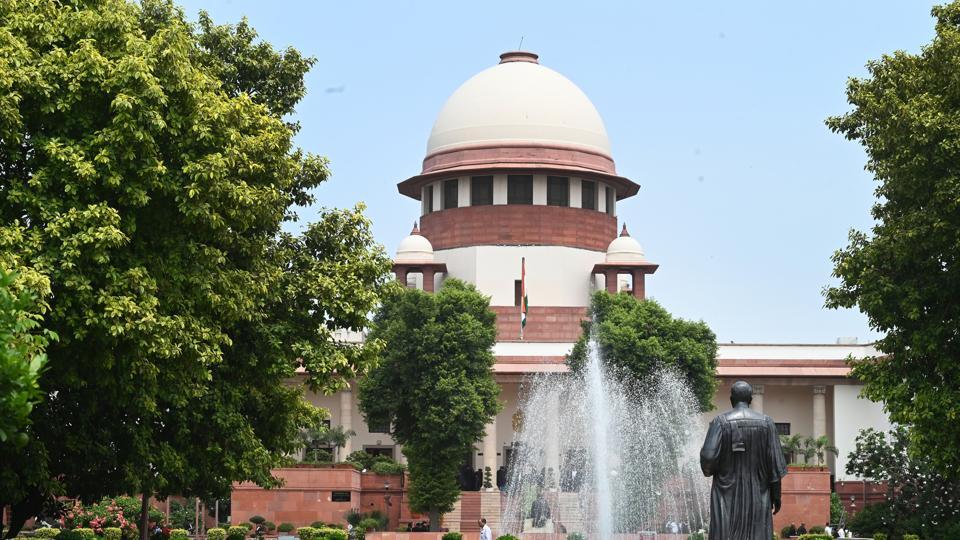
Emphasising that India must guard against a potentially irreversible decline in fertility and frame policies in tune with changing demographic realities, a bench of justices PS Narasimha and Alok Aradhe referred the matter to a larger bench for reconsideration of a 2003 judgment that upheld the two-child norm. The court observed that the assumptions underlying the earlier ruling in Javed Vs State of Haryana had been overtaken by demographic changes and could no longer be treated as valid.
“It would be dangerously complacent to ignore the consequences of India’s changing population growth rate merely because it already has a large population -- the stakes are too high. The need of the hour is to have policies in tune with the present realities. We need to guard against potentially irreversible decline in fertility and respond to the changing demographic realities,” held the bench.
According to a compilation placed before the court by amicus curiae Rukmini Bobde, the restriction is currently in force at least in six states — Assam, Goa, Gujarat, Maharashtra, Odisha and Uttarakhand. Seven states have repealed the provision, while 15 others do not have such a restriction.
The court added that the very foundation on which laws penalising people for having more than two children were enacted had changed, making their continued operation a matter requiring constitutional reconsideration.
“Even if the law was legal and valid at the time of its making, it has become invalid as the foundation on which it rested has changed...We are of the strong opinion that laws that penalise having more than two children have lost their relevance.” it said.
Also read: SC questions 2-child norm rationale for contesting local polls
Appeal Involves Maharashtra Sarpanch’s Election
The judgment arose from an appeal by Mangala Bhimrao Ingle, whose election as Sarpanch of Kakoda gram panchayat in Maharashtra was set aside on the ground that she had a third child in 2014 and was therefore disqualified under the pertinent provision of the Maharashtra Village Panchayats Act, 1959. She was elected in the 2022 panchayat elections.
The bench clarified that the constitutional validity of the Maharashtra provision was not directly under challenge before it and that it was not adjudicating upon the provision itself. However, it stayed the high court order setting aside Ingle’s election, allowing her to continue as sarpanch until the appeal is decided. It directed the registry to place the judgment before the Chief Justice of India for constitution of an appropriate larger bench.
Falling Fertility and an Ageing Population
Explaining why the legal position required reconsideration, the court noted that India’s total fertility rate (TFR) had fallen from 3.02 in 2003, when the judgment in the Javed case was delivered, to 1.9 in 2024, according to the Sample Registration System. The replacement fertility rate -- the level at which one generation replaces itself without migration, is 2.1. The latest National Family Health Survey has similarly placed the rate at around 2.0.
The bench pointed out that the country’s population was not yet declining, largely because of demographic momentum arising from the large number of people born during decades of higher fertility. But the continuing decline in fertility, it warned, would eventually mean a smaller proportion of younger people and a larger ageing population, with consequences for the workforce, economic growth and public finances.
The share of people aged 60 years and above, the judgment noted, had increased from around 8.3% in 2014 to 9.7% in 2024, and government projections put it at nearly 15% by 2036. Referring to the Economic Survey 2025-26 and United Nations projections, the court said India’s demographic dividend, which is the advantage of having a large working-age population, was expected to peak around 2030.
The experience of countries such as China and Japan, the bench said, offered important lessons. China abandoned its one-child policy in 2015 and subsequently allowed couples to have three children, besides introducing incentives and welfare measures to encourage childbirth. Yet the anticipated revival in births had largely not materialised.
“It is high time we recall Javed (judgment). We cannot ride into the future on a horse that is dead,” the court remarked.
Also read: Supreme Court dismisses woman’s plea to terminate 26-week pregnancy over marital discord
Constitutional and Social Concerns
The judgment also underlined a broader constitutional principle: laws that may have been reasonable when enacted could become arbitrary and unjustified as the circumstances underpinning them change. “Adapting to change is important for achieving justice, as failure to adapt produces injustice and is, in a sense, an abuse of power,” said the court, adding that the executive had a duty to continuously assess the impact and effectiveness of statutes. While courts could not direct legislatures to repeal or amend laws, they could examine whether their continued operation remained constitutionally sustainable.
Apart from the demographic shift, the bench questioned the very premise of linking population control with eligibility to contest elections, pointing out that such laws excluded an entire class of citizens from political representation for reasons having little connection with their ability to hold public office.
The court traced the origin of the two-child norm to the K Karunakaran Committee report (1993), which had recommended disqualifying people with more than two children from contesting elections at all levels, from panchayats to Parliament. While several states introduced such restrictions for local self-government institutions, no corresponding law was enacted at the central level. An attempt to introduce a constitutional amendment in 1992 also failed to secure political consensus.
Also read: Marital dispute cannot become ground to seek abortion, says Supreme Court
The bench said the restrictions also disproportionately affected women, particularly in a patriarchal social framework where decisions concerning family size and reproduction were often driven by husbands. Citing a 2009 study sponsored by the Union ministry of panchayati raj, it referred to documented instances of forced abortions, desertion of pregnant wives and denial of paternity to evade electoral disqualification.
It also noted that son preference often influenced reproductive decisions, with families seeking additional children until a male child was born. Such behaviour, the court said, could not be attributed to any particular socio-economic group and required broader policy responses rather than punitive electoral restrictions.
“The pursuit of population control cannot, by itself, justify coercive interference with the married couple’s decision to bear children,” it said.
The court also revisited its 2016 ruling in Rajbala Vs State of Haryana, which had relied on Javed to uphold other eligibility restrictions for panchayat elections, including minimum educational qualifications and conditions relating to outstanding dues and sanitation facilities. It noted that the reasoning in Rajbala had subsequently come under scrutiny, particularly over the disproportionate exclusion of Scheduled Caste candidates, including women.
Frequently Asked Questions