E-Paper



Marital dispute cannot become ground to seek abortion, says Supreme Court
The woman's counsel told the court the husband had threatened not to continue the marriage if she went ahead with the termination.

 Prefer HTon Google


The Supreme Court on Monday directed a man opposing his wife's plea to terminate her 25-week pregnancy to file an affidavit withdrawing all allegations made against her, including those circulated on a family WhatsApp group, while emphasising that a marital dispute or an exchange of harsh words cannot, by itself, become a ground to terminate a pregnancy.
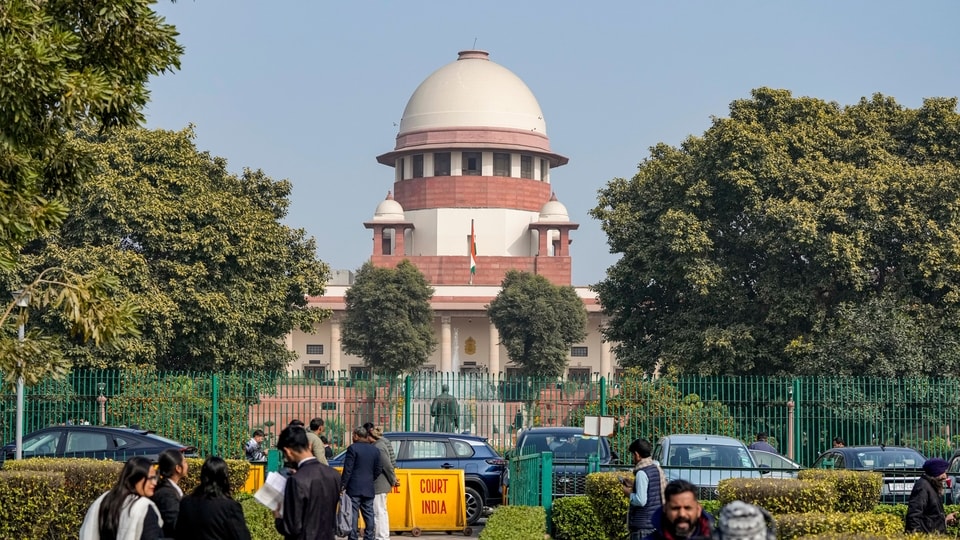
A bench of justices BV Nagarathna and R Mahadevan said the husband must express regret and apologise for the allegations, observing that the couple's differences had “snowballed” into a situation where the woman was seeking to terminate her first pregnancy despite there being no medical reason to do so.
The court posted the matter for November 4, allowing the husband to file an affidavit withdrawing allegations made against his wife in any form, whether orally, in writing or digitally.
“Because of a bitter exchange of words, we cannot allow termination of pregnancy. Your ego kills everything,” remarked the bench during the hearing, questioning whether every marital disagreement should lead to a decision to end a pregnancy.
The woman's counsel told the court that during a meeting between the couple, the husband had threatened not to continue the marriage if she went ahead with the termination. He also allegedly maligned her character on a family WhatsApp group by accusing her of being involved in an illegitimate relationship.
The woman, however, remained firm on her decision, with her counsel submitting that continuing the pregnancy would cause immense mental trauma and could also affect the child. She did not wish to continue the marriage either, the lawyer told the bench.
On his part, the husband's counsel denied circulating any WhatsApp message commenting on her character, but said he had evidence against her which he had deliberately withheld because he was more interested in preserving the relationship.
The bench told the husband that such allegations and material could be withdrawn and put behind them if he was willing to apologise. It stressed that the unborn child was also his, and that the court could not treat an exchange of allegations between spouses as sufficient justification for terminating the pregnancy.
“Are you not still married?” the bench asked the woman's counsel, underlining that the couple's marriage continued and that the dispute had not resulted in a change in their marital status.
“This is not a case of sexual assault and rape. This is in a marriage. Tomorrow, if a woman says, ‘I want to terminate my pregnancy because I had an argument with my husband’, where are we heading?” asked the bench.
It said harsh words or use of abusive language by a husband or in-laws should not automatically result in termination of pregnancy, distinguishing such a situation from one where a woman had divorced or was already divorced and sought termination. “Merely because husband says something, you will terminate your pregnancy?” asked the court, adding that spouses should be able to withstand differences in a relationship.
The bench said the husband would be required to apologise to his wife publicly on the family WhatsApp group by withdrawing the allegations.
The court also noted that the foetus was healthy and the woman was medically fit, and said there was no medical reason warranting termination. It directed the parties to appear, after which it passed an order permitting the husband to file an affidavit withdrawing all allegations against his wife.
The latest hearing follows the court's intervention last week, when it urged the estranged couple to give their six-month-old marriage another chance before deciding the woman's plea to terminate her pregnancy. The bench had then asked the husband to reach out to his wife, who has been staying with her parents since August, and provide assurances that she and the child would be cared for.
The Bombay High court had dismissed the woman's plea on October 26, holding that her case did not fall within the statutory categories permitting termination up to 24 weeks under the Medical Termination of Pregnancy Act and Rules. It noted that the couple remained married, the foetus had no congenital anomalies and the allegations of force, continuous mental cruelty and harassment had not been established.
A medical board constituted by Grant Government Medical College and Sir JJ Group of Hospitals in Mumbai had, however, recorded that the woman was in a fragile psychological state and that her mental agony could worsen if the pregnancy continued. It had opined that termination could be undertaken, while cautioning that the baby might require neonatal intensive care and its prognosis might remain poor despite such care.