E-Paper



Union health minister chairs high-level meeting as Kerala reports 3 Covid deaths
According to the data released by the health ministry of Kerala, the state has reported three deaths and 292 fresh cases over the past 24 hours. The number of active cases in India stands at 2,311

 Prefer HTon Google


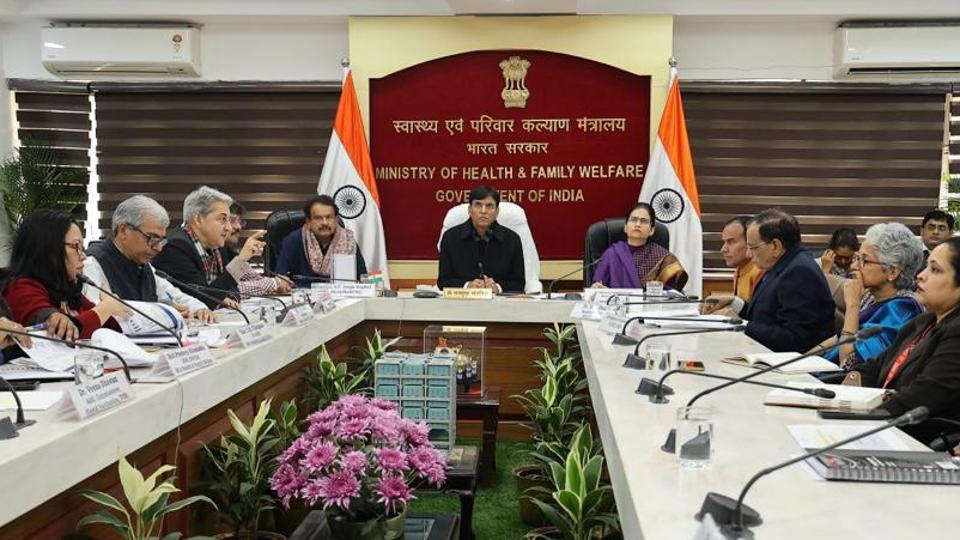
New Delhi: Union health minister Mansukh Mandaviya on Wednesday chaired a high-level meeting of the states and Union territories to review the situation and preparedness amid the recent spike in COVID cases with at least three deaths reported in the last 24 hours in Kerela.
India has reported 614 new Covid cases in the past 24 hours from across the country, while the total number of active cases in India stands at 2,311, according to the data released by the ministry.
In the meeting, Mandaviya stressed the need for collective effort between the Centre and the states to deal with the emerging situation in the spirit of the “Whole of Government” approach and directed local authorities to remain alert but not to panic.
Also Read: World Health Organisation classifies JN.1 as Covid-19 ‘variant of interest’
The health minister stressed holding mock drills in all hospitals once every three months and urged states to ensure preventive measures are taken during the winter season ahead of festivities.
“It is important to be prepared with mock drills of hospital preparedness, increased surveillance and effective communication with people,” the Union health minister said.
On Monday, the Central government issued an advisory to all the states on the detection of first JN.1 variant, asking the state governments to “maintain constant vigil”, following which several states across issued fresh directions.
Mandaviya reiterated that “COVID was not over yet”, and asked states to monitor emerging evidence of COVID cases, symptoms and case severity to plan appropriate public health response.
According to government data, active COVID cases in India are significantly less compared to the global scenario. “In the last two weeks, there has been a steep rise in active cases from 115 on 6th Dec 2023 to 614 to date. It was also noted that 92.8% of the cases are home-isolated, indicating mild illness. A rise in daily positivity rate has been observed in a few states like Kerala, Maharashtra, Jharkhand and Karnataka,” informed health secretary, Sudhansh Pant, during the meeting.
Among the preventive measures suggested included strengthening of surveillance system for whole genome sequencing of positive case samples to track the variants through the Indian SARS-CoV-2 Genomics Consortium (INSACOG) network.
Also Read: India logs 614 new Covid cases, highest since May 21; 3 deaths in Kerala
It is to ensure timely detection of newer variants, circulating in the country, and would facilitate undertaking of appropriate public health measures promptly, the health minister said.
Further, states and UTs have been requested to ramp up testing and refer a large number of samples of COVID-19-positive cases and pneumonia-like illness to INSACOG Genome Sequencing Laboratories (IGSLs) daily, for sequencing, to track new variants, if any.
India has already reported cases of the highly infective JN.1 sublineage of the BA.2.86 variant that is also known as Pirola and seeing sustained growth globally.
“The new JN.1 variant of SARS-CoV-2 is currently under intense scientific scrutiny, but not a cause of immediate concern. No clustering of cases has been observed in India due to JN.1 and all the cases were found to be mild and all of them have recovered without any complications,” the health ministry said.
Further, states have been asked to share information on cases, tests, positivity etc., in real time on the COVID portal to enable timely monitoring and prompt public health measures.