
 E-Paper



Extended BSF jurisdiction to combat transborder crime: Centre
A decision to extend the Border Security Force’s (BSF) jurisdiction for search, seizure and arrest in some states will help combat transborder crime and illegal infiltration that triggered demographic change, the government said on Tuesday, following weeks of protest by Opposition parties


A decision to extend the Border Security Force’s (BSF) jurisdiction for search, seizure and arrest in some states will help combat transborder crime and illegal infiltration that triggered demographic change, the government said on Tuesday, following weeks of protest by Opposition parties.
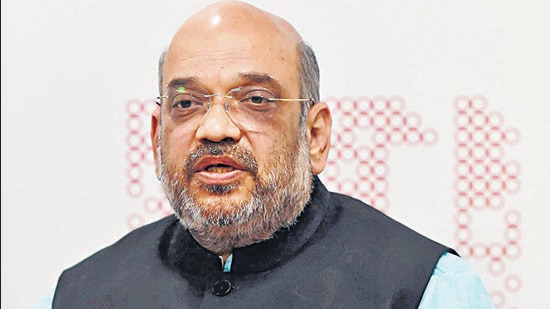
Union minister of state for home Nityanand Rai told Parliament that the increase in the force’s territorial jurisdiction -- from 15km to 50km in West Bengal, Punjab and Assam -- was done under section 139(1) (i) of the BSF Act, 1968.. He was responding to a question by Trinamool Congress (TMC) member Sajda Ahmed on whether the Centre was considering rolling back its October 11 decision.
“The extension of territorial jurisdiction of BSF would result in better and more effective control on transborder crimes in conjunction and co-operation with the state police,” the minister told the Lok Sabha in a written response.
Rai also said that the Punjab and West Bengal governments expressed apprehension that extending BSF’s jurisdiction encroached upon the powers of the state government but added that “their apprehension (s) are ill-founded”.
Separately, at the BSF annual press conference, the force’s director general Pankaj Kumar Singh said one of the reasons for extending the jurisdiction was demographic changes in certain states.
“Over a period of time, it has been observed that demographic balance in Assam and West Bengal has changed. There have been agitations in some states. So, the government probably thought that if the jurisdiction of border guarding force – BSF – is changed from 15 to 50, maybe now it can help support, supplement and coordinate with the local police in catching the infiltrators,” Singh said.
He added that the BSF will not act as parallel police in states where its jurisdiction was extended by the Centre. He said the force’s jurisdiction was primarily extended only in respect of the powers it enjoys under the Passport (Entry into India) Act and the Passport Act. It is for those who are found violating border entry rules, he said.
“I would like to make [it] clear that in case of any operations conducted by BSF in extended jurisdiction area, the FIR will be registered in a local police station and it will be investigated by the local police station. We are not going to act as parallel police or conduct an investigation. It is misinformation being spread,” Kumar said.
In a controversial notification on October 11, the Centre amended the BSF Act to authorise the force to undertake search, seizure and arrest within a larger 50 km stretch, instead of the existing 15 kms, from the international border in Punjab, West Bengal and Assam.
In Gujarat, which shares border with Pakistan, the same limit was reduced from 80 km to 50 km, and in Rajasthan, it was kept unchanged at 50 km.
The decision triggered immediate protests from the Congress and the TMC, the parties in power in Punjab and West Bengal, respectively. They termed the move an attack on federalism, and interference in the work of state police. TMC chief and West Bengal chief minister Mamata Banerjee also brought up the issue when she met Prime Minister Narendra Modi in Delhi last week.
In the second week of November, the Punjab assembly passed a resolution opposing the Centre’s move. On November 16, the West Bengal assembly passed a similar resolution. The Bharatiya Janata Party, which is in power in Assam, accused the Opposition of playing politics with national security.
Section 139(1) (i) of the BSF Act, 1968 empowers the central government to confer powers and duties on members of the force in respect of any central acts for the purposes specified therein.
The Union home ministry’s notification on October 11 amended a July, 2014 enabling provision for the BSF personnel and officers while they operate in border areas. The notification allowed the force to search, seizure and arrest on par with the state police in an extended area. BSF personnel continued to invoke these powers in the “whole of the area” in Manipur, Mizoram, Tripura, Nagaland and Meghalaya and the Union Territories of Jammu and Kashmir and Ladakh.
The BSF chief, talking about the India-Pakistan border, said that drones were a major cause of concern. In 2021 alone, there were sighting of 67 drones flying in from Pakistan, with 95% being used for dropping drugs into the Indian territory. He said it was next to impossible to shoot down all the drones but the force had shot down two drones this year.


