
 E-Paper



‘Militant and terrorist’: Bangladesh bans Jamaat-e-Islami party after violent protests
Bangladesh's Prime Minister Sheikh Hasina and her political allies accused Jamaat-e-Islami, its student wing and other related groups of provoking violence.


Bangladesh on Thursday banned theJamaat-e-Islami party, its student wing, and other related groups. The government labelled the party as a "militant and terrorist" organisation. This move is part of a nationwide crackdown after weeks of violent protests that resulted in more than 200 deaths and thousands of injuries.
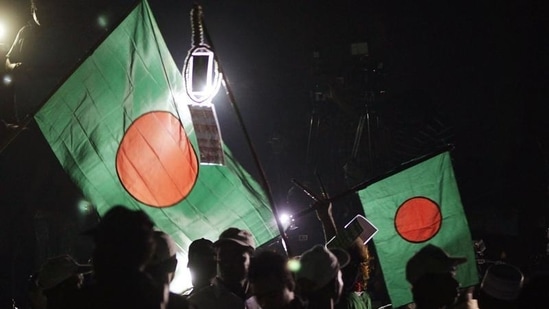
Bangladesh's Prime Minister Sheikh Hasina and her political allies accused Jamaat-e-Islami, its student wing Islami Chhatra Shibir, and other related groups of provoking violence during recent student protests about the government job quota system.
In an official notice, seen by The Associated Press, Bangladesh’s Ministry of Home Affairs announced on Thursday that the ban was enacted under an anti-terrorism law.
Since July 15, at least 211 people have died, and over 10,000 have been arrested across the country.
Jamaat-e Islami has been banned from participating in national elections since 2014 after the Election Commission cancelled its registration, AP reported.
In 2013, the High Court banned the party from elections, stating that its constitution conflicted with the national constitution by opposing secularism. However, it was still allowed to carry out political activities like holding meetings, rallies, and making statements. Ten years later, in 2023, the Supreme Court confirmed the High Court's decision, ending the long legal battle and preventing the party from taking part in elections or using its symbols. Yet, the Supreme Court did not completely ban the party.
Jamaat-e Islami was established in 1941 during British colonial rule by a controversial Islamic scholar. During the 1971 war of independence from Pakistan, the party opposed the creation of Bangladesh as an independent nation.
Since 2013, many top leaders of the party have been executed or imprisoned after being found guilty of crimes against humanity, such as killings, abductions, and rapes in 1971. During the nine-month war against Pakistan in 1971, the party had created militia groups to assist the Pakistani military. Bangladesh gained independence on December 16, 1971, with the support of India. According to Bangladesh, 3 million people died, 200,000 women were raped, and almost 1 million people fled to India during the war.
The party was banned after Bangladesh gained independence in 1971 due to its involvement in the mass killings under Sheikh Mujibur Rahman, Bangladesh’s founding leader and Hasina’s father. The ban was lifted in 1976, a year after Rahman and most of his family were killed in a military coup. Only Hasina and her younger sister Sheikh Rehana survived because they were in Germany at the time.
Jamaat was banned twice before, in 1959 and 1964 in Pakistan, for its communal actions.
On Thursday, the party did not respond right away, but on Tuesday night, the party's chief, Shafiqur Rahman, said in a statement that any decision like this should be condemned after Law Minister Anisul Huq from Hasina's Awami League party mentioned that a decision was coming soon.
“We strongly condemn and protest the illegal, unauthorized, and unconstitutional decision … to ban Bangladesh Jamaat-e-Islami. The 14-party alliance led by the Awami League is a political platform. One political party or alliance cannot make decisions about another political party. The laws and constitution of Bangladesh do not grant such authority. If a trend of banning one party by another party or alliance begins, it will lead to chaos and the collapse of state order,” he said.


