
 E-Paper



Mining companies oppose state tax on minerals in Supreme Court
SC is hearing a batch of more than 80 appeals dealing with the question whether royalty charged on mining is a tax and whether states have legislative competence to levy taxes

 Prefer HTon Google


States cannot impose tax on mineral rights as this relates to mineral development on which any law to be framed is exclusively reserved for the Centre, argued mining companies in Supreme Court.
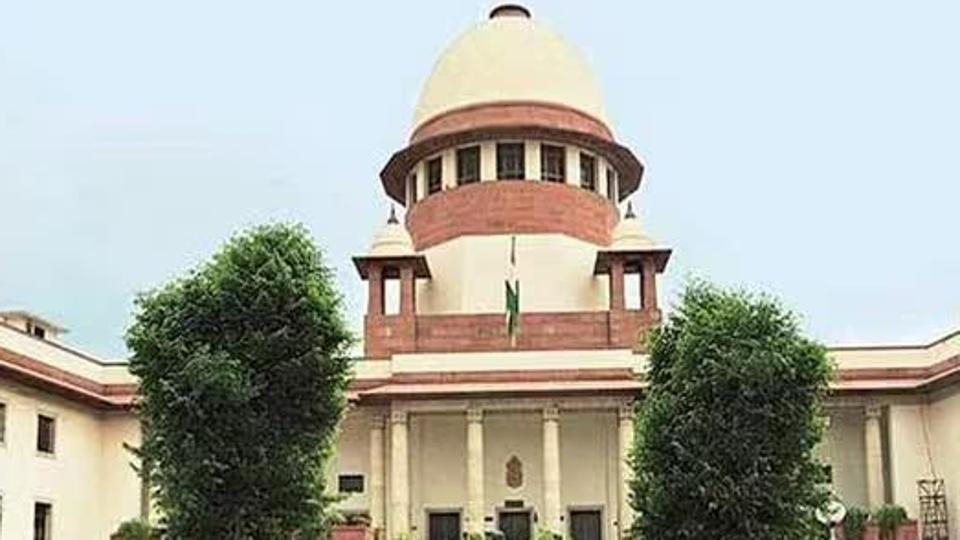
The nine-judge bench of the Supreme Court is deciding the validity of state laws imposing tax related to mineral rights.
Opposing the state laws creating an additional financial burden on private miners, senior advocate Harish Salve appearing for a group of mining companies said, “If taxing mineral rights becomes incompatible with the architecture of law on mineral development, the state’s power to tax stands denuded.”
The bench headed by Chief Justice of India (CJI) Dhananjaya Y Chandrachud, which began hearing a batch of over 80 appeals last week, asked Salve, “We then have to make a hypothesis that any power to tax impinges on mineral development.
Also Read: Supreme Court allows withdrawal of a plea on farmer protests
Salve, who represented Eastern Zone Mining Association, submitted, “Leaving it to each individual state to add yet another layer of economic burden will impinge on mineral development. The Mines and Minerals (Development and Regulation) Act, 1957 contemplates conservation of minerals.”
Salve supported the Centre which had argued last week that states cannot be allowed to tax on minerals as this was never contemplated under the Constitution as it will unjustly enrich states rich in minerals pushing up prices of minerals, that form core of development of key industries in economy, and further lead to inflation.
This was the fourth day of arguments.
The bench, also comprising justices Hrishikesh Roy, AS Oka, BV Nagarathna, JB Pardiwala, Manoj Misra, Ujjal Bhuyan, Satish Chandra Sharma and Augustine George Masih, said, “There can be various kinds of exaction on mineral rights. If the royalty on minerals (regulated by Centre under the MMDR Act) is a species of exaction which is taken away from states under Entry 50 of List 2 (State List), can royalty substitute all kinds of exaction.”
Entry 50 deals with (tax on mineral rights) which along with Entry 23 (regulation of mines and mineral development) are subject to any law related to List 1 (Union List) or law made by Parliament.
The Centre claimed that its right over minerals is sourced from Entry 54 of List 1 which deals with “regulation of mines and mineral development”.
It is under this entry, the Parliament enacted the MMDR Act, which governs the field, and this Entry 54 is a limitation on the power of states to demand or impose similar levies or charges.
Accepting this argument, Salve said, “While minerals vest in states, mineral development is entirely with the Union. If Entry 54 makes a declaration that development and regulation of minerals rests with Centre, the state’s power under Entry 23 or any other entry related to minerals stands denuded.”
He further stated, “The mineral rights, under the present legal system in India, in most cases, vest in the state and thus a tax on mineral rights as such cannot be imposed, over and above the exaction by law made by Parliament (MMDR Act) that provide for payment of royalty... The state is, as the sovereign, the owner of mineral rights but may part with these rights under a lease which is in accordance with the MMDR Act. Under the Act, the state acts as a delegate of the Union government.”
Salve will continue his arguments on Wednesday.
The Court is hearing a batch of more than 80 appeals dealing with the question whether royalty charged on mining is a tax and whether states have legislative competence to levy taxes on minerals and mineral-bearing lands in addition to the royalty imposed by Centre.
The issue has larger implications on the state’s revenue-earning capacity and the authority of states on minerals extracted from their land.
The matter was referred to a 9-judge bench in March 2011 as the top court found a conflict between two previous judgments on this issue.
One was a 1989 verdict in India Cements Limited versus State of Tamil Nadu case decided by a 7-judge bench which held royalty is a tax under MMDR Act.
The other decision was a 5-judge bench decision of 2004 in State of West Bengal versus Kesoram Industries which held that in India Cements, the Court had mistakenly written “royalty is a tax” while it meant that “cess on royalty is a tax”.


