
 E-Paper



Modi has reasons to put climate change on top of his agenda at Davos
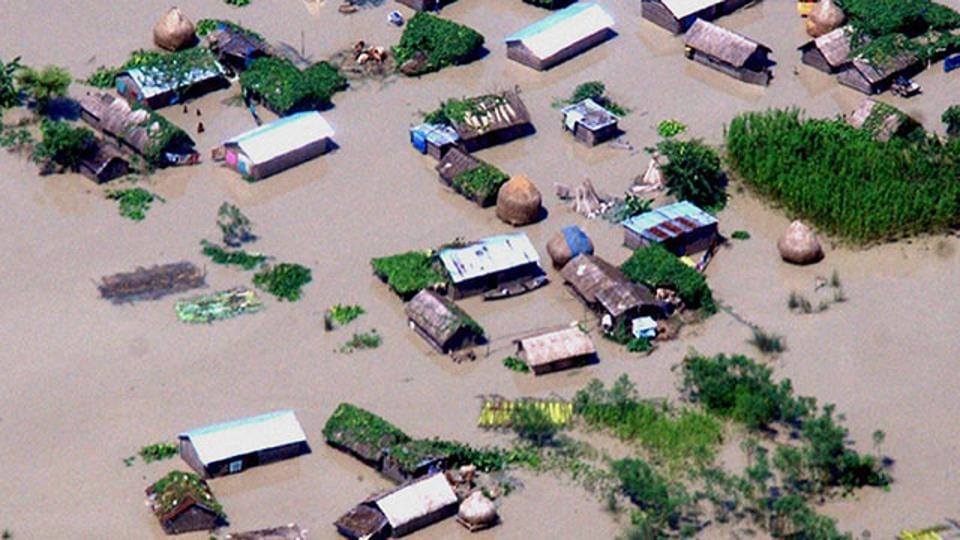
A recent global study found that the number of Indians affected by river floods may increase five times in the next 25 years unless additional checks were put in place.


Climate change is one of the biggest challenges for the world today, Prime Minister Narendra Modi said at the World Economic Forum’s (WEF) plenary session in Davos on Tuesday.
The first Indian Prime Minister to deliver the keynote speech at the WEF in the Swiss resort city underscored the threat from climate change after US President Donald Trump dropped climate change from a list of global threats in a new national security strategy last year.
LIVE UPDATES: Distinction between good and bad terrorists dangerous, says PM Modi
Modi has reasons to put climate change on top of his agenda as, according to a draft report of the India Meteorological Department (IMD), the country was hit by at least 19 extreme weather events in 2017.
Climate change exacerbates extreme weather events, experts say.
Environmental disasters, both natural and manmade, will be high on the agenda at the WEF that opened on Tuesday.
Extreme weather, natural disasters and a failure to control climate change are three environmental concerns among the top 10 risks, both in terms of likelihood and impact, facing the world in 2018, according to the WEF’s global risks report published last week.
A compilation of last year’s extreme events in India showed that a majority of these were floods, heavy rain and landslides. A recent global study found that the number of Indians affected by river floods may increase five times in the next 25 years unless additional checks were placed.
“There is a huge rise in extreme rain events since 1950s, almost a three-fold rise,” said Roxy Mathew Koll, a scientist at the Indian Institute of Tropical Meteorology.
“Due to climate change and warming in the Arabian Sea, there are large fluctuations in the monsoon winds and an episodical surge in moisture transport which cause large-scale extreme rainfall events,” he said.
Environmental disasters aren’t just a risk to human lives, there is an economic cost attached, too.
“Natural catastrophes such as droughts, floods or storms are likely to increase as the planet becomes warmer and the earth experiences longer-term shifts and variability in weather patterns caused by climate change,” Michael Wilkins, head of sustainable finance, S&P Global Ratings, said.
“As a result, international credit markets have begun to take climate change more seriously.”


