
 E-Paper



'Moral cowardice': PM Modi's Israel visit under fire as US-Israel launch strikes on Iran
“Israel and the US have begun their joint assault on Iran. This was fully expected... Mr Modi nevertheless chose to go to Israel,” said Cong's Jairam Ramesh.

 Prefer HTon Google


Barely 48 hours after Indian Prime Minister Narendra Modi wrapped up a state visit to Israel, where he addressed the Knesset and declared that India stood with Israel “firmly with full conviction”, the United States and Israel launched a major joint military operation against Iran on Saturday, raining missiles and airstrikes on Tehran and other Iranian cities.
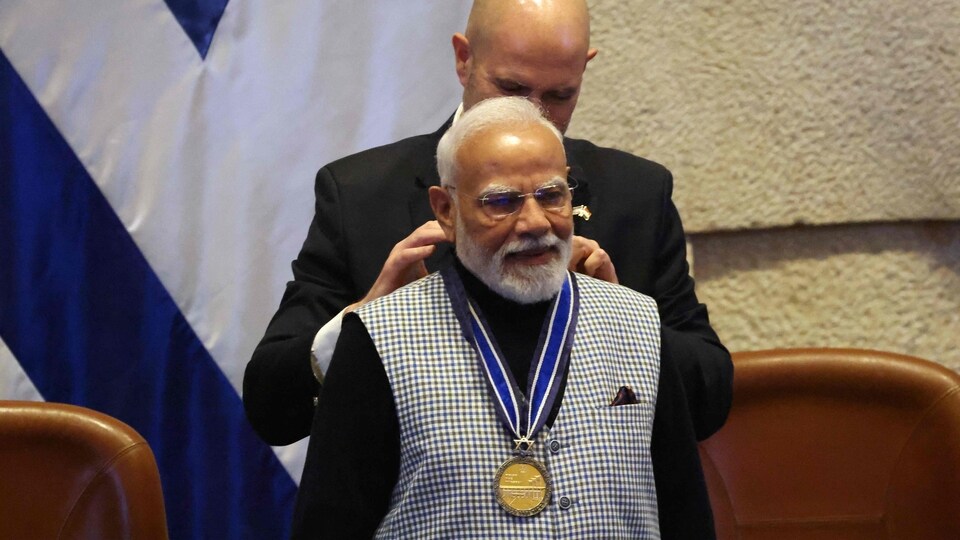
The timing of Modi's visit thus drew sharp and immediate fire from the main Opposition party Congress, with its communications chief Jairam Ramesh accusing Modi of “the highest moral cowardice”.
What Congress said on Modi after US-Israel attack
"Two days after Mr. Modi celebrated his visit to Israel, Israel and the US have begun their joint assault on Iran," Ramesh wrote on X.
"This was fully expected given their military build-up in the last few months. Mr. Modi nevertheless chose to go to Israel, where he displayed the highest moral cowardice. He declared that India stood with Israel and got himself an award for saying so. This Israel visit was shameful and it is even more so in light of the war that has been launched by two of Mr. Modi's 'good friends'," he further wrote.
As of now, New Delhi has not announced any evacuation while Iranian counter-attacks target US bases across the Middle East.
India's Leader of Opposition and Congress MP Rahul Gandhi also posted on X: “The safety and security of every Indian citizen across the Middle East must be our highest priority... I urge the Government of India to take immediate and proactive measures.”
Saying the INC (Indian National Congress) condemns the US-Israel actions, Ramesh made another X post, accusing US President Donald Trump of putting up a “charade of diplomacy and negotiations with Iran”.
“Egged on by the Israeli PM Mr. Netanyahu and hawks in the US, he has launched a military offensive aimed at achieving regime change. The INC condemns this attack and calls upon the Government of India to help bring the hostilities to an immediate end. The Govt of India must take all necessary steps to ensure the safety and security of the millions of Indians who live and work in the West Asia region,” he added.
Senior Congress leader Sachin Pilot also said, “I believe the timing of PM Modi's visit (to Israel) was not correct, and the speech given (by PM modi) casts doubt on India's impartiality.”
Modi had arrived in Tel Aviv on February 25 for a two-day state visit. In a speech that drew thunderous applause and chants of "Modi! Modi!" from Israeli lawmakers, the Prime Minister said: "I carry with me the deepest condolences of the people of India for every life lost and for every family whose world was shattered in the barbaric terrorist attack by Hamas on October 7 (2023). We feel your pain. We share your grief. India stands with Israel firmly with full conviction in this moment and beyond."
Israel had launched major strikes in the occupied Palestinian territory of Gaza, killing around 70,000 people, after the October 2023 attack by Palestinian militant group Hamas killed 1,200 people in Israel.
Modi's Knesset address
PM Modi also called Israel "a protective wall against barbarism" — language that mirrored the framing regularly deployed by Prime Minister Benjamin Netanyahu.
Following the address, Knesset Speaker Amir Ohana conferred the newly established ‘Speaker of the Knesset Medal’ on Modi, the first such award in Israeli parliamentary history. Accepting the honour, Modi said: "I dedicate this award to 140 crore Indians and the India-Israel friendship." The two sides signed agreements spanning AI, cybersecurity, agriculture, fisheries and maritime heritage, and discussed a landmark defence deal reportedly worth $10 billion.
Opposition raised questions, BJP hit back
Back in New Delhi, the Opposition's anger centred on an alleged irony: that even as Modi was accepting Israeli honours and invoking solidarity with Netanyahu, India had quietly issued evacuation advisories for its own citizens in Iran, effectively acknowledging the war that was coming.
Ahead of Modi's departure too, Congress MP Priyanka Gandhi Vadra had publicly urged the Prime Minister to use the Knesset address to speak up for Palestinians. "I hope that the Hon Prime Minister @narendramodi ji mentions the genocide of thousands of innocent men, women and children in Gaza while addressing the Knesset on his upcoming trip to Israel and demands justice for them," she wrote on X.
The BJP hit back sharply at Priyanka, with national spokesperson Gaurav Bhatia calling her the "female ‘Ghajini’ of Indian politics" — a movie reference for short-term memory loss. He accused her of showing selective outrage, saying: "Carrying a 'Palestine' bag to Parliament is easy, but having the moral courage to condemn the Oct 7th massacre of 1,200-plus innocents, women being abducted and raped is clearly too hard for Priyanka Gandhi."
In other Opposition voices, All India Majlis-e-Ittehadul Muslimeen (AIMIM) chief Asaduddin Owaisi had also hit out at PM Modi's state visit to Israel, alleging that “PM's love for Israel is only on the basis of ideology… not national interest”.
Owaisi questioned India's stand on the Israel-Palestine conflict and accused the Bharatiya Janata Party (BJP) of abandoning the country's traditional multi-alignment policy. "You have openly supported a genocidal regime. The ideology is the same, of Zionism and the RSS ideology. It is based on hatred. People ask what your concern with Palestine is," Owaisi said.
"What is the national interest in this? The entire Global South is troubled today. They are worried about what the Prime Minister of India is doing. Where did our policy of multi-alignment go?" the AIMIM chief questioned.
Asked about Owaisi's comments, Union minister Kiren Rijiju on Saturday hit back: "This is politics being done.One should not always criticise the government and abuse PM Modi."
India's advisories
While Modi was in Jerusalem, India's Embassy in Tehran issued an urgent advisory asking the over 10,000 Indian nationals to leave Iran “by available means of transport, including commercial flights”. The advisory, which reiterated earlier warnings from January, was apparently based on New Delhi's assessment that military escalation was imminent.
The escalation arrived on Saturday morning, as the US and Israel launched a joint attack on Iran, with explosions heard across Tehran, including near the offices of Supreme Leader Ayatollah Ali Khamenei.
The Indian missions in Tel Aviv and Tehran issued advisories again.
US President Donald Trump, confirming the action, said: "Our objective is to defend the American people by eliminating threats from the Iranian regime." Israel's PM Netanyahu said the strike was launched “to remove an existential threat to the State of Israel”.
According to an Israeli defence official, the attacks had been planned for months, with the launch date decided weeks ago, even as the US and Iran were carrying out negotiations over Iran's nuclear programme. The US insisted that Iran end its nuclear energy programme altogether.
Denying this demand, Iran's foreign ministry vowed a “crushing” retaliation if and when attacked.


