E-Paper



MP government to move Supreme Court for 27% OBC reservation in state
On Tuesday, the MP high court ordered a continuation of its interim stay to release the list of candidates selected through various exams with 14% OBC reservation, and keep 13% seats vacant till the final order is issued in the case


The Madhya Pradesh state government will soon move the Supreme Court against the MP high court stay on 27% reservation for other backward classes (OBC), said a minister on Thursday.
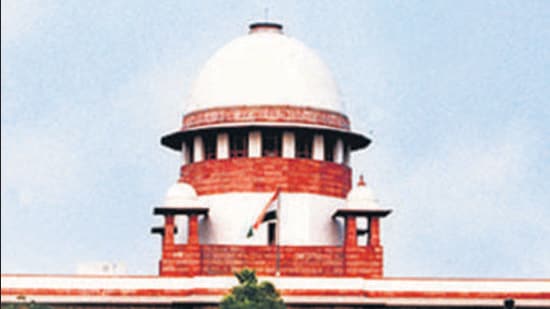
The then Kamal Nath-led Congress government had increased the OBC reservation from 14% to 27% in March 2019. The high court stayed the decision in March itself. On Tuesday, it ordered a continuation of its interim stay to release the list of candidates selected through various exams with 14% OBC reservation, and keep 13% seats vacant till the final order is issued in the case.
The decision to approach the apex court was taken at a meeting of OBC welfare committee on Wednesday, headed by chief minister Shivraj Singh Chouhan.
Horticulture minister Bharat Singh Kushwaha said, “The CM has clearly said that the state government will move the Supreme Court for 27% reservation for OBCs as MP has 51% OBC population and it is necessary to give reservation to the community members in this proportion.”
Also Read | Punjab Police bust another weapon supply module in MP, two arrested
“The OBC community has been demanding an increase in quota. At the meeting, it was decided to move Supreme Court against the high court stay,” said Bhagat Singh Yadav, president, BJP OBC morcha.
The state government swung into action on OBC quota issue after former chief minister Kamal Nath and other Congress leaders attacked it for failing to pursue the matter effectively in court.
In a series of tweets, Nath said, “Some petitions were filed in the high court against reservation, but due to lack of proper presentation by the BJP-led state government, the increased reservation could not be implemented till now. If the government supports the strong side, then the backward classes of Madhya Pradesh will get the benefit of 27% reservation.”
MP advocate general Purushendra Kaurav said, “I won’t comment on the decision at the meeting.”
The increase in quota for OBC violates Supreme Court reservation cap of 50%. In MP, the total reservation will gone up to 73% with 27% OBC quota. The state has 10% reservation for economically weaker section (EWS) people in upper castes, 20% reservation for scheduled tribes and 16% reservation for scheduled castes.
The MP high court is hearing at least 70 petitions in connection to the reservation in jobs and educational institutes, officials said.
One of the lawyers representing some petitioners, Aditya Singhvi, said, “They can move the Supreme Court but they will lose the case there too. The Supreme Court’s larger bench on May 5, 2021, gave a clear judgment in connection with Maratha reservation that population ratio can’t be a basis of increasing reservation in any state.” “Approaching SC is a political gimmick, nothing else,” he added.
According to the 2011 census, OBCs constitute 50.09% of the total 72.62 million population of Madhya Pradesh. Out of 52 districts, 36 have over 50% OBC population.