
 E-Paper



Mumbai airport gets body scanner at T2, trial runs to begin soon
The machine, which was put up over the weekend at the airport’s terminal two, is currently being checked for efficiency. The scanner has been installed in the security hold area (SHA) of international departure area.

 Prefer HTon Google


In a month, the Chhatrapati Shivaji Maharaj International Airport (CSMIA) will get a new body scanner, for more stringent security checks.
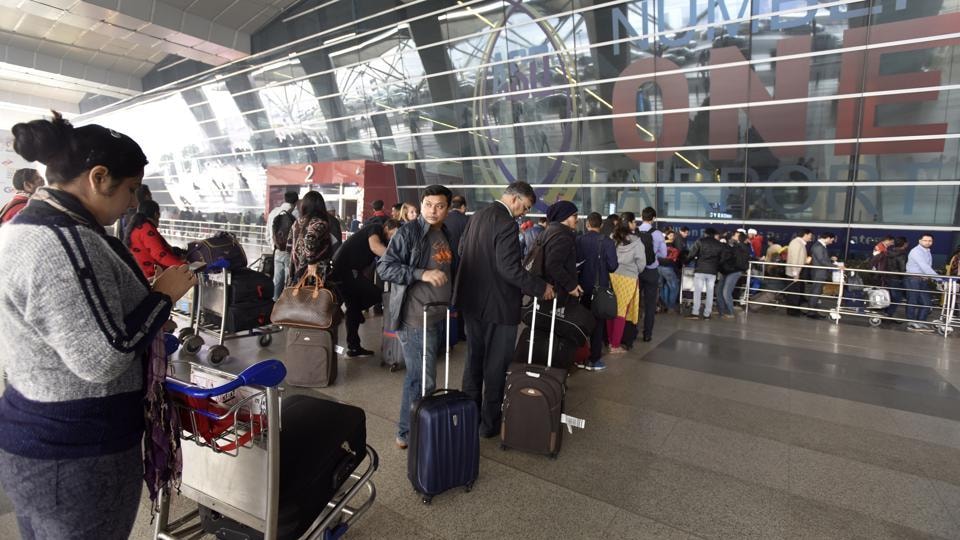
The machine, which was put up over the weekend at the airport’s terminal two, is currently being checked for efficiency. The scanner has been installed in the security hold area (SHA) of international departure area.
Bangalore’s Kempegowda international airport, which is the only other airport in the country to have the scanner, conducted the first trial run for the scanner for a Vistara flight to Mumbai (UK 864) on Monday.
A senior airport official from Mumbai said, “The Central Industrial Security Force (CISF) will conduct the trial run at CSMIA in a couple of days. They need to ensure it follows the Bureau of Civil Aviation Security (BCAS) guidelines.”
The scanner is based on millimeter wave and non-ionising electromagnetic radiation technology. The BCAS specified that the scanner would not emit harmful radiation and that pregnant women will have to be screened using the same screening procedure as applied to other passengers.
On April 24, the BCAS issued a list of minimum technical specifications and standard operating procedures for deployment of body scanners, after which the airport operator – Mumbai International Airport Pvt. Ltd. (MIAL) – called for expression of interest (EOI) on May 10.
BCAS said the scanner, which will be able to handle 300 passengers an hour, should store the scanned images of the passengers for a minimum of seven days. Another official said, “T2 alone will need six scanners (including domestic SHA) in order to speed up the procedure of security checks and for passenger convenience.”
Of around 105 operational airports in the country, 28 are classified as hypersensitive, including those in big cities such as Delhi and Mumbai, three airports in Jammu and Kashmir and the Northeast. Fifty-six airports are categorized as sensitive. According to the aviation ministry, the 28 hypersensitive and 56 sensitive airports will have to install body scanners by March 2020, while the remaining airports can install it by March 2021.


