
 E-Paper



Dipke, Das, CJP leaders and 400+ supporters booked after Shivaji Park protest in Mumbai
Police booked several CJP leaders, including the leading trio Abhijeet Dipke, Saurav Das and Ashutosh Ranka.

 Prefer HTon Google


The Shivaji Park police have registered a case against Cockroach Janta Party (CJP) leaders Abhijeet Dipke, Saurabh Das, Pranav Ahire, Ashutosh Ranka, Ajinkya Shinde, Afreen Nawaz, Saumya Korde, Ankit Bharadwaj, Vijay Malangi and Yogesh Ingle, along with more than 400 unidentified supporters, for allegedly holding an unlawful assembly and raising slogans during the party’s protest at Shivaji Park on Friday.
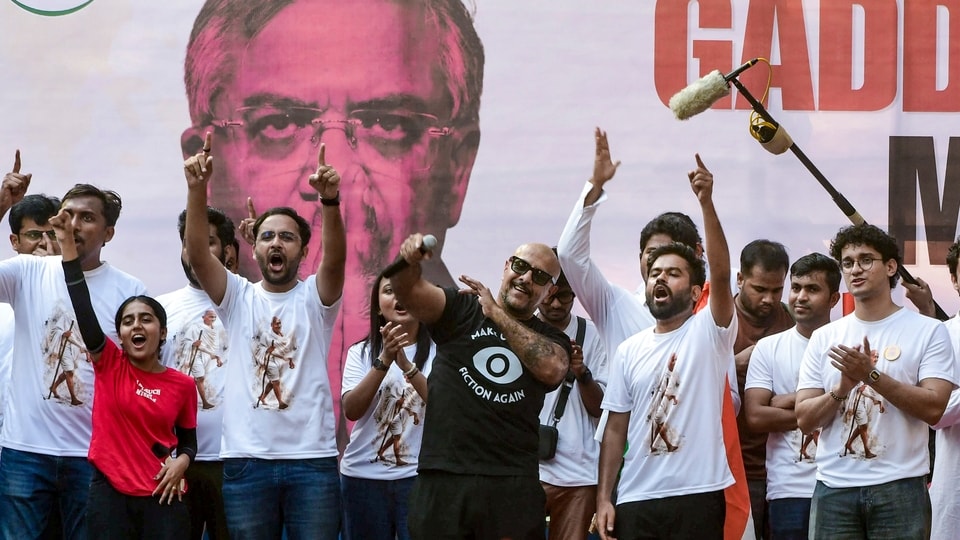
According to the police, around 400-500 protesters gathered near Gate No. 6 of the Shivaji Park grounds, in front of the Meenatai Thackeray Memorial, from around 2pm to 7pm.
The police alleged that the gathering obstructed traffic and that loudspeakers were used without the required permission. The case has been registered under Sections 189 (unlawful assembly) and 223 (disobedience to a public servant’s lawful order) of the Bharatiya Nyaya Sanhita (BNS), besides Sections 37 and 135 of the Maharashtra Police Act.
Deep Dive

The case follows the CJP’s decision to proceed with its ‘Jail Bharo Andolan’ at Shivaji Park despite the Mumbai Police denying permission for the gathering. The police had advised the organisers to seek an alternative venue, citing restrictions on the use of the historic ground under a 2013 Bombay High Court order and a subsequent Maharashtra government order. The police also said the organisers had not submitted the requisite BMC permission for using the ground.
In its communication to CJP, the police cited Shivaji Park’s residential surroundings and silence-zone status, warning that the protest could lead to noise pollution and traffic congestion and potentially affect access to hospitals in the vicinity. The organisers, however, went ahead with the agitation after CJP founder Dipke announced that the denial of permission would lead to a ‘Jail Bharo Andolan’. Dipke had also posted on X that the Mumbai Police had denied permission for the October 2 protest, calling the decision an attempt to suppress citizens’ voices.
The protest was organised to demand the resignation of Chief Election Commissioner Gyanesh Kumar amid allegations concerning the Election Commission’s handling of the Special Intensive Revision (SIR) of electoral rolls. CJP leaders have also demanded a criminal case against Kumar and a rollback of the SIR exercise. The Election Commission has defended the revision process.
The gathering drew thousands of people, predominantly young protesters, as well as public figures including actors Shabana Azmi and Naseeruddin Shah, singer Vishal Dadlani and filmmaker Vishal Bhardwaj. Tushar Gandhi, Mahatma Gandhi’s great-grandson, was also present. The police deployed around 300 personnel and said the situation remained peaceful, with roads leading to Shivaji Park blocked during the protest and cleared afterwards.
Also Read | 1,000 detained as Delhi cops thwart Jantar Mantar protest against Gyanesh Kumar
Addressing the gathering, Dipke said the protest was the beginning of a wider agitation and warned of a prolonged campaign if Kumar did not resign. He said the movement would continue for three months and referred to a planned “Jantar Mantar 2.0”.
Government backs police vigilance
Minister of State for Home Pankaj Bhoyar said police were monitoring the protest for possible involvement of anti-social elements and would act against anyone disrupting law and order.
On Saturday, Minister of State for Home Pankaj Bhoyar defended the police handling of the protest, saying the force had kept a close watch on the gathering to prevent anti-social elements from disrupting peace and public order. He said the Mumbai Police had cooperated with the organisers and rejected suggestions that the administration had attempted to suppress the agitation.
Bhoyar said police would take stricter action if anyone was found attempting to disrupt law and order. He also said any incorrect or objectionable remarks made against Prime Minister Narendra Modi during the protest would be taken into consideration.
“No one should make such inappropriate remarks about the PM of the country,” Bhoyar said, adding that the police action was aimed at maintaining law and order and ensuring the safety of commuters in Mumbai.
Asked about reports that police were examining CCTV footage following the protest, Bhoyar said the footage may have been sought after complaints about the possible involvement of anti-social elements.
The minister also criticised Dipke’s description of Shiv Sena as a “Shell Company” of the BJP, saying political parties have the right to exist as part of the democratic process.
The FIR has drawn criticism from opposition leaders. Maharashtra Congress president Harshvardhan Sapkal alleged that cases were being filed against young protesters to suppress opposition to the BJP-led governments and the Election Commission. Shiv Sena (UBT), which supported the CJP-led agitation, also condemned the police action, with party leader Aaditya Thackeray saying the movement would continue.
The police, meanwhile, maintain that the case relates to the alleged violation of orders and provisions governing public gatherings, rather than the issues raised by the protesters. The FIR brings the focus of the Shivaji Park agitation from the demands against the Election Commission to the legal and administrative consequences of holding a protest at a venue where permission had been denied.


