
 E-Paper



Justice Chandrachud rues delay in bail releases
Justice Chandrachud, who is chairman of the E-Committee of the Supreme Court, was speaking at an online event organised by the Allahabad high court to inaugurate virtual courts (to settle traffic offences), and 76 e-Sewa kendras to facilitate online legal assistance to litigants

 Prefer HTon Google


The delay in communicating bail orders to convicts and people under trial is a “serious deficiency” of the criminal justice system that must be addressed on a war footing, Supreme Court judge, justice Dhananjaya Y Chandrachud, said on Monday.
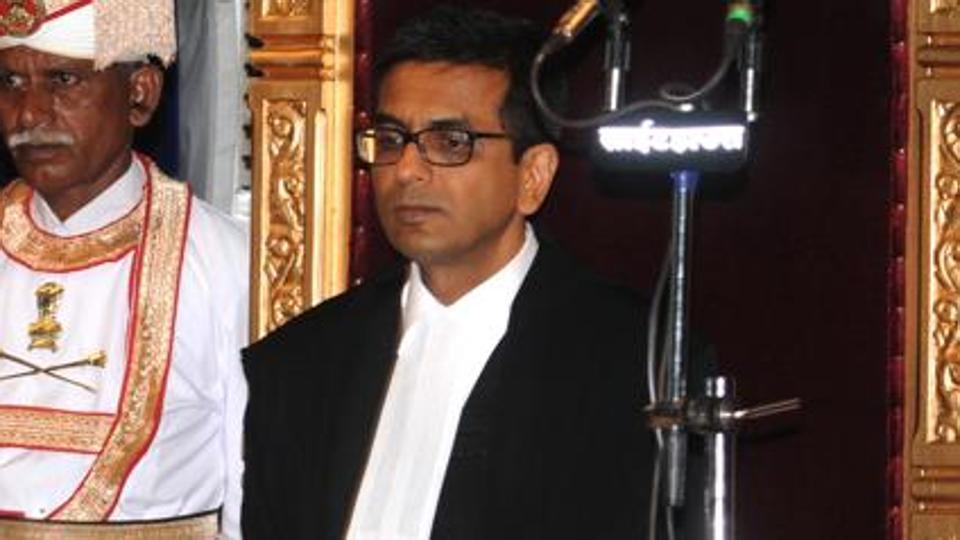
Justice Chandrachud, who is chairman of the E-Committee of the Supreme Court, was speaking at an online event organised by the Allahabad high court to inaugurate virtual courts (to settle traffic offences), and 76 e-Sewa kendras to facilitate online legal assistance to litigants.
“This is a very serious deficiency in our criminal justice system, that of delay in communication of bail orders, which we need to address on a war footing,” justice Chandrachud. “This touches upon the human liberty of every under-trial or a convict who has got a suspension of sentence pending the hearing on criminal appeal.”
A recent example to illustrate the delay observed by the Supreme Court judge relates to the case of Bollywood actor Shahrukh Khan’s son, Aryan Khan, who spent an extra day at Mumbai’s Arthur Road jail in a drug case despite securing bail from the Bombay high court. The bail order was signed on October 28 but the release memo could not be typed out by the trial court on time.
As a result, the delivery of the release order got delayed, leading to the process being completed the following day.
To be sure, justice Chandrachud did not refer to this or any other specific case during the event.
However, earlier this year in July, the top court came down hard on delays in executing bail orders by jail authorities after the Court came across a four-day delay to release 13 convicts of Agra Jail on bail.
A bench headed by CJI NV Ramana rebuked the prison authorities for causing delay and said, “We are in a time when we use information technology tools, and we are still looking at the skies for pigeons to communicate orders... It is too much that prisoners have to wait even after the Supreme Court has granted bail as jails are insisting on the bail order to come by post.”
The Supreme Court last month introduced a mechanism for speedy communication of bail orders to prisons under an electronic transmission channel known as FASTER (Fast and Secured Transmission of Electronic Records) -- an initiative that came about while the court was considering a suo moto petition based on a news report published in July where release of convicts on bail was delayed by jail authorities in Agra for want of verification of the court’s order (may be redundant if same as above).
By an order passed in September, the Court directed Chief Secretaries of all states and union territories to extend internet facility in all jails to ensure the e-certified copies of Supreme Court can be accessed under the FASTER system, and asked the director generals of all prisons to ensure successful implementation of the initiative.
During the online event on Tuesday, also attended by the chief justice of the Allahabad high court Justice Rajesh Bindal and other high court judges, justice Chandhrachud spoke about an e-custody certificate started by the Orissa high court. “Every under-trial and every convict who is undergoing a sentence of imprisonment would have an e-custody certificate tagged to them. That certificate will give us all data with regard to that particular under-trial or convict, right from initial remand to the subsequent progress of each case. This will also help us in ensuring that bail orders are communicated as soon as they are made,” justice Chandrachud said.
The judge, who has been a champion of human liberty, has in the past expressed similar views when it comes to release of prisoners on bail. Last November, a bench of the Supreme Court headed by him held a special sitting and granted bail to journalist Arnab Goswami and two others in an alleged abetment to suicide case.
While ordering the release of the three, the bench said, “We are dealing with a person’s liberty. If this court is not to interfere today, we are treading on a path of destruction of liberty.”


