
 E-Paper



Nepal President Poudel appeals for support, says interim govt formed by consensus
Student-led protests this month left 72 people dead, forcing Prime Minister KP Sharma Oli’s resignation and the dissolution of Parliament

 Prefer HTon Google


The decision to form the interim government for six months was taken by consensus, as there was no alternative to constituting a council of ministers from the existing House of Representatives, Nepal President Ram Chandra Poudel has said. Poudel appealed for continued support from friendly nations as Nepal navigated its challenges. He urged heeding the call of Gen Z protesters to end corruption and commit to meaningful reforms.
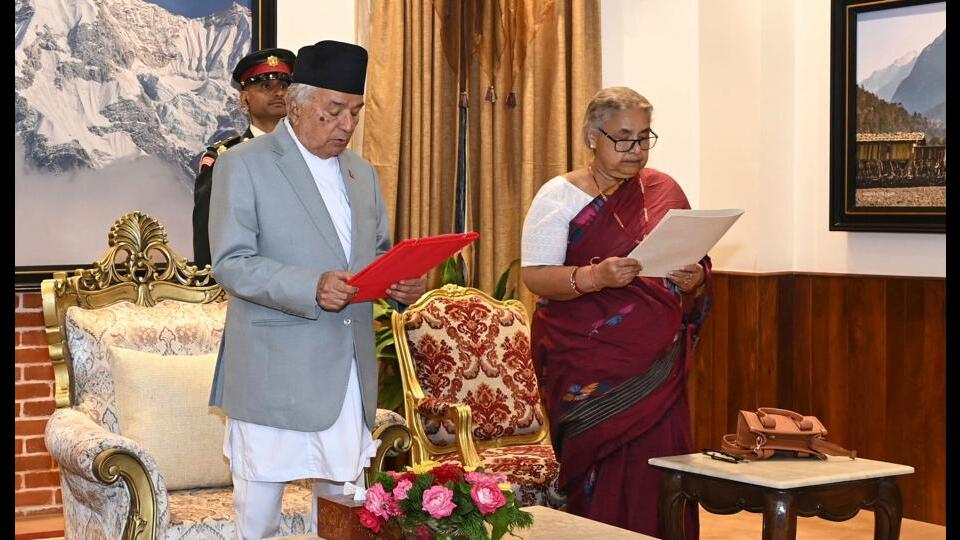
Student-led protests this month left 72 people dead, forcing Prime Minister KP Sharma Oli’s resignation and the dissolution of Parliament. Gen Z chose Sushila Karki, who served as Nepal’s first woman chief justice, as the interim Prime Minister in an unprecedented shift. The dramatic turn underscored the depth of public anger and the generational demand for change.
Poudel said Nepal has once again entered a new path of change with new dreams. “I firmly believe that the new people’s mandate will further institutionalise democracy and determine the future course of the country,” Poudel said in his address to the nation on Constitution Day on Saturday.
He added that the interim government will reconstruct the national losses, complete the elections in six months, and hand over power to the people’s representatives. “This is now the main responsibility of all Nepalese. Let us all understand that this step was taken by consensus, as there was no other way to form a council of ministers from the existing House of Representatives.”
He called for completing the elections to form the House of Representatives within six months. Poudel requested political parties, bodies involved in the administration and management of the country, think tanks, and citizens to work for the success of the election through coordination and cooperation without prejudice, disagreement, and conflict.
“In today’s context, the equitable and prosperous Nepal envisioned by the Constitution is only possible if we prioritise good governance, an end to malpractices, creation of job opportunities, environmental sustainability, and social justice.”
Poudel said that circumstances had placed him in a position to handle the political difficulties and vacuum. “And with everyone’s understanding, coordination, and cooperation, we have been able to manage this uncomfortable situation. Together, we have done everything possible at the time, according to the spirit of democracy and the Constitution, the dream of change of the new generation, and the people’s desires.”
Marking the 10th Constitution Day, he offered condolences to those killed in the past struggles for democracy and those who lost their lives in the youth-led demonstrations of September 8 and 9.
The interim government has declared 59 students and other civilians who died in the protests as martyrs.
Poudel expressed sorrow over the loss of life, property, businesses, and heritage during the unrest. He described the grief as both personal and national. “As a guardian of children, I can feel the pain of parents who lost their young ones, and as a guardian of the nation, I can feel the country’s loss of its talented youth.”
He acknowledged the aspirations of those who took to the streets, calling their demand for stability and a better future a reminder of democracy’s spirit.
Poudel recalled a personal political journey beginning at the age of 17 in 1960, drawing parallels with the younger generation’s call for change. He emphasised that with collective understanding and cooperation, the political vacuum after September 9 had been managed in line with democratic values.
Poudel said the road map for the future rests on good governance, ending malpractices, creating employment, ensuring environmental sustainability, and delivering social justice.


