
 E-Paper



Why govt doesn’t want you to lower AC temperature below 20°C: What's the new rule?
This new setting for the air conditioners will apply not just to home air conditioners but also to those in hotels and cars.

 Prefer HTon Google


The Indian government is planning a new rule that will limit how cool your air conditioner can go. If the regulation comes into effect, you won’t be able to set your AC below 20 degree Celsius, even during extreme heat. So, what triggered this decision? It’s all part of a larger effort to save electricity and manage India’s rising energy demand, power minister Manohar Lal Khattar said.
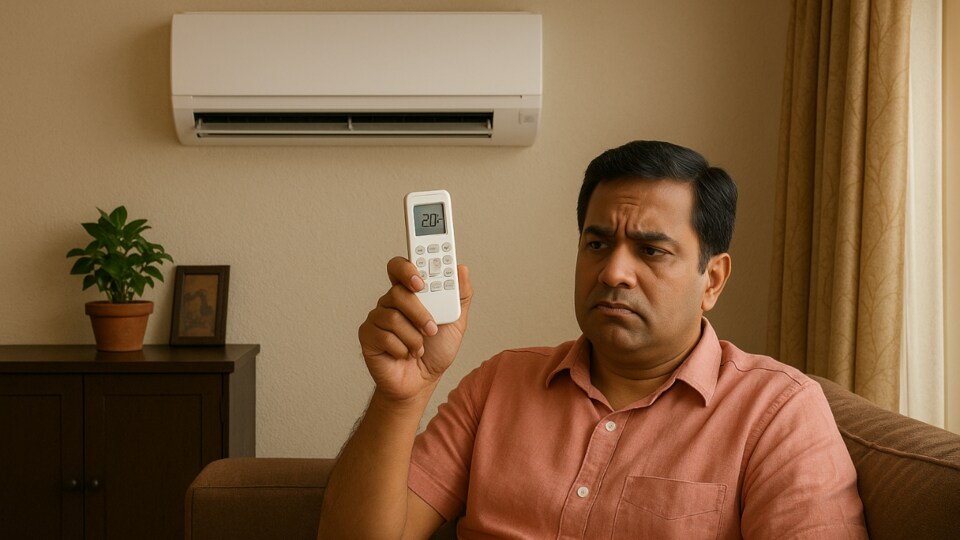
This new setting will apply not just to home air conditioners but also to those in hotels and cars.
“Regarding air conditioning standards, a new provision is being implemented soon. The temperature standardization for ACs will be set between 20°C to 28°C, meaning we won't be able to cool below 20°C or warm above 28°C. This is a first-of-its-kind experiment, aiming to standardize temperature settings,” Khattar said in a event in Delhi.
Why the Centre wants standardised AC temperatures
The main reason for this move is to reduce electricity consumption, especially during the summer months when demand is at its highest. Many homes and buildings run their ACs at very low temperatures, sometimes as low as 16°C. This puts extra pressure on the power grid.
Pankaj Agarwal, a top official in the power housing and urban affairs ministry, explained that air conditioners account for around 50 gigawatts of electricity use, about one-fifth of the country’s maximum power load.
“Studies show that every 1°C increase in AC temperature cuts energy use by 6%. That means if everyone sets their ACs just 1 degree higher, we can save about 3 gigawatts of power during peak times,” Bloomberg quoted Agarwal as saying.
India has around 100 million ACs, and 15 million more are being installed every year. With these numbers, small changes can lead to big savings.
Tighter energy rules for ACs could save up to 60 gigawatts of peak demand by 2035, that would prevent the need to spend RS 7.5 trillion ($88 billion) on building new power plants and grid systems, according to a study by the University of California, Berkeley, cited by Bloomberg.
Battling blackouts and heatwaves
One of the major challenges India faces in summer is electricity blackouts due to high demand during heatwaves.
In fact, the nation’s power use hit a record of 250 gigawatts last summer, and it could go up to 270 gigawatts this year. So far, heavy rains in May have kept demand lower, but with heatwaves returning in June, usage has spiked again. On Monday alone, demand touched nearly 241 gigawatts—the highest this year.
“Even if the peak requirement reaches the estimated 270 gigawatts, we are fully prepared to meet it,” said Khattar.
Standardising AC temperature will help ease pressure on the grid during such times, making power outages less likely.
Boosting green energy and storage
Alongside energy-saving rules for ACs, the government is also working to improve its use of renewable energy.
Minister Khattar said the Centre will invite companies to build battery storage systems with a total capacity of 30 gigawatt-hours. These batteries will help store solar and wind power so the country can rely less on fossil fuels. The government plans to offer ₹5,400 crore in subsidies to attract companies. Tenders for this project will be floated in three months, he said.


