
 E-Paper



New scheme named after Mahatma Gandhi in Budget 2026 amid MGNREGA repeal row — this one focused on khadi
Sitharaman said focus of ‘Mahatma Gandhi Gram Swaraj’ scheme is to strengthen khadi, handloom, and handicraft sectors

 Prefer HTon Google


A new scheme named after Mahatma Gandhi was announced by finance minister Nirmala Sitharaman in the Union Budget 2026 in Parliament on Sunday, at a time when there is an ongoing row over the government's recent repeal of the Mahatma Gandhi National Rural Employment Guarantee Act (MGNREGA).
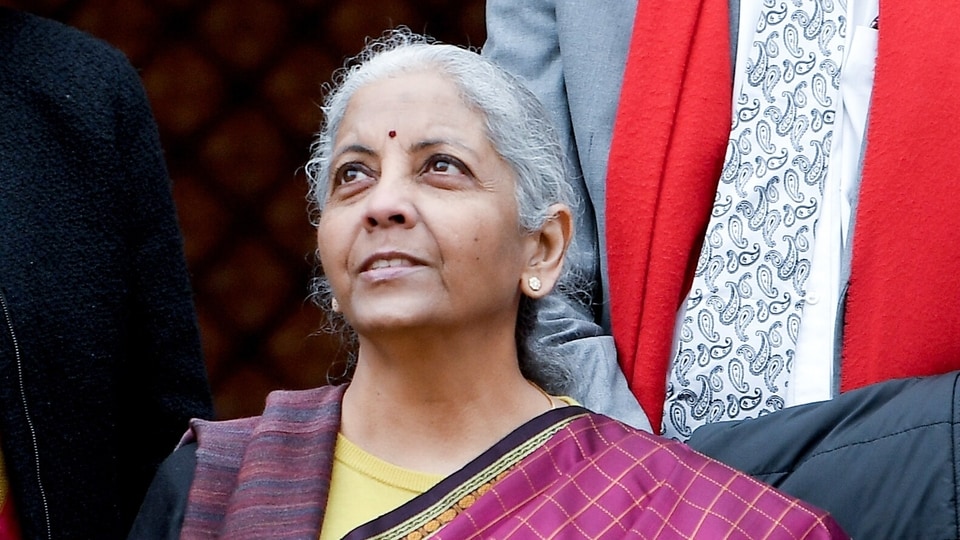
Sitharaman announced the launch of ‘Mahatma Gandhi Gram Swaraj’ as a handloom-focused scheme and asserted that the government wants reforms in the textile industry, particularly the khadi, handloom, and handicraft sectors.
It's just been a few weeks that the MGNREGA-based job scheme was replaced by the BJP-led NDA government with a new scheme, under the Viksit Bharat-Guarantee for Rozgar and Ajeevika Mission (Gramin) Act, or simply VB-G RAM G, using Lord Ram's name.
There continue to be several other schemes, roads and places named after Mahatma Gandhi, but MGNREGA was seen as a marquee scheme, the repeal of which led to serious allegations against PM Narendra Modi's regime.
What's the row over MGNREGA repeal?
The repeal of MGNREGA sparked large-scale protests by the opposition led by Congress, which had brought in the landmark scheme in 2005 that the then-opposition BJP had backed in a rare consensus in Parliament.
The controversy is centered not only on the potential loss of a legal "right to work" for millions of rural households, but also on the symbolic removal of Mahatma Gandhi’s name from the flagship scheme.
Opposition leaders have accused the government of attempting to erase the legacy of the ‘Father of the Nation’ while systematically dismantling the social safety net that sustained the rural economy for nearly two decades.
The government, however, maintains that the VB G-RAM-G scheme aims is more efficient, and focuses on “asset-linked employment” rather than “digging holes”.
Congress MP Rahul Gandhi, Leader of the Opposition in Lok Sabha, has framed the NDA's move as a direct assault on the poor and the foundational values of the country.
"By removing Mahatma Gandhi’s name, you cannot erase his ideas; but by killing MGNREGA, you are snatching the bread from the mouths of the poorest Indians," he said at a rally in Delhi. The party is now holding ‘Save MGNERGA’ rallies across states.
What new handloom scheme entails
Sitharaman, announcing the handloom scheme named after Mahatma Gandhi, gave some details on focus on the textile industry.
“I propose to set up mega textile parks in challenge mode. I propose to launch the Mahatma Gandhi Gram Swaraj initiative to strengthen khadi and handloom," Sitharaman said.
Khadi was popularised by Gandhi as measure of swaraj (self-governance) and swadeshi (indigenous) during the British colonial raj.
"Challenge mode" generally means a competitive selection process where entities such as states, cities, or organisations can submit proposals to win funding for specific projects.
The initiative announced by Sitharaman aims to provide global market linkages and branding support, while streamlining training, skilling, and production quality.
It is expected to benefit weavers, village industries, the One District One Product (ODOP) programme, and rural youth, as per her speech.
The focus on textiles included proposal for an integrated programme with five key components.
The first of these components a National Fibre Scheme, aimed at achieving self-reliance in natural fibres like silk, wool, and jute, as well as man-made and new industrial-age fibres.
The second is a Textile Expansion and Employment Scheme, to modernise traditional clusters by providing capital support.
The third is a National Handloom and Handicraft Programme designed to integrate and strengthen existing schemes while ensuring targeted support for weavers and artisans.
Focus of Union Budget 2026-27
Sitharaman created history by presenting her ninth consecutive Union Budget in Parliament, asserting that the "reform express" of the Narendra Modi-led National Democratic Alliance (NDA) government is well on its way and will continue to maintain momentum to fulfil its duties.
"Our government has decisively and consistently chosen action over ambivalence, and we have pursued far-reaching structural reforms, fiscal prudence and monetary stability, while maintaining a strong thrust on public investment," Sitharaman added.
Referring to global challenges, Sitharaman said India is facing an external environment in which trade and multilateralism are under strain.
She emphasised that India will continue to take confident steps towards ‘Viksit Bharat’ by balancing ambition with inclusion.


