
 E-Paper


Follow the latest breaking news, major developments and agenda-setting stories from India and around the world with the newsdesk at Hindustan Times. Operating round the clock, the desk brings together experienced editors, reporters and correspondents to deliver fast, accurate and contextual reporting across subjects that influence public policy, governance, business, society and international affairs. The HT News Desk covers politics, elections, government policies, the economy, business and markets, science and technology, the environment, law and order, infrastructure, education, climate issues and geopolitics, while closely tracking developments across states, institutions and global capitals. The team also leads coverage of major breaking news events, policy announcements, court proceedings, natural disasters, public emergencies and significant international developments. Reports published by the newsdesk are based on information gathered from reporters on the ground, official statements, government agencies, court records, regulatory filings, recognised institutions and other authoritative sources. Stories undergo editorial scrutiny and verification processes to ensure accuracy, fairness and relevance, and are updated as events evolve and additional information becomes available. Whether covering a key political decision in New Delhi, an economic policy shift affecting millions, a landmark court ruling or a major global event, the HT News Desk aims to provide readers with reliable, fact-based journalism that delivers not only the latest developments but also the context and analysis needed to understand their wider implications.
NIA planning to file closure report in Italian mariners’ case
his comes after the Centre on Thursday asked the Supreme Court to dispose of the matter related to the jurisdictional issues of the case as it has agreed to accept a UN tribunal’s ruling that the two marines cannot be prosecuted.


The National Investigation Agency (NIA) plans to close its case against Italian marines for killing two Indian fishermen off the Kerala coast in 2012, two officials familiar with the matter said on Saturday.
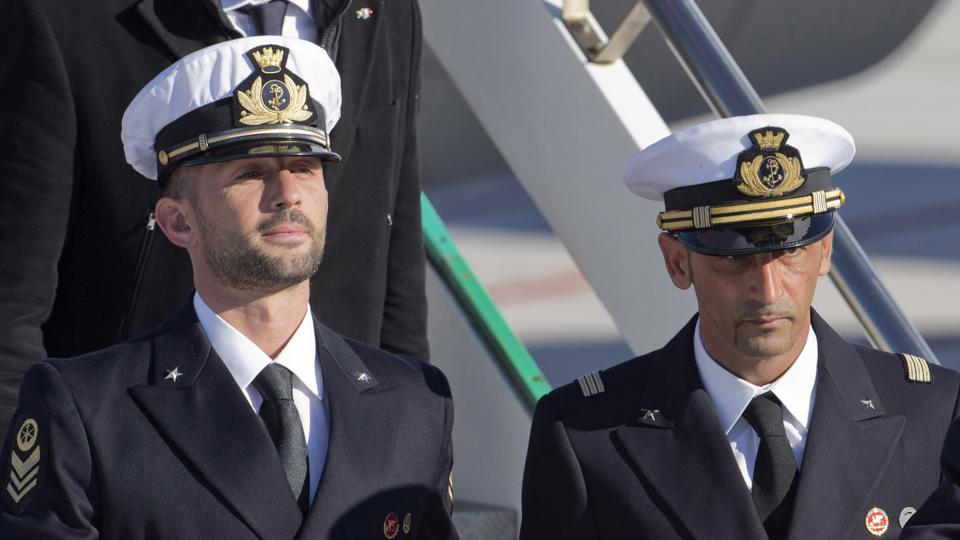
This comes after the Centre on Thursday asked the Supreme Court to dispose of the matter related to the jurisdictional issues of the case as it has agreed to accept a UN tribunal’s ruling that the two marines cannot be prosecuted. The five-member arbitral tribunal, under the UN Convention on the Law of the Sea, said India is entitled to compensation in the case but said the marines deserve immunity and that India is “precluded from exercising its jurisdiction”.
Also read: India to follow UN court order in Italian Marines case, Supreme Court told
The officials cited above said they will file a closure report in the case in a few weeks after getting a go-ahead from the Union home ministry. “The case is more or less null and void now,” an official said on condition of anonymity.
The official added that the report will be filed before the court of additional sessions judge-1 at New Delhi’s Patiala House Courts, which was designated for the case when it was filed in April 2013.
The marines, Massimiliano Latorre and Salvatore Girone, moved the Supreme Court against a May 2012 judgment of the Kerala high court, which held the state government had the jurisdiction to try them. The high court ruled the marines enjoyed no state immunity since their act of shooting was neither in the defence of the vessel nor the state. The matter is pending before the Supreme Court, which granted the marines conditional bail and allowed them to return to Italy in 2016.
Kerala chief minister Pinarayi Vijayan has opposed the withdrawal of the case against the marines and asked the Centre to explore the possibility of a review petition.
Also read: Kerala CM writes to PM Modi seeking trial in Italy of marines who killed 2 fishermen
The two fishermen were killed after the marines fired upon them from an oil tanker they were deployed at to guard against pirates. The ship was intercepted and brought to Kochi, where the marines were arrested and charged with murder.
The officials cited above said NIA assigned a deputy superintendent-rank officer to complete its probe in the case when it took over the matter. NIA finalised a charge sheet against the marines in November 2013, when the probe report was submitted to the home ministry.
The ministry gave the sanction to prosecute the marines in January 2014 under the Suppression of Unlawful Acts against Safety of Maritime Navigation and Fixed Platforms on Continental Shelf Act and for murder and attempt to murder. The ministry in February 2014 withdrew the charges under the Act, which provides for a death penalty, the officials said.
NIA was then asked to go ahead with its charge sheet related to murder, attempt to murder and causing damage to the boat of the fishermen.
A second official said six other crew members of the oil tanker were summoned to India to record their statements, but Italy refused to send them. “So we had to record their statements through audio and video means on November 11, 2013. We had also collected other evidence including post mortem reports, forensic evidence and statements of witnesses on Indian fishing boat,” said the second officer. “At every step, Italy tried to delay the proceedings.”
India informed the tribunal that Italy was delaying the trial. During the final arguments in the case at The Hague on July 8 last year, India’s representative, G Balasubramanian, told the tribunal, “Given the status of work of investigating agencies in this process of criminal prosecution, the case has been practically ready for trial for some time. It is Italy which is not allowing the prosecution to progress further.”
The tribunal said the marines enjoyed immunity since they were exercising official functions in their capacity as Italian state officials and ordered India to stop criminal proceedings against them.
International law expert Zulfiqar Memon called it a failure. “It shows that the life of poor Indian fishermen has no value when compared to the accused who happen to be citizens of a powerful European nation who are protected under immunity,” said Memon. He added the compensation cannot undo the irreversible damage the killings caused. “We must ask ourselves, as to what extent we have actually gone to seek justice for our citizens as compared to what Italy has done for its.”


