
 E-Paper



Nine-judge SC bench rules in favour of states to regulate industrial alcohol
This is the second consecutive victory for states with regard to powers to tax.

 Prefer HTon Google


The Supreme Court on Wednesday, through an 8:1 majority ruling, maintained that states have regulatory power over production, manufacture and supply of industrial alcohol, overturning a seven-judge bench verdict and ending a long-standing dispute over the power-tussle between the Centre and states.
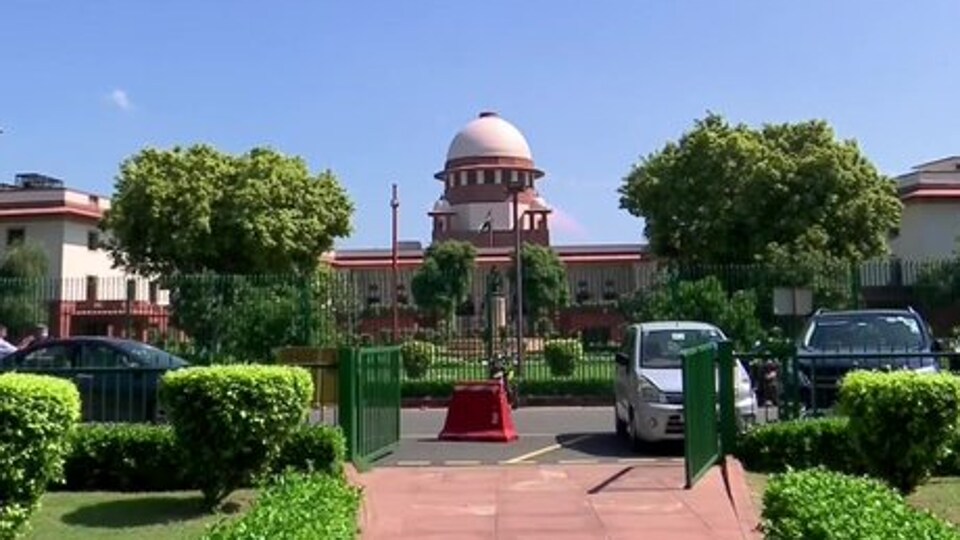
“This judgment has confounded generations of lawyers,” Chief Justice of India (CJI) Dhananjaya Y Chandrachud, who headed the bench, said, as the present proceedings arising in a batch of 30 appeals, filed mostly by states, challenged the correctness of a 1990 judgment of the top court in Synthetic and Chemicals Ltd, which took away state’s power over industrial alcohol.
The majority verdict authored by the CJI overruled the 1990 judgment and said that the power of states to legislate on industrial alcohol will fall under Entry 8 of List 2 (State List) dealing with ‘intoxicating liquor’ and cannot be taken over by Parliament, which claimed legislative power under Entry 52 of List 1 (Union List) dealing with ‘Industries’ in general.
The majority ruling, comprising justices Hrishikesh Roy, AS Oka, JB Pardiwala, Ujjal Bhuyan, Manoj Misra, SC Sharma and AG Masih, shared the view of CJI, while the dissenting view was given by justice BV Nagarathna.
The court held that the phrase ‘intoxicating liquor’ in Entry 8 goes beyond alcoholic beverages and will include alcohol not meant for human consumption. The bench reasoned that the meaning of ‘intoxicating liquor’ under Entry 8 would include all liquor which can be used to harm public health and thus cannot exclude the raw materials that go into its production.
Further, it said that the term ‘intoxicating’ is defined by its effect while the world alcohol is defined by its ingredient. ‘Intoxicating’, it said, could also mean poison and hence would acquire a broad meaning.
However, justice Nagarathna stated that vesting taxing rights with states will have deleterious effect and would stultify the two-tier political system envisaged under the Constitution. She further held that industrial alcohol was a field occupied by Centre and without any express notification allowing states to legislate on the subject, the power cannot be read as belonging to states under Entry 8. She upheld the 1990 decision to be correct.
The state governments of Uttar Pradesh, West Bengal, Maharashtra, Punjab and Kerala among others who filed the appeals, claimed that states have exclusive power to regulate the production, manufacture, possession, transport, purchase and sale of all intoxicating liquors. They argued that this included industrial alcohol, as the base material for preparing alcoholic beverages is rectified spirit or extra neutral alcohol (ENA), that fall well within its control for purposes of licenses, excise fee, etc.
The Centre, on the other hand, argued that the field of “alcohol” is occupied by Section 18G of the Industries (Development and Regulation) Act, 1951, and the only form of alcohol which is excluded under this provision is “potable liquor” on which only state can regulate. Solicitor General Tushar Mehta in his final submissions before the court said that alcohol has a wide and expansive meaning and is used in several industries. He said that even ENA is produced from either molasses or grain and is not fit for human consumption and will fall within Centre’s control.
The Centre relied on two legislative entries to derive its control over industrial alcohol, one being Entry 52 of List I and Entry 33 of List III (Concurrent List) that gives it power over the subject of “trade and commerce in, and the production, supply and distribution of the products of any industry where the control of such industry by the Union is declared by Parliament by law to be expedient in the public interest.” It further stated that the 1951 Act was passed by Parliament under these two heads.
The Union government had backed the 1990 judgment and submitted that the control of Centre over industries is in “public interest”, while further adding, “When it comes to progress and development of country at a national level, which needs to be nationally integrated and for the said object, a coordinated national level approach is needed, the Centre exercising the powers in the larger interest of collective development of all federating units shall also be a part of federalism.”
The matter was referred to a nine-judge bench in October 2007 and the hearing in the case was taken up last month. The case was heard on six dates before orders were reserved by the court.
This is the second consecutive victory for states with regard to taxing powers after a 9-judge bench in July this year ruled that states have power to levy tax on mines and minerals.


