
 E-Paper



‘Not a desirable situation’: SC slams states for delaying nod for CBI probes
Expressing its views on registration of a suo motu PIL over inordinate delay by eight states, the SC bench said that the matter should be placed before the Chief Justice of India for his consideration and appropriate orders


The Supreme Court on Monday favoured suo motu (on its own motion) registration of a public interest litigation (PIL) over inordinate delay by eight states in the country, including West Bengal, Kerala, Maharashtra and Punjab, in deciding requests of the Central Bureau of Investigation (CBI) to carry out investigations in more than a hundred cases.
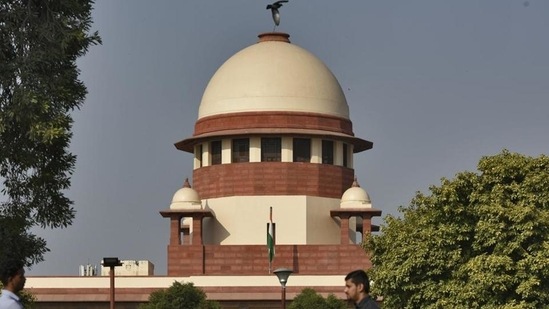
“This is certainly not a desirable situation,” said a bench of justices Sanjay Kishan Kaul and MM Sundresh, as it came across the data submitted to the court by CBI director Subodh Kumar Jaiswal on how the investigations were yet to take off for want of a go-ahead by eight states that have withdrawn the general consent from the agency to conduct probe in their territories.
The bench noted that the issue was serious, and required urgent attention in view of the CBI’s assertions that crucial evidence in economic offences of high magnitudes are getting disappeared or destroyed while the states do not respond to the agency’s requests.
Expressing its views on registration of a suo motu PIL, the bench said that the matter should be placed before the Chief Justice of India (CJI) for his consideration and appropriate orders.
Jaiswal on October 18 filed his personal affidavit in response to posers by the court on September 3, asking the director to place relevant data on the cases being prosecuted by the agency throughout the country; their success rate in securing conviction; and the impediments in completing investigations in a timebound manner.
Jaiswal, apart from disclosing that the agency has maintained a success rate of about 65-70% in getting conviction over the last 10 years and that it intends to improve this average to 75% by August 2022, cited the agency’s predicament in completing investigation in cases where the state concerned has withdrawn the general consent, requiring CBI to obtain the state’s consent on a case-by-case basis.
His affidavit stated that CBI has sent over 150 requests to the governments of Maharashtra, Punjab, Chhattisgarh, Rajasthan, Jharkhand, West Bengal, Kerala and Mizoram between 2018 and June 2021 for grant of specific consent for investigation of cases in the territory of these states but approvals were granted in less than 18% cases.
Jaiswal highlighted that the cases in which the states agreed for a CBI probe chiefly related to trap of corrupt central public servants, while requests in approximately 78% cases pertaining to bank frauds of high magnitude impacting the economy of the country remained pending.
“The delay caused in taking up cases by CBI due to any of the reasons mentioned above, at times, leads to destruction or dissipation of evidence. This is detrimental not only for the investigation by the CBI but also for subsequent prosecution of cases,” lamented Jaiswal.
On Monday, additional solicitor general Sanjay Jain and advocate Sanjay Tyagi, appeared for CBI and referred to Jaiswal’s affidavit.
Another aspect in Jaswal’s affidavit that the court highlighted in its order pertained to holding up of trials because of stay orders granted by the Supreme Court and high courts despite the top court’s directives in 2018 disapproving of an indefinite stay on trials.
The statistics submitted by the CBI director showed that trials were stayed in 367 cases of 9,757 pending cases. The oldest instance of stay on trial was from the Calcutta high court, where two corruption cases remain suspended since April 1991. Similarly, in one case, the stay on the trial from the Supreme Court has been operating since August 2000.
The bench said that both these aspects are important and should be placed before CJI NV Ramana for issuing appropriate orders on registration of a PIL to deal with the subject matter.
The court was hearing a matter arising out of the CBI’s appeal from a 2018 judgment of the Jammu & Kashmir high court. By this judgment, the high court let off some lawyers from the charges of fabricating false evidence against a few security forces personnel to frame them in a case of rape and murder. While the two girls from Shopian due to drowning in March 2009, CBI claimed that some lawyers and doctors created false evidence of rape and murder to implicate personnel of security forces.
However, it took CBI more than a year to file its appeal against this order. In January, the top court sought an explanation from the department noting the delay in filing the case “shows clearly gross incompetence in the legal department of CBI which raises serious questions of its efficacy to prosecute the case”.
When the agency submitted its explanation for the delay in February, the bench called it “a saga of gross negligence in performing duties” while asking, this time, the CBI director to file his personal affidavit as to what steps are being taken to ensure proper functioning of prosecution of legal cases.
Subsequently, then CBI director Rishi Kumar Shukla filed his affidavit in March 2020 apologising for the inordinate delay in filing the appeal. The director pointed out that a new set of instructions with stipulated timelines have been issued to streamline the process of filing and monitoring of appeals filed by the agency.
But, in September, the bench called upon the new CBI director to submit relevant data on the agency’s success rate, observing that an analysis of CBI’s working must be done and that the “premier investigating agency” cannot simply launch prosecutions and then not bother about their outcome.
On Monday, the bench also issued a notice on CBI’s petition in the case while imposing a penalty of ₹25,000 on the officers guilty of causing delay in filing the appeal before the top court.


