
 E-Paper



Not proved beyond reasonable doubt: Goa court while acquitting Tejpal
The court referred to evidence on record and added the benefit of the doubt was given to the accused because there is no corroborative evidence supporting the allegations


The fast-track court, which on Friday acquitted former Tehelka magazine editor Tarun Tejpal of rape and sexual assault, said the prosecution failed to prove the case beyond reasonable doubt while pulling up the Goa Police for trying to suppress crucial pieces of evidence. It cited facts on record and said they create a doubt on the truthfulness of the prosecutrix. “There is also no medical evidence on record on account of delay in lodging of the FIR [First Information Report] and as the prosecutrix had refused to go for medical examination,” said judge Kshama Joshi in her judgment, copies of the which were made available to the parties on Tuesday. “The allegations made by the prosecutrix cannot be said to have been proved beyond [a] reasonable doubt.”
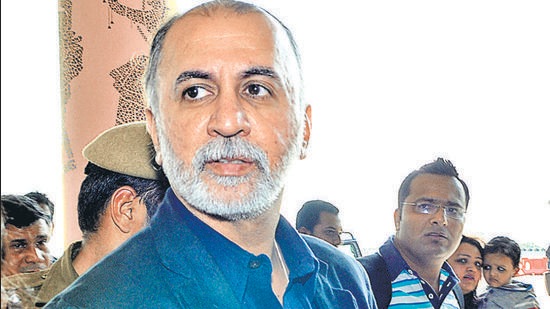
The court referred to evidence on record and added the benefit of the doubt was given to the accused because there is no corroborative evidence supporting the allegations. “In this case, the prosecution has failed to discharge the burden proving the guilt of the accused beyond a reasonable doubt.”
Also Read | Goa’s Mandovi river was cleaner during lockdown months, study confirms
Much of the prosecution’s case focussed on the CCTV footage of the corridors of the hotel, where a former colleague of Tejpal accused him of sexually assaulting him in an elevator during a conference in 2013. There were no CCTV cameras inside the elevators. The prosecution relied on the footage from the corridors.
The court found the prosecution preserved footage of the hotel’s ground and second floors while that of the first floor was missing.
Tejpal’s lawyers accused the investigation officer (IO) in the case of carrying out an unfair investigation to implicate him. “All the evidence documents/that conclude and prove the innocence of the accused have been intentionally suppressed and any line of questioning that can contradict, challenge or prove as outright false the prosecutrix’s version has simply not been conducted so that it is ensured that any such circumstances and evidence in favour of the accused do not see the light of the court,” the defence told the court.
“The IO has, in some cases such as the CCTV footage of the first floor Block 7 of... [the hotel], entirely destroyed evidence, knowing that it is necessary for the investigating officer to gather all the evidence through investigation.”
The court also took issue with the complainant and the IO being the same person. “[The IO] has admitted that she didn’t move any proposal before her superiors that she being the complainant, the investigation should be handed over to some other officer and claimed that her superiors directed her to investigate the offence. Despite the availability of another Lady Police Inspector of the Crime Branch, the Investigating Officer and her superiors malafidely retained the investigation with the IO who was also the complainant,” the court said.
The Goa Police took cognisance of the case on its own when an email Tejpal wrote on the matter became public. Tejpal referred to an “unfortunate incident” between himself and the colleague in the leaked e-mail to Tehelka’s management in 2013. He described the incident “bad lapse of judgment” in the e-mail. But in another note later, he said that he was being “framed”.
The Goa government on Tuesday said it will move the high court against the fast-track court’s verdict on Thursday.
The case hit the headlines for weeks amid a renewed focus on crimes against women. It surfaced a year after the rape and murder of a 23-year-old student on a moving bus in Delhi provoked national outrage and prompted the government to pass tougher laws to check such crimes. The allegations against Tejpal also triggered a debate on harassment of women at workplaces and underreporting of such cases over fears of job losses and persecution.
Tejpal faced the trial under India Penal Code’s Sections 376 (rape), 354 A (sexual harassment), 354 B (criminal assault with intent to disrobe a woman), 341 (wrongful restraint), and 342 (wrongful confinement).


