
 E-Paper



‘Nothing normal’ with Trump, Canada looks to India: What's in it for Delhi? Critical minerals, n-energy fuel, and more
Canadian minister Tim Hodgson, at event in Goa, said India’s growth in energy demand an opportunity as Canada holds vast supplies of oil, gas, critical minerals

 Prefer HTon Google


In a rapidly shifting global landscape defined by tariff threats from Donald Trump's America, India is now emerging as a premier partner for major economies seeking to "de-risk" their countries' futures.
This reset also thaws India's relationships that have been frosty in recent times — most prominently with Canada, where energy and critical minerals are New Delhi's interests.
Positive signs from India Energy Week
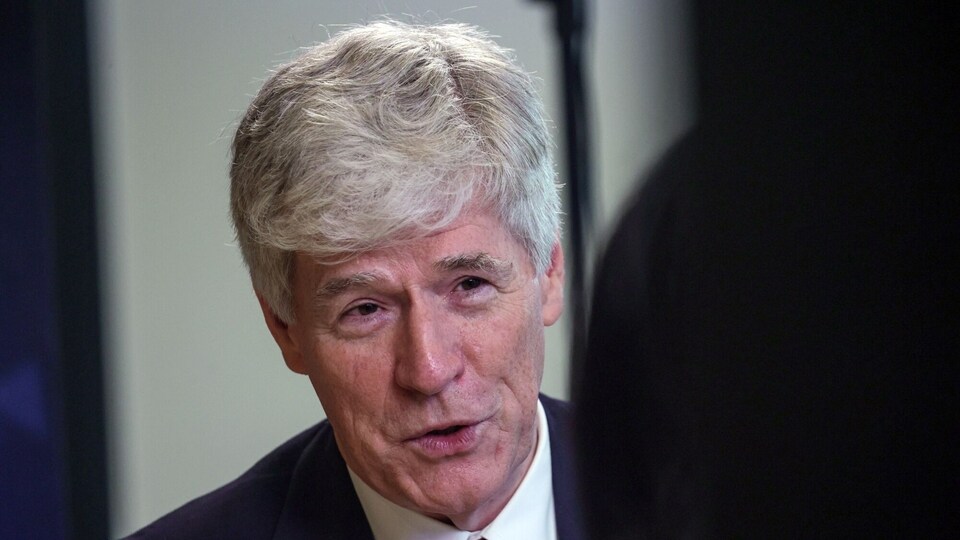
Canadian energy and natural resources minister Tim Hodgson, speaking at India Energy Week in Goa, said India’s expected growth in energy demand represents a “great opportunity” for Canada, which holds vast supplies of oil, gas, and critical minerals.
“We produce 6% of the world’s oil today and India gets less than 1% of its oil from Canada,” Hodgson noted, adding that increasing this share would make both nations "stronger, more resilient and secure".
The diplomatic shift is driven by a need to look beyond the North American border as US President Trump ramps up economic pressure on Canada and, in fact, on a long list of countries, historic allies included.
Headed to India, PM Carney caustic on Trump
Canadian PM Mark Carney is headed to India in March, reports say, and deals would cover uranium, gas, and other sectors.
"The world has changed. Washington has changed. There's almost nothing normal in the United States now. That's the truth," PM Carney told the Canadian Parliament.
The speech followed a combative address at Davos. “Let me be direct. We are in the midst of a rupture, not a transition,” he said at the World Economic Forum in the Swiss town. Further in a phone call with Donald Trump on Monday, the Canadian PM said he told the US President that he stands by every word he said in Davos.
Energy minister Hodgson spoke along similar lines in Goa. “We used to be in a world where we sought to integrate with our closest trading partners, and we now find that that integration is used for coercion” or tariffs are used to gain leverage, Hodgson said.
EU deal sone, what India can gain from Canada
Canada now needs to “rewire its economy” and build relationships beyond those with its neighbors, he said, as per a Bloomberg news report.
More directly, Ottawa looking at potentially providing its uranium to help India reach its goal of 100 gigawatts of nuclear capacity by 2047, which PM Narendra Modi has set as the target year for a Viksit Bharat or developed India.
Modi is buoyed by the recent free trade agreement with European Union. Canada’s aggressive pivot towards New Delhi also means that the Justin Trudeau era — when Ottawa was hostile towards India and even alleged the Modi regime's role in the killing of a Sikh separatist leader on its soil — has been pushed into the past as Trump's threats and actions define a new global future.
While Canada focuses on minerals, the EU has already cemented its partnership with what has been termed the “mother of all deals”.
Signed on January 27, 2026, the India-EU FTA creates a market of two billion people, accounting for nearly a fourth of global GDP.
The agreement, though in the works for almost two decades but hastened more recently, is apparently intended also to counter the Trump administration. Under the deal, the EU will eliminate or reduce tariffs on nearly 97% of its goods' exports to India, while India will see the EU scrap all tariffs on 90% of Indian goods.
PM Modi hailed the signing as a “perfect example of a partnership”. EU chief Ursula von der Leyen echoed his sentiment.
India and Canada, for the record, find themselves in a similar predicament regarding Trump’s trade policies. Currently, India faces a 50% tariff from the US (including a 25% penalty over Russian oil purchases), while Canada faces 35%.
Canada's urgency is palpable. Its foreign minister Anita Anand, who happens to have Indian family roots, has been blunt about the necessity of a pivot, directly commenting on Trump's threats: "Canada will never be the 51st state.”
She also said her country will double its non-US export trade within a decade. "That is why we went to China, that’s why we will be going to India and that is why we won’t put all our eggs in one basket," Anand has asserted.
For critical minerals, delegation from India to head to Canada soon
Also in Goa, at the event with his Canadian counterpart, India's oil minister Hardeep Singh Puri said on Tuesday that India is keen on investing in extraction of critical minerals in Canada, and will mount a delegation soon to discuss joint collaboration in the sector. Talking to reporters after meeting Hodgson on the sidelines of the India Energy Week, Puri said the two sides agreed to deepen bilateral energy trade.
State-owned Oil India Limited (OIL) under his ministry is part of a group that's looking at securing critical minerals like lithium, cobalt and rare earth elements that are essential for manufacturing electric vehicle (EV) batteries, solar panels, wind turbines, and defence equipment.
OIL chairman Ranjit Rath said a delegation will soon visit Canada.

A joint statement issued after the meeting between Puri and Hodgson said: “Canada has stated its goal of becoming an energy superpower in clean and conventional energy, with export diversification as a priority while India, as the epicentre of the global energy landscape, offers a natural and symbiotic partnership grounded in scale, stability, and long-term opportunity.”
With a one-party-run China controlling the majority of current supplies of critical earths, Canada and others are also looking at India's being a democracy as a big plus when choosing partners besides Beijing.
“India, as a major consumer and Canada as a safe, secure and reliable supplier, can act in partnership,” the minister's joint statement further said.
(inputs from Bloomberg, Reuters, PTI)


