
 E-Paper



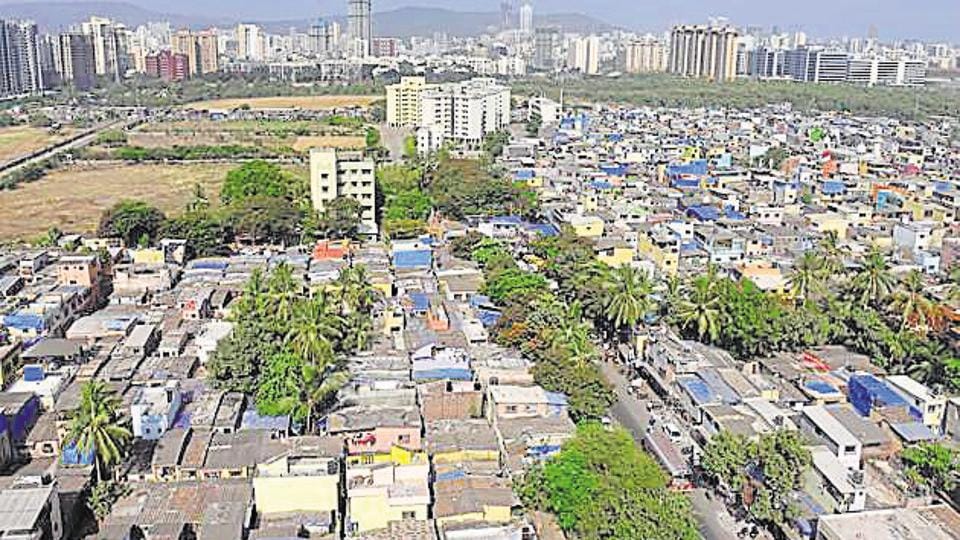
Odisha, Chhattisgarh, Jharkhand, Tamil Nadu, Bihar: 5 states have half of India’s slums
In 2008-09, Tamil Nadu had the highest share of India’s slums or 30%, the only state with a share in double digits.

 Prefer HTon Google


The top five states by number of slums per 100 households– Chhattisgarh (18), Odisha (17), Jharkhand (14), Tamil Nadu (11) and Bihar (10) – in 2008-09, the latest year for which household data are available, had 51% of India’s slums, according to a paper.
The top five by number of slums per 100 households are the only states/union territories with more than 10% of their population living in slums, said the September 2017 paper by HS Chopra, project director in Rajasthan’s rural development department.
Source: Ministry Of Statistics & Programme Implementation
Note: Data not available for other states
In 2008-09, Tamil Nadu had the highest share of India’s slums at 931,169 or 30%, the only state/Union Territory with a share in double digits.
Households that lacked a concrete roof, drinking water, a latrine and closed drainage – the criteria laid down by an August 2010 report of the slum census committee – in the 2008-09 survey data of the National Sample Survey Office, India’s official socio-economic surveyor, were counted as slums.
A slum is defined as “a compact settlement of at least 20 households with slum-like conditions as given in the above criteria”, according to the paper.
Overall, 3.15 million–about 28% less than the Census 2011 figure of 4.4 million – or 5% of India’s households were slums in 2008-09.
The only communities with more than 10% of their population living in slums were scheduled castes and scheduled tribes, deprived communities identified in India’s constitution for government support.
Source: Ministry Of Statistics & Programme Implementation
In urban India, 60% slums are on government land with 40% owned by urban local bodies, according to the draft National Urban Rental Housing Policy 2015.
The share of slums with a health centre and a primary school within 1km fell 16 and 3 percentage points, respectively, to 47% and 87% in 2009 from 63% and 90% in 1993, according to the housing and urban poverty alleviation ministry’s 2015 statistical compendium on slums.
In Mumbai – home to the world’s third largest slum by population, Dharavi – 90% of deaths result from respiratory diseases, according to a survey by International Institute of Population Sciences, Mumbai, the Indian Express reported on August 7, 2015. Apart from Dharavi, slums in Mumbai’s suburbs too were growing to become at least as big as Dharavi, The Times of India reported on July 6, 2011. Despite having India’s largest slums, only 3.7% of Maharashtra’s 9.8 million households were in slums, and only one in 100 households in the state was in a slum in 2008-09.
Slum dwellers often sell homes that the government relocates them to because these end up being far from their workplaces, according to Saudamini Das at Delhi University’s Institute Of Economic Growth, City Labs reported on June 9, 2017.
(Vipul Vivek is an analyst with IndiaSpend)
Published in arrangement with IndiaSpend.


