
 E-Paper



Odisha plans new assembly that can accommodate 300 MLAs
Phase I will prioritise the construction of a new secretariat-cum-mantralaya adjacent to Kharvela Bhawan and the OSEPA campus


Bhubaneswar: Odisha chief minister Mohan Charan Majhi on Monday laid the foundation stone for the construction of a new assembly building and Lok Seva Bhavan.
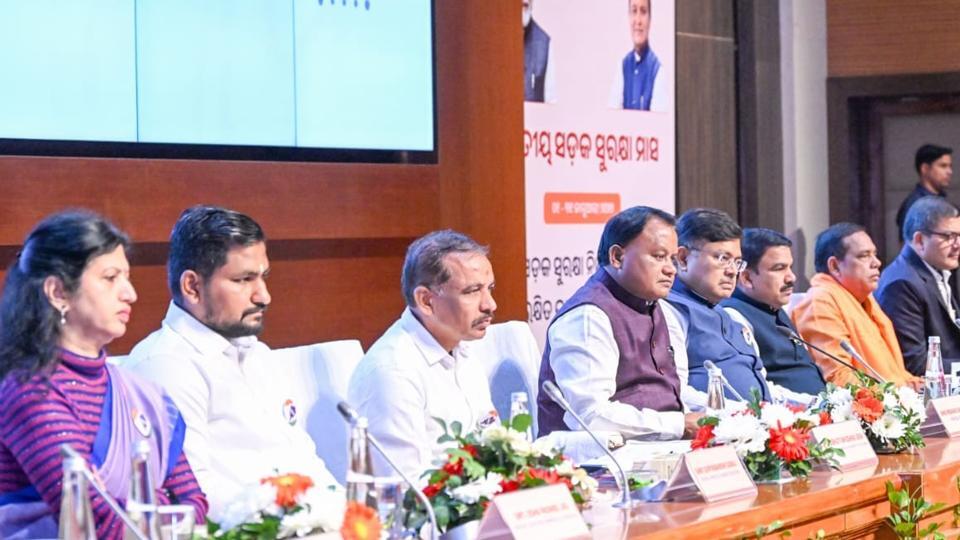
The chief minister said the proposed assembly building would have a modern meeting hall with a seating capacity of 300 members. “Today, we have 147 MLAs, which could increase after delimitation. I am not sure, but after delimitation, the number of members could be 200. Therefore, we have to construct a new assembly building keeping in view for the next 50/100 years,” Majhi said at the event.
Odisha is also planning a 49-member state legislative council.
The mammoth project, estimated to cost ₹3,623 crore, will unfold across 71 acres in two phases, and is inspired by Delhi’s central Vista redevelopment to create an integrated administrative hub.
State public works department minister Prithviraj Harichandan said the expansion of government departments and employees over the years has created an urgent need for modern administrative infrastructure.
Phase I will prioritise the construction of a new secretariat-cum-mantralaya adjacent to Kharvela Bhawan and the OSEPA campus. The 12-storey structure — featuring three basement levels, a ground floor, and 11 upper floors — will be a huge change to the current arrangement where ministers’ chambers are scattered across two floors, disconnected from their departments.
The new design allocates dedicated chambers, lobbies, and conference halls for each department, promising enhanced coordination and administrative efficiency.
To accommodate departments displaced during construction, a second 12-storey office building will come up between the Police Commissionerate and Nirman Soudha. A three-level underground parking facility fronting the present Lok Seva Bhawan will address the perennial space crunch.
Phase II will focus on the centrepiece — the new state Assembly building. The structure will comprise three basements, a ground floor, and a single-storey superstructure, designed with flexibility to house 300 legislators. An annex secretariat building (3B+G+9 configuration) and a service building (B+G+1) will complement the main Assembly. Additionally, a 12-storey office complex is planned for the old Nirman Soudha campus.
Majhi said that while Phase I construction would commence at the earliest, the new assembly building would become operational only after the state receives permission to establish the upper house, or Vidhan Parishad.
The Central Vista-style architectural framework promises to integrate both the assembly and Lok Seva Bhavan within a single cohesive campus, a departure from the fragmented administrative layout of the state government.
Majhi also laid the foundation stone for a dedicated elevated corridor from Jaydev Vihar to Nandankanan in Bhubaneswar, costing ₹952 crore. This project will include flyovers at key junctions such as Jaydev Vihar, Kalinga Hospital Square, Damana Square, and KIIT Square. This included a planned 4-lane cable-stayed bridge at Jaydev Vihar Square.
Harichandan said to promote environmental sustainability, 22,410 trees will also be planted along both sides of the corridor.



