E-Paper



Odisha to probe use of leftover wood from Puri at Digha’s Jagannath temple
Harichandan said the probe seeks to uncover the truth about a claim that was made and that “appropriate action” will be taken against those found guilty.

 Prefer HTon Google


Odisha law minister Prithiviraj Harichandan on Friday told the Shree Jagannath Temple Administration chief Arabinda Padhee to investigate claims that surplus sacred neem wood from the 2015 Nabakalebara ceremony at Puri’s 12th-century Jagannath Temple was used to create idols for West Bengal’s Jagannath temple opened in Digha this week.
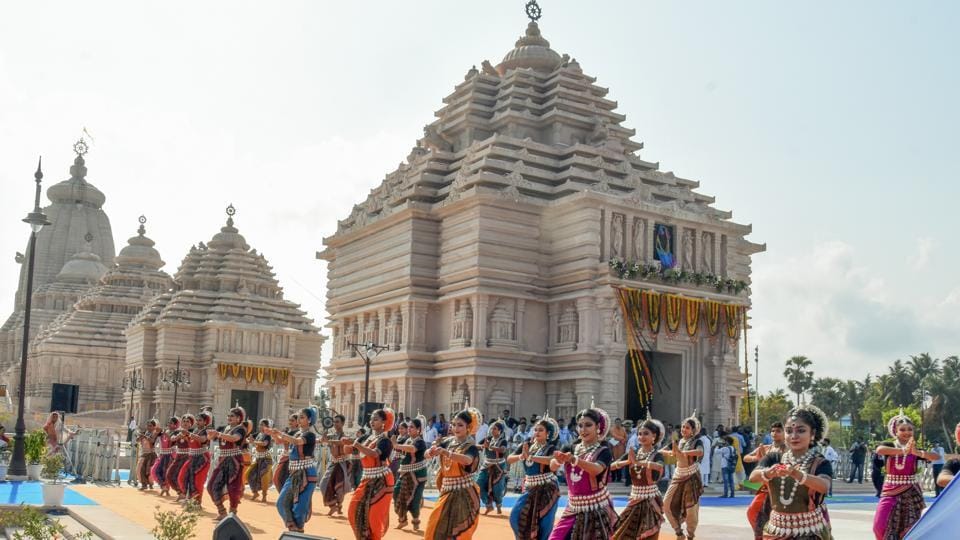
The Nabakalebara ritual involves the renewal of the wooden idols of Lord Jagannath, Lord Balabhadra, Goddess Subhadra, and Sri Sudarshan using sacred neem wood (Daru).
Harichandan said the probe seeks to uncover the truth about a claim that was made and that “appropriate action” will be taken against those found guilty.
Odisha’s probe was triggered by reports that Ramakrushna Dasmahapatra, a senior Daitapati servitor from Puri who attended the Digha temple’s inauguration, claimed he transported surplus Daru from the 2015 Nabakalebara to craft the Digha idols.
According to reports from Bengal, Dasmahapatra reportedly told reporters that the wood was leftover from the sacred trees collected under the guidance of Devi Mangala of Kakatpur.

But after an adverse reaction in Odisha, Dasmahapatra denied having made the claim at a news conference convened in Puri on Friday. He said the video clips of his statement were “morphed or intentionally edited.”
The idols for the Digha temple, he said in Puri, were made from ordinary neem wood and said he was invited to perform rituals at the temple by West Bengal chief minister Mamata Banerjee, whom he described as a disciple.
The Jagannth temple in Digha, constructed by the West Bengal Housing Infrastructure Development Corporation (WBHIDCO) on a 24-acre coastal site, mirrors Puri’s temple in design, and stands at 213 feet—nearly identical to Puri’s 214-foot height.
There is concern in Odisha that the Digha temple, backed by Banerjee’s government, could threaten Puri’s tourism-driven economy. The naming of the temple as “Jagannath Dham” and its promotion as a cultural and religious hub have fuelled fears that it could divert pilgrims from Puri.
Except former Bengal BJP president Dilip Ghosh, other BJP leaders stayed away from the consecration of the temple in Digha while Banerjee camped in the district for the event.
On Friday, Trinmool Congress (TMC) also hit back at the Bharatiya Janata Party (BJP) and its ministers in Odisha, accusing them of trying to malign Bengal’s efforts to build a Hindu temple.
“The BJP calls itself a Hindutva party but tries to tarnish a temple dedicated to Lord Jagannath. This exposes their hypocrisy,” said TMC spokesman Jay Prakash Majumdar, framing the temple as a cultural milestone rather than a rival to Puri. He said the BJP’s criticism reflects frustration over their inability to counter Banerjee’s initiatives.
The Odisha government and Puri’s servitor community said the alleged use of sacred wood and the temple’s “Jagannath Dham” branding was an affront to Puri’s unique spiritual and cultural identity.
Several Nijogs (servitor associations) in Puri had previously barred members from participating in Digha’s rituals. But Dasmahapatra still went, despite being the secretary of a Nijog, and has drawn sharp criticism.
Senior Daitapati Binayak Dasmahapatra questioned how Ramakrushna could access the securely stored Daru, while former Nijog chief Durga Charan Dasmahapatra condemned his actions, promising a discussion at the next Nijog meeting.
On Thursday, sand artist Sudarsan Pattnaik expressed his concerns about Digha being called Jgannath Dham.
In a letter to Odisha chief minister Mohan Charan Majhi, Pattnaik said the statement had hurt sentiments of millions of Jagannath devotees. “According to our sacred scriptures, there exists only one Jagannath Dham, which is located in Puri. Associating any other temple with the title may lead to confusion and contradict long-standing spiritual and Hindu cultural traditions,” he said.