
 E-Paper



On India-China border situation, Army chief rules out ‘buffer zones’ along LAC
India and China completed disengagement at Depsang and Demchok in eastern Ladakh last October.

 Prefer HTon Google


Army chief General Upendra Dwivedi on Monday described the situation along the border with China as “stable but sensitive”, asserting there were no buffer zones along the Line of Actual Control (LAC).
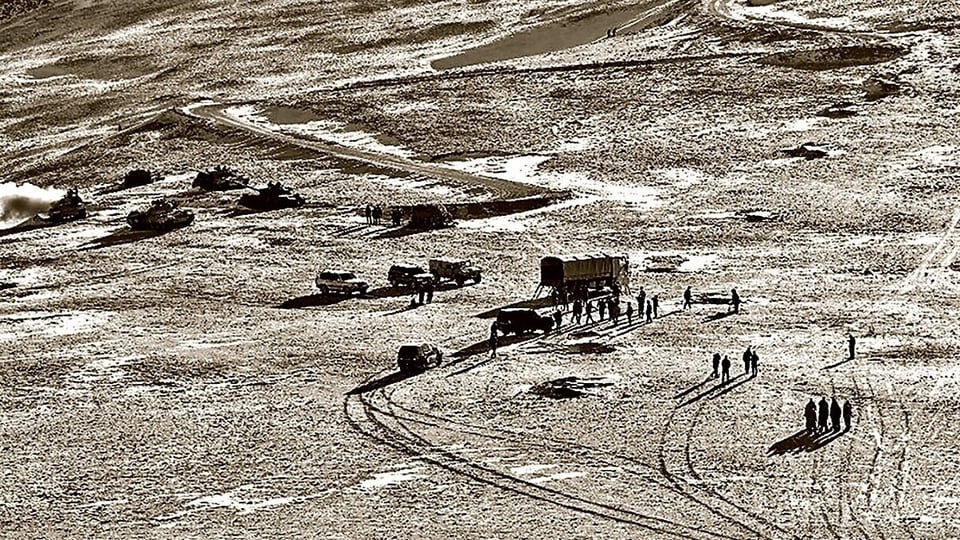
"It is stable but sensitive. There have been a series of meetings. Even the Prime Minister has met the Chinese head...Coming on to Depsang and Demchok, April 2029 onwards, both sides had moved forward and stopped the other side from going to the traditional areas where they were carrying out the patrolling," ANI quoted General Dwivedi as saying during his annual Army Day press conference.
ALSO READ: China building villages near Doklam in Bhutan: Satellite data
"As far as verification patrolling, two rounds have already been completed by both sides over a period of time and both are quite satisfied about it. As far as the grazing ground is concerned, they have now mutually agreed upon," he added.
The army chief said there is “nothing” called a buffer zone, adding,"Where you feel that the nature or the degree of violence can be high and the fuse is short, you create some distance. So when we carried out these negotiations over a period of time, some places were declared as a temporary moratorium."
ALSO READ: Narendra Modi to Xi Jinping: ‘Maintaining border peace priority’
“It means that both sides will remain back and will not go to the common areas because we still feel that if we meet at those places, the violence level may go high,” he said.
The army chief said that after April 20, the trust level between the two countries “has to have a new definition”.
"Therefore, there is a requirement for us to sit together and thereafter come to a broader understanding of how we want to calm down the situation and restore the trust. We are now looking forward to the next special representatives meeting, which should take place," ANI quoted General Dwivedi as saying.
India-China disengagement
India and China completed disengagement at Depsang and Demchok in eastern Ladakh last October.
As part of the disengagement process, both the Indian and Chinese armies pulled back their forward-deployed troops and equipment from the two flashpoints along the contested LAC.
They also dismantled temporary structures that had come up there after the military standoff began in May 2020.
(With ANI inputs)


