
 E-Paper



‘One family, one ticket’ rule in Congress reform plan
The Congress on Sunday pushed for sweeping internal reforms, including an age cap and youth quota in poll tickets and party posts for the first time.

 Prefer HTon Google


The Congress on Sunday pushed for sweeping internal reforms, including an age cap and youth quota in poll tickets and party posts for the first time, signalled an outreach to caste groups and young voters, announced a mega “Bharat Jodo Yatra” against polarisation, and resumed a district-level campaign on the precarious economic situation.
For the first time, India’s grand old party decided to allot 50% seats to candidates below 50 years of age, starting from the 2024 Lok Sabha elections. The Udaipur declaration also added that the party will decide on an age cap for candidates for the Lok Sabha, state assemblies and other elected posts in the future, even as a proposal to provide 50% reservation to scheduled castes and tribes and minorities was not immediately accepted.
Creating more space for new faces and young leaders in the organisation, the party announced that one family would not get more than one ticket, but added a caveat that those who have worked for five years in the organisation can be eligible for poll tickets. It also decided to restrict, for the first time, organisational posts for five years following a three-year cooling off period for office bearers.
In the Congress’s “Nav Sankalp” declaration that was adopted at the end of the three-day “Chintan Shivir” in Udaipur, the party also decided to set up a public insight department, a national training institute and an election management department.
The party also decided to establish intermediary “Mandal Congress Committees” between booth and block committees.
The ruling Bharatiya Janata Party has already put in place some of the restrictions. After Narendra Modi became Prime Minister, the party decided not to give tickets to those who are above 75 years of age. It also allows upto two consecutive terms for its president.
The Congress, which created new cells such as data analytics and research in recent years, decided to add an election management department to exclusively handle all poll-related issues. A senior leader added that the new body will come with a single goal and would work round the year, preparing in advance for upcoming elections.
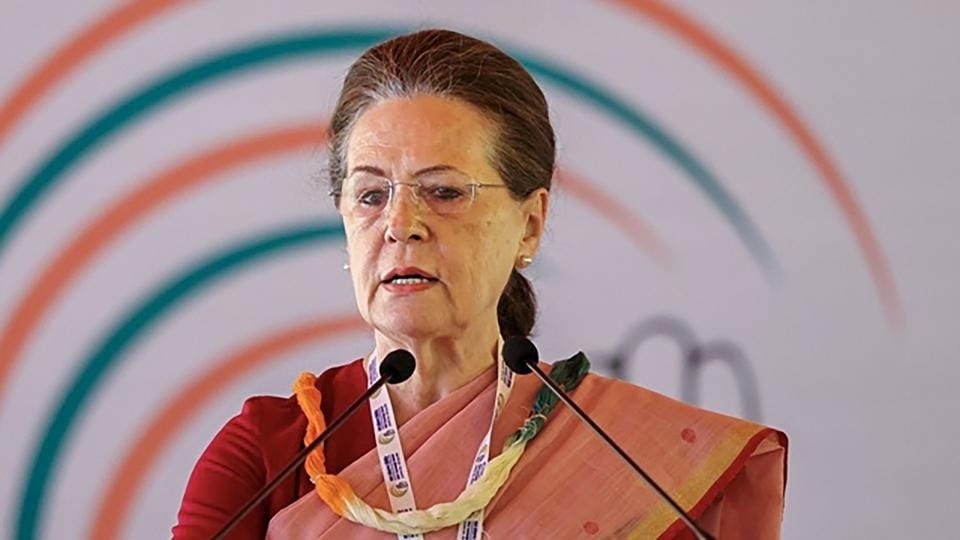
Congress president Sonia Gandhi announced that a new advisory panel will be established to assist the party chief. The panel will have some members of the working committee and while the panel usually meets once in every quarter, the new body can meet more frequently. And while the key demand of the G23 leaders to revive the parliamentary board was rejected by the working committee, the new advisory body came as a consolation prize as it is likely to accommodate some veteran faces.
While adopting the “Nav Sankalp” declaration, the party said exactly 80 years ago, in the year 1942, Mahatma Gandhi gave the slogan of “Quit India” and in 2022, the slogan of “Jodo India” (Unite India) should be adopted.
In a new push for mass campaign, the Congress president announced a mega Bharat Jodo Yatra (Unite India March) that would start from Kashmir and end in Kanyakumari. At the same time, the party announced resumption of its district-based protest programme, this time on economic issues.
The Congress’ Udaipur declaration, however, shied away from committing to a quota in the private sector, a touchy but often debated issue. But it announced that it will push for a quota within quota in the Women’s Reservation Bill, a complete U-turn from its earlier bill that was passed in the Rajya Sabha in 2010.
It will also set up a compact task force to drive internal reforms with a focus on the 2024 polls, establish dialogue with all like-minded parties to consider alliances according to the political situation, create a public insight department to seek feedback from people on various issues for policymaking and set up a national training institute for training leaders and workers on the party’s approach, government policies and current issues.
With the BJP far ahead of the Congress in the new age communication on social media, the Congress declaration sought a major change in its communication tactics. “In the changing environment, by changing the jurisdiction, scope and structure of the department of media and communication of the Indian National Congress, it should be expanded widely and made more effective with the help of subject experts by connecting the departments of media, social media, data, research, ideas, etc.,” Congress general secretary Ajay Maken said.
“All the departments of media, social media, research, etc. of the states should be directly connected under the communication department of the All India Congress Committee, so that the message of the party can be spread in every nook and corner of the country every day,” Maken added.
After recommendations from the party’s panel to lead discussion on economic issues at the shivir, the party called for a recalibration of the economic policies while taking into account global and domestic developments.
Employment generation should be the focus of this “Nav Sankalp Economic Policy” and there can be no place for “jobless growth” in today’s India, the party said.


