E-Paper



Only 0.28% of India’s Covid-19 cases on ventilator: Harsh Vardhan
India’s case recovery rate is also improving steadily, and with over one million recoveries the current national recovery rate is 64.54%, he cited.

 Prefer HTon Google


India is reporting less severe coronavirus disease (Covid-19) cases, said Union health minister Harsh Vardhan during the 19th group of ministers’ (GoM) meeting held on Friday, as only 0.28% of patients are being currently on ventilator support across the country.
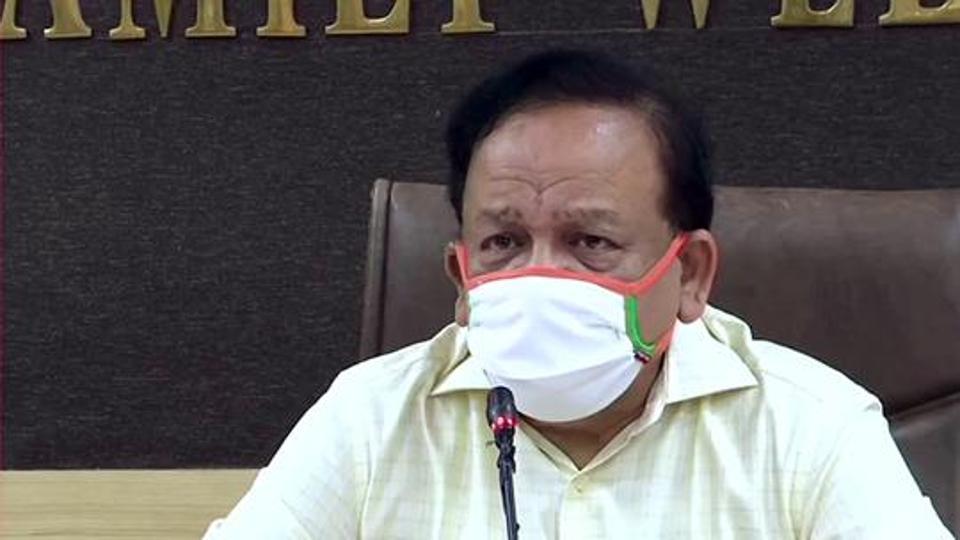
“Out of the total active cases, only 0.28% of patients are on ventilator support, 1.61% patients on intensive care unit (ICU) support, and 2.32% are on oxygen support,” the minister said.
India’s case recovery rate is also improving steadily, and with over one million recoveries the current national recovery rate is 64.54%, he cited.
Delhi has recorded the highest recovery rate at 89.08%, followed by Haryana (79.82%). Karnataka has the lowest recovery rate at 39.36%.
“…this shows that the active cases under medical supervision are 33.27%, or approximately one-third of total Covid-19 positive cases. India’s case fatality rate (CFR) is also progressively reducing and currently stands at 2.18%, one of the lowest globally,” said the health minister.
The government aims to reduce the CFR further and bring down the national average to 1% or below.
The government is laying emphasis on reducing mortality in high-case load districts/ cities, and cities showing recent upsurge such as Pune, Thane, Bengaluru, and Hyderabad, etc.
The GoM also reviewed the distribution of confirmed Covid-19 cases along with locality and active cases in the containment zones across rural and urban India.
It has been found that the maximum caseload, which was about 80% of the cases, is restricted to 50 out of about 740 districts in the country.
In moderate caseload districts/cities, the efforts are on to focus on preventing spill-over from the high-burden areas; limiting local spread; early identification of cases; strengthening contact tracing with the use of technology; and community involvement.
In low-burden districts, the efforts are aimed at preventing infection among the population from other areas; strengthening influenza-like illness (ILI)/severe acute respiratory illness (SARI) surveillance and targeted testing; rigorous contact tracing with targets to be set by the local administration such as 15-20 contacts for every Covid-19 patient and prior identification of the high-risk population.
“This three-pronged strategy will help in controlling the disease spread. However, our main concern should be protecting the areas, where no Covid-19 cases are being reported, and also ensuring there is no increase in caseload in low disease-burden areas. The key is to strengthen community engagement, as it will help in sending the message across effectively,” said Jugal Kishore, head, community medicine, Safdarjung Hospital.
On the rapidly expanding testing capacity of India, Harsh Vardhan highlighted that to date, through a network of 1,331 laboratories, including 911 and 420 government-run and private ones, respectively, a record 6,42,588 tests were conducted in the past 24 hours.
The country has carried out over 10.8 million tests since the viral outbreak was first reported.
“The more you test, the better it will in controlling the disease transmission, as you would be picking up cases early who would otherwise be roaming within the community and exposing the vulnerable population to the virus,” says Dr. T Jacob John, former head, virology department, Christian Medical College, Vellore, Tamil Nadu.
The domestic production capacities of various sectors involved in Covid-19 management such as for manufacturing personal protective equipment (PPE) kits, masks, ventilators, and drugs such as hydroxychloroquine (HCQ) have also been ramped up over the past three months.
In terms of healthcare logistics, cumulatively 268.25 lakh N-95 masks, 120.40 lakh PPEs, and 1083.77 lakh HCQ tablets have been distributed to all states and Central institutions.