
 E-Paper



Operation Sindoor brilliant example of civil-military fusion: Rajnath Singh
The defence minister said administrative machinery worked seamlessly with Armed Forces to share vital information and build public confidence during Op Sindoor

 Prefer HTon Google


Dehradun: Defence minister Rajnath Singh on Saturday said Operation Sindoor was a remarkable example of civil–military fusion, where the administrative machinery worked seamlessly with the Armed Forces to share vital information and build public confidence.
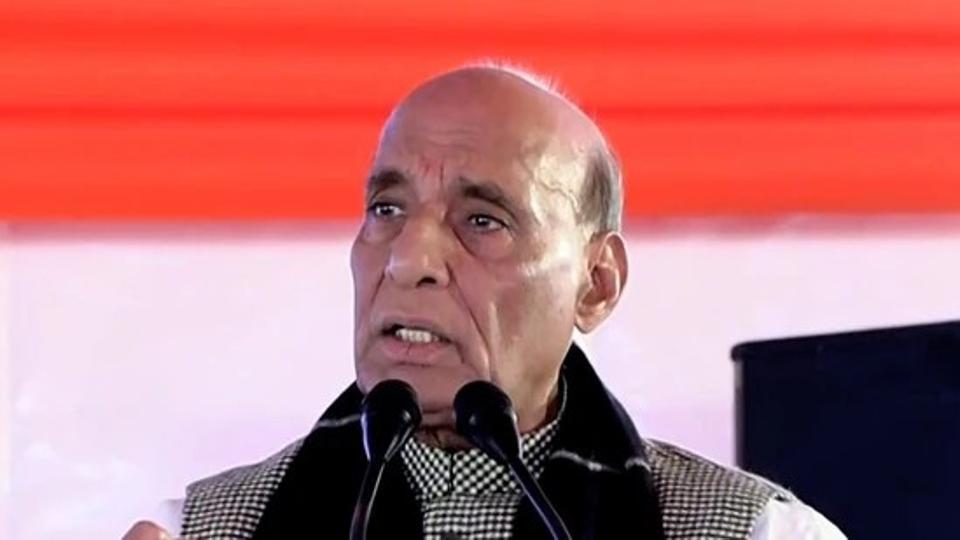
He was speaking at the valedictory ceremony of the 100th Common Foundation Course at the Lal Bahadur Shastri National Academy of Administration (LBSNAA) in Mussoorie.
He asked young civil servants to understand their vital role in protecting national interests and to stay prepared for critical situations, as soldiers do.
“During Operation Sindoor, the Armed Forces destroyed the terror camps in Pakistan and PoK in a balanced and non-escalatory response, but it was the misbehaviour of the neighbouring country, which did not allow the situation along the border to return to normal,” he said.
He appreciated the work carried out by the administrative officers as they communicated crucial information and ensured successful conduct of mock drills across the country.
He said stronger coordination between governance and national security is essential for India to become a Viksit Bharat by 2047.
Singh said civil servants have a pivotal role in accelerating India’s journey towards self-reliance and development. “When our government was formed in 2014, India was the world’s 11th-largest economy. In the last 9–10 years, we have climbed to fourth place. Even reputed financial firms like Morgan Stanley say India may become the third-largest economy in the next two to three years,” he said.
“You are not platonic guardians but servants of the people. You are not merely providers, but facilitators of empowerment. Your character must be incorruptible; your conduct must reflect integrity. Create a culture where honesty is not a virtue or an exception, but a normal part of daily life,” he said.
The minister said young civil servants should work innovatively in a technology-driven era and find solutions to people’s problems.
He said technology today acts as an enabler and cited the success of Pradhan Mantri Jan Dhan Yojana, Direct Benefit Transfer, Ayushman Bharat Digital Mission and the Income Tax Department’s Faceless Assessment Scheme.
He said the Ministry of Defence’s SAMPURNA initiative is an AI-driven automation system that analyses defence procurement and payments in a transparent manner.
He further said technology should be used to increase public outreach, accessibility, transparency, welfare and inclusivity.
Singh said civil servants must meet every citizen with empathy and understanding, especially the underprivileged, whose struggles are shaped by wider social and economic circumstances.
He said women are steadily rising in the Civil Services, adding that a woman topped the latest UPSC exam and three of the top five candidates were women. He said he is confident that by 2047 many women will rise to the position of cabinet secretary.
He said the Foundation Course is not just a training module but a commitment to building an efficient and sensitive governance system, and praised LBSNAA’s comprehensive training ecosystem.
Earlier, he paid floral tributes to Lal Bahadur Shastri and Sardar Vallabhbhai Patel.


