Two pages, eight paragraphs and 15 sentences were not enough for the Allahabad high court to explain why six people should face a criminal trial, the Supreme Court has held, reminding judges that a judicial order cannot be reduced to a conclusion without the reasoning that leads to it and that heavy caseload cannot be an excuse for dispensing with reasons.
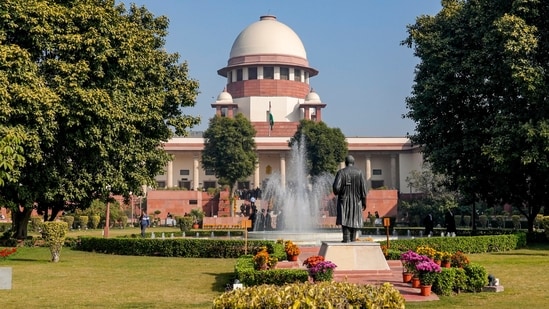
A bench of justices Dipankar Datta and Sheel Nagu set aside the high court’s order, underlining that it failed to meet even the basic standards of a “reasoned and speaking” judicial order. The bench particularly faulted the high court for not examining the evidence against the accused even though they had not been named in the charge sheet and were brought into the trial subsequently on an application under Section 319 of the Code of Criminal Procedure (CrPC).
Also read: Supreme Court quashes all FIRs across the country against NEET paper leak protesters
SC cautions against reasonless orders
The court said the burden on high court judges was undoubtedly immense and that writing brief orders could be a prudent approach in view of heavy caseloads. But brevity, it cautioned, cannot come at the cost of reasons.
{{/usCountry}}The court said the burden on high court judges was undoubtedly immense and that writing brief orders could be a prudent approach in view of heavy caseloads. But brevity, it cautioned, cannot come at the cost of reasons.
{{/usCountry}}“A laconic order (such as the impugned order) can neither be appreciated nor countenanced,” held the bench in an order earlier this week, stressing that every judicial order must meet the basic minimum standard expected of a high court judge, “more so in a criminal appeal of the present nature”.
Reasons essential to judicial decisions
The judgment highlights a recurring judicial insistence that a reasoned order is not a matter of style or judicial formality but an essential component of the adjudicatory process, particularly where the consequence is to subject an individual to a criminal trial.
The present case concerned six people who were initially named as accused in an FIR registered in Azamgarh, Uttar Pradesh, under provisions of the Indian Penal Code and the Scheduled Caste/Scheduled Tribe (Prevention of Atrocities) Act. However, after investigation, the police filed a chargesheet on October 3, 2022, without showing them as accused.
After the trial commenced, the complainant moved an application under Section 319 CrPC seeking their summoning to face trial. The special judge, SC/ST Act, allowed the application on June 11, 2025. The accused challenged that order before the Allahabad high court, but a single judge dismissed their appeal on August 11, 2025.
Also read: SC closes suo motu case over NCERT textbook chapter on judiciary
Two-page order under scrutiny
The Supreme Court bench noted that the high court’s order ran to effectively two pages, comprising eight paragraphs and 15 sentences. After recording the appearance of lawyers, the legal provision invoked, the prosecution case and the submissions of the parties, the order concluded in just three paragraphs.
The sixth paragraph said the judge had considered the rival submissions and examined the record. The seventh said that, “having regard to the facts and circumstances” and the gravity of the offence, evidence, alleged complicity and specific allegations, there was no illegality or perversity in the summoning order. The eighth simply dismissed the appeal.
“There is thus no reason for dismissal of the appeal,” noted the Supreme Court, finding that the impugned order “does not spell out any reason for dismissal of the appeal.”
Also read: SC quashes SC/ST Act case against Vyapam whistleblower Anand Rai
SC reiterates need for reasoned verdicts
The bench invoked a recent ruling in Asma Lateef Vs Shabbir Ahmad, saying the principle that every judicial verdict determining the rights and liabilities of parties must disclose the reasons for its conclusion applies equally to criminal proceedings.
Reasons, the court explained, serve a fundamental purpose: “They demonstrate that the adjudicator has applied his or her mind to the material on record and allow the unsuccessful party to effectively challenge the decision before a higher forum.”
A decision without reasons, it added, may indicate non-application of mind and leaves the higher court handicapped in determining the basis on which the conclusion was reached and testing its legality or correctness. The court said the high court order failed this test because an affected party could not comprehend “what weighed in the mind of the Judge” in deciding against them.
Also read: Relief for Rahul Gandhi, SC quashes criminal defamation complaint in Savarkar remarks row
High court did not address key submission
The omission assumed greater significance because the appellants had specifically argued before the high court that the investigating officer had found no evidence against them and had therefore excluded them from the chargesheet.
Once the special judge subsequently summoned, the high court was required to examine whether the material emerging during trial met the stringent test laid down by the Constitution Bench in Hardeep Singh Vs State of Punjab, the top court said.
SC finds no examination of trial evidence
Instead, the high court’s order did not refer to any evidence, “far less cogent evidence”, on the basis of which it could conclude that the appellants were prima facie involved in the crime. “This being the submission of the appellants, the minimum that was expected and required of the Single Judge was to refer to some evidence led in course of the trial which, upon application of the test laid down by the Constitution Bench…would have necessitated an order for the appellants to face trial,” said the bench.
The bench then proceeded to quash the high court order and remanding the criminal appeal to the roster bench for fresh consideration after hearing the accused, the state and the complainant.