
 E-Paper



Pabitra Kar trails Suvendu Adhikari in high-stakes 2026 battle for Nandigram
Pabitra Kar, once a close aide of BJP leader Suvendu Adhikari, is now fielded by the Trinamool Congress against him .

 Prefer HTon Google


Pabitra Kar is a West Bengal politician and a prominent leader of the All India Trinamool Congress (TMC), contesting the 2026 Assembly elections from Nandigram. Once a close aide of Suvendu Adhikari, Kar’s political journey has come full circle as he now stands against his former mentor in one of the state’s most high-profile electoral battles. His return to the TMC has positioned him as a key challenger to the Bharatiya Janata Party (BJP) in the constituency.
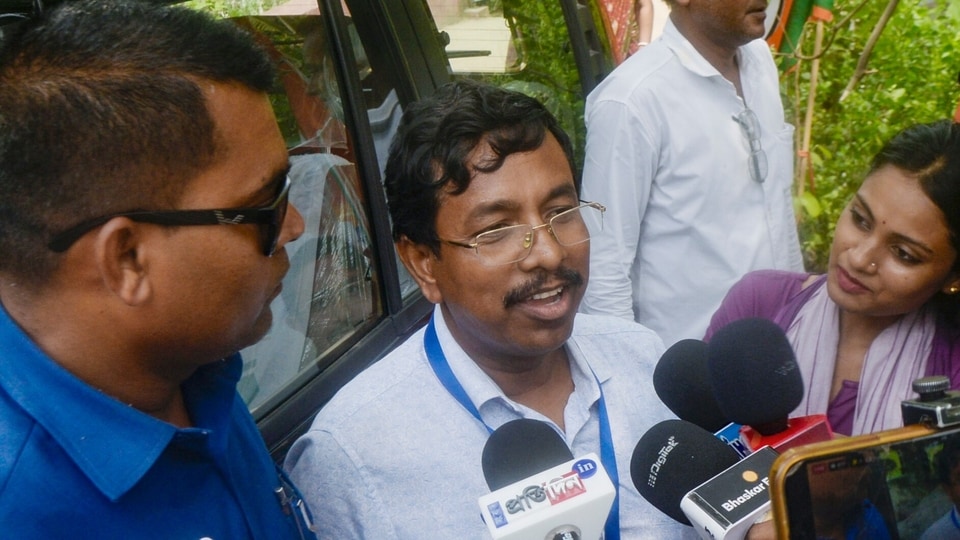
After 17 rounds of counting, Kar is trailing behind Adhikari by over 6,000 votes. He has received 112,642 votes, while the latter has received 118,947 votes.
Early life of Pabitra Kar
Pabitra Kar is a grassroots leader who rose through local governance structures in Purba Medinipur district. He served as the pradhan of the Boyal-1 gram panchayat in Nandigram-II block, building a strong local base over the years. With formal education up to Class 10, Kar’s political growth has largely been driven by organisational work and on-ground mobilisation.
He was once associated with the TMC but defected to the BJP in November 2020 ahead of the 2021 Assembly elections, joining a wave of leaders who shifted allegiance along with Suvendu Adhikari. Within the BJP, Kar served as the Vice-President of the party’s Tamluk organisational district and was known for his expertise in booth-level management. His role in strengthening the BJP’s grassroots network in Nandigram contributed to the party’s strong performance in the 2021 elections. In 2026, he returned to the TMC, marking another significant political shift in the run-up to the Assembly polls.
Find detailed updates for West Bengal assembly election 2026 here.
About the constituency
Nandigram, located in Purba Medinipur district, is one of the most politically sensitive constituencies in West Bengal. It gained national prominence during the 2007 anti-land acquisition movement, which played a major role in the rise of Mamata Banerjee and the eventual decline of the Left Front government in 2011.
The constituency is part of the Tamluk Lok Sabha seat and has a predominantly rural electorate, with politics often shaped by agrarian concerns, local governance issues, and party organisation at the booth level. Over the past decade, Nandigram has evolved into a prestige battleground between the TMC and the BJP, reflecting the broader bipolar contest in West Bengal politics. High voter turnout and intense campaigning have become defining features of elections in the seat
Get live updates of the 2026 assembly elections here.
What happened in the previous elections?
The 2021 West Bengal Assembly election in Nandigram was among the most high-profile contests in recent Indian political history. Chief Minister Mamata Banerjee contested from the seat against her former aide Suvendu Adhikari, who had joined the BJP months before the election.
In a closely fought battle, Adhikari defeated Banerjee by a margin of around 1,956 votes, according to Election Commission data. Despite losing the seat, Banerjee’s TMC secured a sweeping victory statewide, winning 213 out of 294 seats, while the BJP emerged as the principal opposition with 77 seats.
Nandigram’s result underscored the BJP’s growing influence in certain pockets of the state, even as the TMC retained overall dominance. The 2026 contest, featuring Pabitra Kar against Suvendu Adhikari, is being closely watched as a rematch of political forces that shaped the 2021 election, with both parties aiming to consolidate their support bases in a constituency that continues to carry outsized political significance


