
 E-Paper



Pay ₹30L to kin of those who die cleaning sewers: Supreme Court to govt
The top court stated that manual scavengers have lived in “bondage, systematically trapped in inhuman conditions” for a long time

 Prefer HTon Google


The Supreme Court on Friday directed the Centre and state governments to pay ₹30 lakh as compensation to the next of kin of those who die while cleaning sewers lakh while seeking “complete eradication” of manual scavenging across the country.
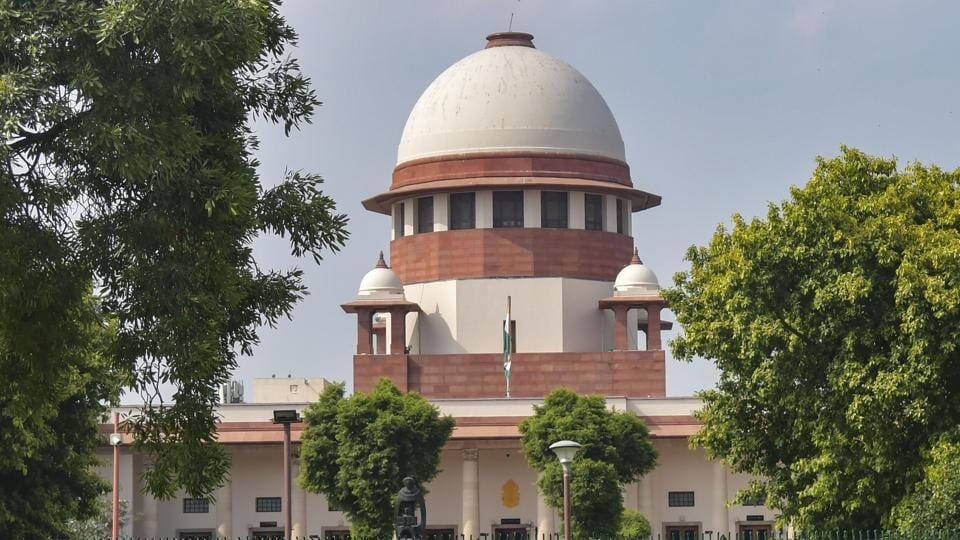
The top court stated that manual scavengers have lived in “bondage, systematically trapped in inhuman conditions” for a long time.
“Ours is a battle not for wealth or power. It is a battle for freedom. It is a battle for reclamation of human personality,” justice S Ravindra Bhat quoted B R Ambedkar as he along with justice Aravind Kumar pronounced the verdict on a PIL filed by social activist Balram Singh against manual scavenging.The bench posted the PIL for further monitoring on February 1, 2024.The court was assisted in framing directions by amicus curiae K Parmeshwar and additional solicitor general (ASG) Aishwarya Bhati for the Centre.
Enhancing the compensation in cases of sewer deaths and injuries, the top court said those who suffer permanent disabilities while cleaning sewers will be paid ₹20 lakh as minimum compensation, and for other injuries a compensation up to ₹10 lakh can be paid to the victims. “The Union and the state governments must ensure that manual scavenging is completely eradicated,” the bench said.
The bench issued 14 directions to the Union and state governments for effective implementation of the Prohibition of Employment as Manual Scavengers and their Rehabilitation Act, 2013.
Justice Bhat, while reading out the verdict, said that the authorities needed to take measures for the rehabilitation of the victims and their families.The kith and kin of the victims be provided scholarships and imparted skill development training, said the court. Some of these directions had been part of an earlier decision by the Supreme Court in 2014 in Safai Karamchari Andolan vs Union of India. This decision had recommended a compensation of ₹10 lakh to be paid for people who died while cleaning sewers and septic tanks.
“If you have to be truly equal in all respects, the commitment that Constitution makers gave to all sections of society by entrenching emancipatory provisions such as Articles 15(2)..., each of us must live up to its promise. The Union and States are duty bound to ensure that the practice of manual scavenging is completely eradicated,” justice Bhat said.
Talking about the plight of manual scavengers, the bench said, “Each of us owe to this large segment of the population, who have remained unseen, unheard and muted, in bondage systematically trapped in inhuman conditions. The conferment of entitlements and placement of obligations upon the Union and States through the express prohibitions in the Constitution and provisions of the 2013 Act mean that they are obliged to implement the provisions in the letter and spirit.”
Justice Bhat said a duty is cast on all to realise “true fraternity”. “It is not without reason that our Constitution has placed great emphasis on the value of dignity and fraternity. But for these two, all other liberties are chimera. All of us today, who proudly bask in the achievements of our republic, have to awake and arise so that the darkness which has been the fate of generations of our people is dispelled...” he said.
Issuing a slew of directions, which were not read out, the bench said government agencies must coordinate to ensure that such incidents do not occur and high courts are not precluded from monitoring the cases related to sewer deaths.
At least 347 people died while cleaning sewers and septic tanks in India in the last five years with Uttar Pradesh, Tamil Nadu and Delhi accounting for 40% of these deaths, according to government data cited in the Lok Sabha in July 2022.
With Agency inputs


