
 E-Paper



‘Peace may emerge’: Pakistan signals willingness to resolve Kashmir issue with India
Pakistan’s defence minister said major issues with India related to the Indus Waters Treaty (IWT), terrorism and Kashmir could be discussed in potential talks.

 Prefer HTon Google


Pakistan’s defence minister Khawaja Asif signalled a possible thaw in bilateral ties, stating that key issues such as Kashmir, terrorism, and the Indus Waters Treaty could be discussed in any future dialogue with India.
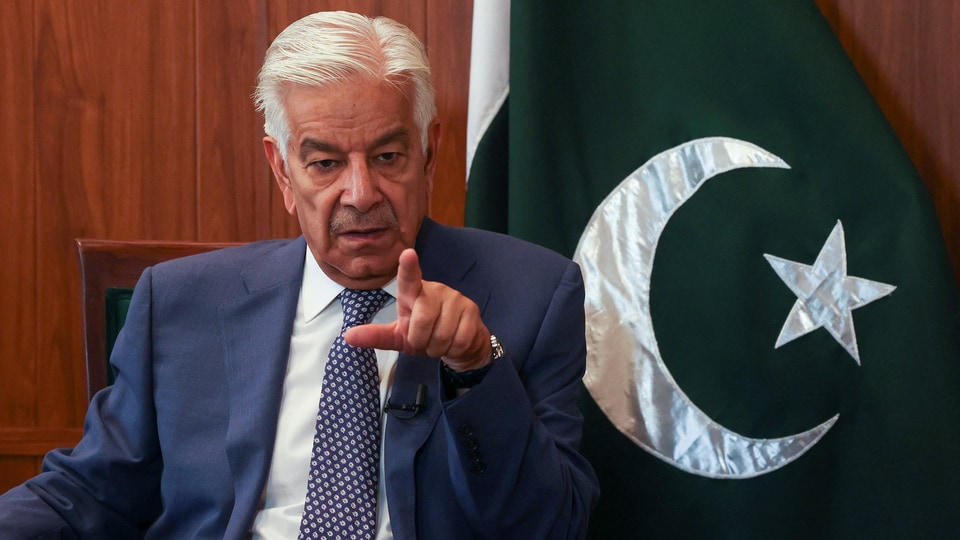
Asif's comments came when he was asked about tackling the pending issues with India following a ceasefire agreement to stop all firings and military actions on land, air and sea, with immediate effect.
"If the ceasefire helps pave the way towards peace, it would be a welcome development," he said, adding it is too early to say anything with certainty.
“These are the three major issues that can be discussed," the local channel quoted Asif as saying.
Also Read | What China told Pakistan about the India-Pak ceasefire during high-level call
While Pakistan described the move as a formal "ceasefire agreement," India referred to it more cautiously as an "understanding."
The understanding was reached after four days of intense cross-border drone and missile strikes that brought the two countries teetering on the edge of full-scale war.
'Peace may emerge': Pakistani minister on Kashmir issue
Asif said major issues with India related to the Indus Waters Treaty (IWT), terrorism and Kashmir could be discussed in potential talks with India.
“As time passes, opportunities for peace may emerge,” Asif said.
“We hope India, and particularly its leadership, will one day prioritise the region’s future over party interests,” the minister said, adding that peaceful coexistence based on equality is key to South Asia’s progress.
Also Read | Day after ceasefire with Pakistan, PM Modi chairs high-level meeting with tri-services chiefs
He also acknowledged the diplomatic support Pakistan received during the crisis from allies, including China, Türkiye, Azerbaijan, and Gulf nations.
Both India and Pakistan on Saturday announced an immediate ceasefire of all hostilities across land, air, and sea.
However, just hours after India and Pakistan reached a ceasefire understanding on Saturday, a series of drone sightings and explosions rocked Jammu and Kashmir, triggering air defence responses by Indian security forces to neutralise the aerial threats.
(with PTI inputs)


