E-Paper



Plans for Odisha oil reserve stuck due to illegal quarrying
Officials admitted that large-scale extraction of blackstone, used widely in road construction, has continued unabated in the area with more than a dozen such quarries operating in the project area

 Prefer HTon Google


A quest to add capacity to India’s strategic oil reserves –– a critical fallback in times of war and supply disruptions like the current shutdown on the Strait of Hormuz –– has been hanging fire in Odisha’s Jajpur district for over a year.
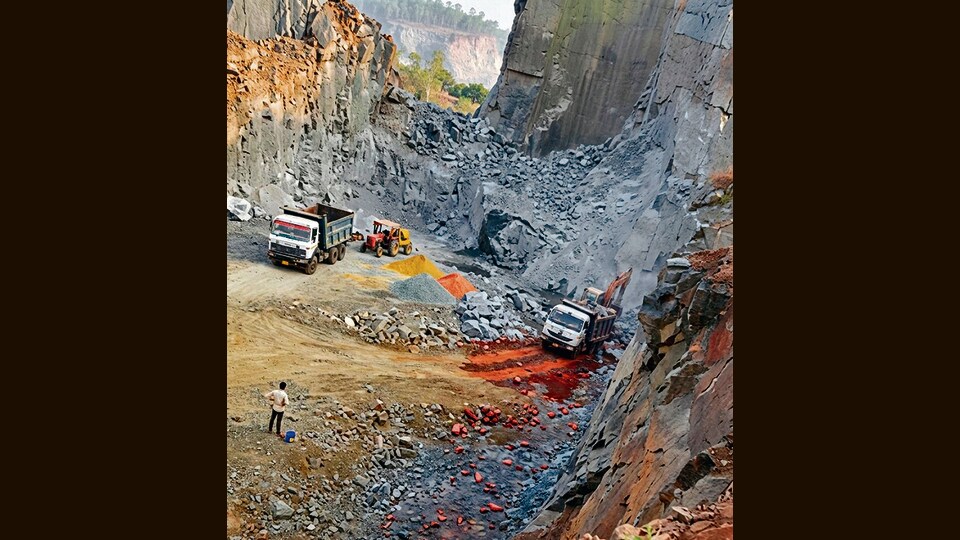
On April 8, 2025, a Memorandum of Understanding (MoU) was signed between the Odisha government and the Indian Strategic Petroleum Reserves Limited (ISPRL) for a four-million-metric-tonne crude oil storage complex at Dankari Hills in Jajpur. However, till now, the land has still not been handed over to ISPRL, a special purpose vehicle under the Union ministry of petroleum and natural gas, which is executing the project. The reason: illegal stone quarrying that has continued on the earmarked site for months, potentially undermining its viability.
Officials in the state industry department admitted that large-scale extraction of blackstone, used widely in road construction, has continued unabated in the area with more than a dozen such quarries operating in the project area. “The district administration is supposed to handover the area to ISPRL, but they have not been able to take any concrete steps in this regard,” said a senior industry department official. HT has also reviewed the series of communications between ISPRL and the state government over the matter in which the former has expressed its concern over the delay on handover the land.
India’s existing strategic petroleum reserves located at Visakhapatnam (1.33 million metric tonnes ), Mangaluru (1.5 million metric tonnes ), and Padur (2.5 million metric tonnes ), hold a total of 5.33 million metric tonnes of crude oil, according to statements by petroleum minister Hardeep Singh Puri in Parliament. This is about 9.5 days of the country’s needs or around 77 days of net imports. ISPRL plans to increase the reserve capacity to 15 million tonnes over the next decade, in line with India’s ambition to join the International Energy Agency (IEA), which requires member countries to maintain crude stocks equivalent to 90 days of consumption.
The Jajpur project, along with a parallel facility in Padur, Karnataka, was designed under Phase II of the strategic petroleum reserve programme to increase capacity to 11.83 million metric tonnes, narrowing the gap with the IEA benchmark. Designed as underground rock caverns, the petroleum reserves are directly connected to nearby refineries and augment the commercial stocks maintained by oil companies, serving as a critical cushion during supply disruptions. Officials in the state industry department admitted that the plan is now in limbo even as the Strait of Hormuz, through which roughly 20% of global crude supply flows daily, was shut by Iran after US and Israeli strikes killed its Supreme Leader.
ISPRL officials said the agency has deposited more than ₹21 crore for 400 acres of land at Dankari Hills with the Industrial Infrastructure Development Corporation. Yet, a response to a Right to Information (RTI) request, dated January 31, 2026, from the Jajpur district administration confirmed that no land has been transferred to ISPRL.
“We have written repeatedly to district and state authorities since March 2025 seeking intervention. In a November 2025 letter to the Jajpur district magistrate, we warned that quarrying within the project boundary will disturb the topographical integrity of the area and will have adverse impact on the project feasibility,” said the ISPRL official, requesting anonymity. Last month, ISPRL wrote to Dharmasala MLA Liku Sahu seeking his intervention in stopping the quarrying of blackstone in the project area as it is an issue of national security and energy safety.
Jajpur district collector Ambar Kar did not respond to calls as well as messages from HT on why the land has not been handed over to ISPRL.