
 E-Paper



Plea filed in Mathura court for survey of Eidgah mosque
The Hindu petitioners are seeking the removal of the 16th century mosque and transfer of the 13.37 acre plot to the Krishna Temple next door.


Hindu petitioners in the Sri Krishna Janmabhoomi-Shahi Eidgah mosque dispute in Mathura has asked the local court to appoint an advocate commissioner and order a survey of the mosque complex, claiming the presence of Hindu idols on the premises.
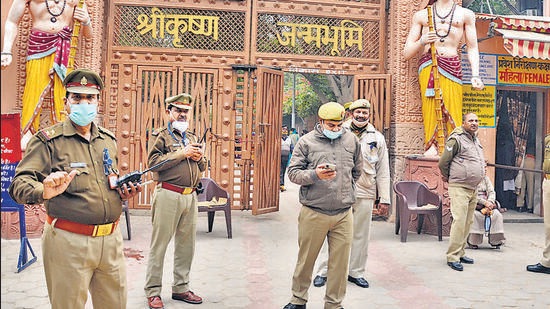
The Hindu petitioners are seeking the removal of the 16th century mosque and transfer of the 13.37 acre plot to the Krishna Temple next door. Last week, a district court ruled that the plea of the Hindu side was maintainable and could be heard in a lower court, though the Muslim side is set to challenge this decision in the Allahabad high court.
“There are still remains of Hindu religion within Shahi Eidgah Mosque which can prove that it was originally Thakur Keshav Dev temple, demolished to build a mosque. These facts are important for disposal of the case but those managing Shahi Eidgah mosque are inclined to remove these symbols of Hindu religion. So it is very necessary that a survey, including videography and photography of the mosque premises, should be conducted before the court goes for summer vacation from June 1,” said Rajendra Maheshwari, one of the petitioners.
Also read: Application for impleadment in Gyanvapi case says 1991 law cannot protect mosque
The court said it will take up the application on July 1, the next date of hearing in the original plea.The other petitioners present in court on Monday included Jai Bhagwan Goyal from Delhi and Saurabh Gaur.
Tanveer Ahmad, counsel for the management committee of Shahi Eidgah Mosque, said he had not received a copy of the application.
This is the fifthtime the Hindu petitioners are seeking a survey of the premises, and their effort comes at a time when a similarly controversial exercise was completed at the Gyanvapi Masjid complex in Varanasi. In both cases, Hindu groups argue that temples were demolished by Islamic rulers to build mosques, and therefore, the land should be returned to Hindus. Muslim groups reject the contention. The Gyanvapi case is currently being heard by the Varanasi district court, which will decide on the maintainability of the Hindu petitioners’ plea first.
in the Sri Krishna Janmabhoomi case, a plea was originally filed in the court of Mathura civil judge (senior division) on September 25, 2020 by Lucknow-based lawyer, Ranjana Agnihotri, and six others as the “next friend” of Bhagwan Sri Krishna Virajman, the presiding deity at the Mathura temple. Next friend is a legal representative of someone incapable of maintaining a suit directly.
The suit claimed that Shahi Eidgah Masjid was constructed on a part of 13.37-acre land belonging to the Sri Krishna Janmabhoomi Trust. They demanded the mosque, which abuts the temple, be removed and the land returned to the trust.
Also read: Gyanvapi case: No verdict today, Varanasi court to hear Muslim side's plea on May 26
The religious dispute simmered in the first half of the 20th century but on October 12, 1968, an agreement was signed between the Shri Krishna Janmasthan Seva Sansthan and the Shahi Masjid Idgah Trust, which divided the land between the two parties and relinquished any claims of the Hindu parties to the land of the mosque.
Agnihotri’s petition challenged the settlement and alleged that the pact had no legal validity because the Sri Krishna Janmabhoomi Trust, which the petitioners claimed had the ownership and title of the land, was not party to the settlement.


