
 E-Paper



PM: Energy important pillar of bilateral ties, reflects deep trust
Modi aims to transform India-Kuwait ties into a strategic partnership, enhancing energy cooperation and exploring investments in various sectors.


The scope for collaboration between India, the world’s third largest energy consumer, and Kuwait, which holds 6.5% of global oil reserves, is immense and the two sides are set to transform their traditional buyer-seller relationship into a strategic partnership, Prime Minister Narendra Modi said on Saturday.
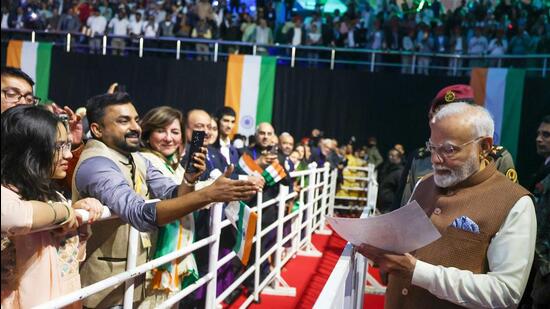
India’s rapidly growing petrochemical industry, which will be worth $300 billion by 2025, and Kuwait’s “Petrochemical Vision” under its Strategy 2040 can open the doors for joint investment, technology exchange and mutual growth, Modi said in an interview with state-run KUNA news agency as he began a two-day visit to the West Asian state.
Kuwait is India’s sixth largest crude supplier and fourth largest LPG supplier, meeting 3% of the country’s energy needs, while investments by the Kuwait Investment Authority in India exceed $10 billion. India is among Kuwait’s top trading partners and two-way trade was worth $10.47 billion during 2023-24.
Modi said energy is an important pillar of bilateral ties and it reflects the deep trust and mutual benefit underpinning the partnership between the two sides. “Indian companies actively engage in importing crude oil, LPG and petroleum products from Kuwait, while also exporting petroleum products to Kuwait,” he said.
“As India emerges as the world’s third largest energy, oil and LPG consumer, and Kuwait holds around 6.5% of global oil reserves, the scope for further collaboration is immense,” he added.
In addition to conventional hydrocarbons trade, there are new areas for cooperation such as an entire value chain of oil and gas, joint efforts in low-carbon solutions such as green hydrogen, biofuels and carbon capture technologies. Modi also referred to the bilateral energy partnership as a driver of diversified and sustainable growth and energy security.
“Trade and commerce have been important pillars of our bilateral relationship. Our bilateral trade has been on an upswing. Our energy partnership adds a unique value to our bilateral trade,” Modi said.
“We are happy to see ‘Made in India’ products, particularly in automobile, electrical and mechanical machinery and telecom segments making new inroads in Kuwait... Diversification to non-oil trade is key to achieving greater bilateral trade,” he added. There is potential to expand cooperation in the pharmaceutical, health, technology, digitalisation, innovation and textile sectors.
Modi, who is set to hold talks with the Amir of Kuwait, Sheikh Meshal Al-Ahmad Al-Jaber Al-Sabah, on Sunday, said: “Overall, bilateral ties are progressing well and...scaling new heights. I eagerly look forward to my talks with...the Amir to elevate our ties in various areas, including defence, trade, investment and energy.”
He said India’s economic growth and pace of infrastructure development creates opportunities for investment across a range of areas, including expressways, railways, airports, ports, energy grids and digital connectivity.
“Our political stability, policy predictability and reform-oriented business approach has made India a magnet for global investment, manufacturing and supply chains. The Indian growth story is attracting global manufacturers – from semiconductors, aircraft, drones to e-vehicles -- to set up shop in the country,” he said.
At the same time, Modi pointed out, the “Kuwait Vision 2035” is focused on transforming the country by making it an economic and connectivity hub. He said there is synergy in the visions of both sides and the pace of economic activity in both countries opens up opportunities for the two governments and companies to collaborate.
Modi thanked the Amir of Kuwait for looking after the welfare of the one million-strong Indian community, the largest expatriate group that includes doctors, businessmen, construction workers, engineers and nurses. “As we elevate the level of our relationship with Kuwait to a strategic partnership, I believe the role of the Indian community will only grow in importance,” he added.
Modi also spoke on the conflicts in Gaza and Ukraine and emphasised that solutions cannot be found on the battlefield. He underlined the importance of “sincere and practical engagement between stakeholders for bridging differences and achieving negotiated settlements”. He expressed willingness to support earnest efforts that can lead to the early restoration of peace, especially in Gaza and Ukraine.
He reiterated India’s support for a negotiated two-state solution for the establishment of a sovereign, independent and viable state of Palestine within secure and recognised borders.


