
 E-Paper


Mann Ki Baat: PM Modi backs farm laws, reaches out to agri community
The PM’s remarks came against the backdrop of the ongoing agitation by a large section of farmers in Punjab and Haryana, who have marched to the Capital in protest against the laws.

 Prefer HTon Google


Prime Minister Narendra Modi on Sunday sought to dispel concerns about the recently passed farm laws and cited an example of a farmer who used the new law to his advantage.
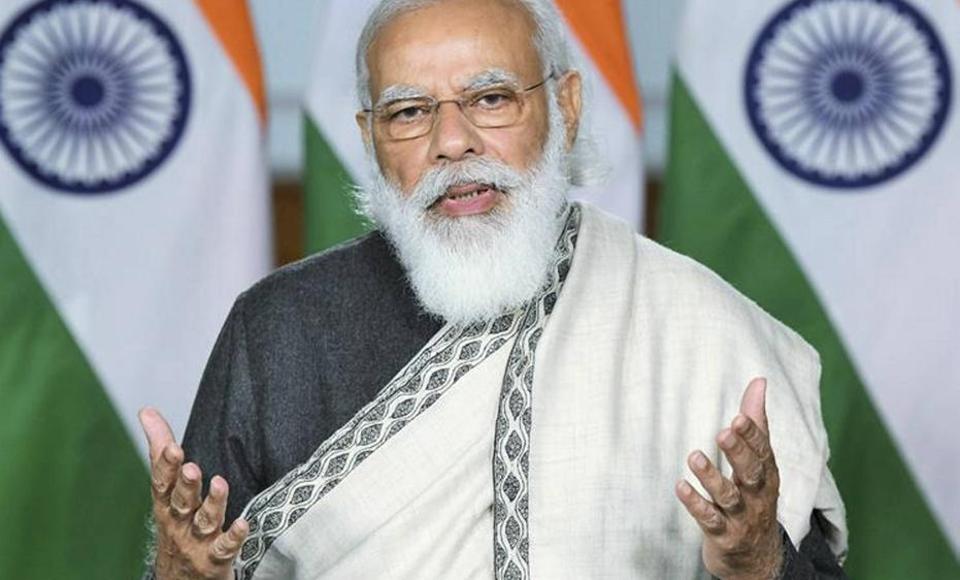
In his monthly radio broadcast, Man Ki Baat the Prime Minister said, “New dimensions are being added to agriculture and its related activities in India. The agriculture reforms in the past few days have also now opened new doors of possibilities for our farmers.”
The Prime Minister said decades-old demands of farmers were met with Parliament passing laws aimed at liberalizing the farm sector after rigorous brainstorming. “These reforms have not only broken shackles of farmers but have also given new rights and opportunities for them. These rights started mitigating problems that were being faced by farmers in a short span of time,” he said.
The PM’s remarks came against the backdrop of the ongoing agitation by a large section of farmers in Punjab and Haryana, who have marched to the Capital in protest against the laws.
The Prime Minister went on to cite the example of a Maharashtra-based farmer, Jitendra Bhoiji, who used one of the new laws to recover money owed to him. The PM said after he failed to get the amount even four months after selling his produce, Bhoiji got his money back using a provision of the law that specifies it is mandatory to pay farmers within three days of purchasing the produce.
“If the payment is not made the, the farmer can make a complaint. Under the law, there is a provision that the SDM of the area must address the complaint of the farmer within a month,” PM Modi said.
The Prime Minister also cited the example of Mohammad Aslam in Rajasthan‘s Botton district, who is creating awareness among farmers by updating them about the day-to-day rates in the local mandis. Aslam is the CEO of a farm producers’ federation.
A third example that the Prime Minister gave was that of Virendra Yadav, who returned from Australia to Haryana‘s Kaithal and has found a solution to farm stubble. Instead of burning stubble which causes immense damage to the air quality, Yadav has been selling the stubble to paper mills and agro energy plants, and has made profit in two years’ time.
A large number of farmers are protesting against the government’s moves to open up agricultural markets in the country and bring sweeping reforms to the farm sector, which supports nearly half the population.
Farmers have demanded a repeal of three laws enacted by Parliament in September which, together, allow agribusinesses to freely trade farm produce without restrictions, permit private traders to stockpile large quantities of essential commodities for future sales and lay down new rules for contract farming.
Farmers say the reforms would make them vulnerable to exploitation by big corporations, erode their bargaining power and weaken the government’s minimum support price (MSP) system, which offers cultivators assured prices from the government, largely for wheat and rice.
Agriculture minister Narendra Singh Tomar and railways, food and consumer affairs minister Piyush Goyal held day-long negotiations on November 13 with leaders of several farmers’ groups in attempt to end over two months of a politically challenging agitation. The discussions were inconclusive, but both sides had agreed to continue negotiations in the future.


