
 E-Paper



PM Modi may opt for continuity in the national security establishment
With the West and China in competition, India has to upgrade its external intelligence and cannot rely on ‘associates.’

 Prefer HTon Google


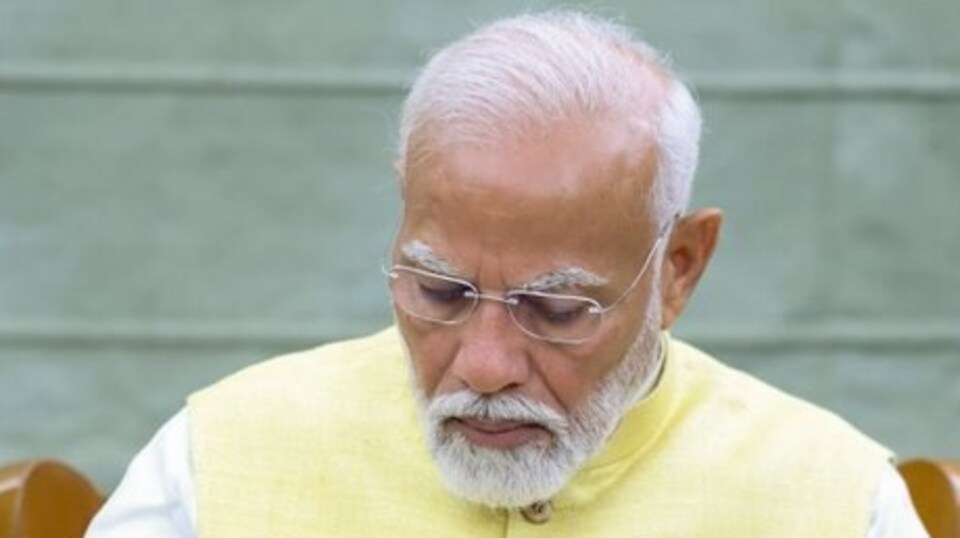
New Delhi: By keeping his Cabinet Committee on Security (CCS) intact in his third term, Prime Minister Narendra Modi is expected to opt for continuity in the top national security establishment with National Security Advisor Ajit Doval slated to go with him for the G-7 summit in Italy on June 13. The orders for continuation of Dr P K Mishra, Principal Secretary to PM, and the NSA are awaited.
While PM Modi will have to take a call on who will be the new Army chief, time has also come to decide on Tapan Deka, Director, Intelligence Bureau, who has done a great job in internal intelligence against Islamists and Maoists in the country. Deka, a top counter terrorism expert, is scheduled to complete his two year tenure on June 30.
As Army Chief Gen Manoj Pande is to attain superannuation on June 30th after solid innings, the PM has a choice to opt for the senior most Army Commander in Lt General Upendra Dwivedi, who has served as Northern Army Commander for two years and has a first-hand knowledge of Indian adversaries to the north and to the west. Gen Dwivedi also has ground experience of cross border terrorism faced in the Rajouri-Poonch sector with the Reasi firing being the latest incident in which 10 Hindu pilgrims lost their lives. PM and Defence Minister Rajnath Singh have other options also but radical steps are not expected to run a ship as large as the Indian Army.
Also read: Pakistan-based terror group LeT behind Reasi terror attack
Even as Bharat aspires to be a global power in Modi 3.0, India will need to improve its domain awareness vis-à-vis China and Pakistan apart from self-appointed rivals like Canada, UK, Germany and Turkey. Simply put, India cannot rely on shared external intelligence to keep up with the rivals and has to improve its own resources. The role played by the Pakistani, Chinese and western media in particular during the 2024 election against PM Modi needs to be effectively countered just as anti-India forces need to be effectively neutralized. After giving no less than 83 interviews to media in the run-up to the 2024 elections, PM Modi now has first-hand experience on what to expect from the western media in the third term.
However, India’s biggest challenge will come from the maritime domain with Chinese PLA Navy rapidly expanding in the Indo-Pacific and the once dominant US Navy not that sure of taking on Beijing as is evident from confused signals from the Biden administration. The Chinese Navy is expected to start long range forays into the Indian Ocean region with littoral states succumbing to coercion from the massive Communist state. As it is, the Indian neighborhood is under serious debt from China under the garb of the Belt Road Initiative and that alone will act as a huge leverage for the Xi Jinping regime.
In this context, the Modi government needs to develop its island territories as part of maritime security architecture in order to effectively contain the Chinese threat. India needs platforms like Rafale Maritime fighters as of yesterday to make platforms like INS Vikrant aircraft carrier potent as well as develop security leverages in Andaman and Nicobar Islands as well as Lakshadweep. Just as the west kept silent when China transgressed in Ladakh in May 2020, India needs to be prepared to meet the PLA Navy challenge on its own engines in the Indo-Pacific and hence national security doctrines have to be tweaked to address the future concerns.


