
 E-Paper



PM Modi, Putin to discuss fallout of US sanctions at informal summit in Sochi
Bilateral issues may also find a mention in Sochi with PM Modi looking towards an all-round relationship with Russia rather than merely a transactional one between a seller and buyer of military hardware.

 Prefer HTon Google


The global fallout of US sanctions on Russia and Iran will dominate Prime Minister Narendra Modi’s informal meeting with Russian President Vladimir Putin at Sochi on Monday even as New Delhi will try to make its position clear that it would like Moscow to invest much more in the bilateral relationship with India rather than in Europe.
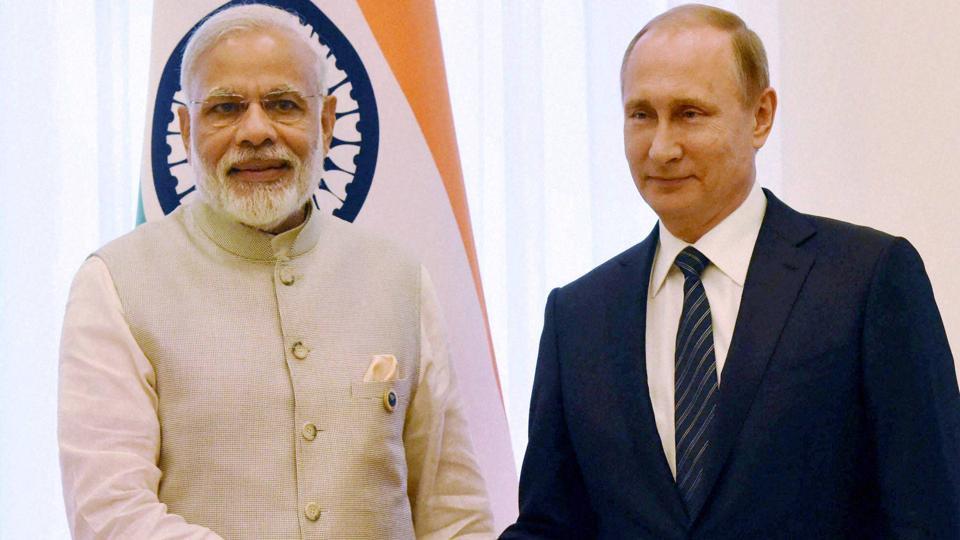
South Block officials familiar with the forthcoming Sochi dialogue told Hindustan Times that Prime Minister Modi’s focus will be to exchange notes with Russia, which, along with France, Germany and the European Union, wants to pursue the 2015 nuclear agreement with Iran after the US walked out of the agreement and imposed sanctions on the West Asian country earlier this month.
The US has also imposed sanctions on Russia for its role in Syria and for allegedly trying to manipulate the US presidential elections, with Europe caught in the cleft stick.
Bilateral issues may also find a mention in Sochi with PM Modi looking towards an all-round relationship with Russia rather than merely a transactional one between a seller and buyer of military hardware. While India will continue to buy military equipment from Russia without any default on payments, the worry for India is Iranian crude imports as the trading currency under the Joint Comprehensive Plan of Action (JSPOA) with Iran is the US dollar. India had reduced oil imports to nearly 6% before JSPOA kicked in. Now, Indian imports of crude from Iran stand at 17% . Any wrong move, and oil prices will shoot up in India with serious domestic ramifications, say analysts. With elections due in 2019, the government would like to avoid that.
India has, meanwhile, allayed Russian concerns over its partnership with the US, with National Security Advisor Ajit Doval making no less than three visits to Moscow in the past two months and making it clear that both relationships are mutually exclusive and not interlinked. It has been conveyed to Russia that India has stood with Moscow through thick and thin in the past 70 years and has never objected to its close relationship with China. “The only time when we object is when Russian military equipment is supplied to Pakistan directly or through third-party that is China. Our worry is that Russian equipment will be used against India by Pakistan and not by China as the latter would prefer dialogue rather than conflict with India. In fact, China’s alliance with the US since the 1970s was aimed at the erstwhile Soviet Union and then its successor Russia. India has never been part of any such project to derail Russia,” said a senior government official asking not to be identified.
Russia’s grouse with India is that it is directly buying military hardware from the US on the so-called G2G or government-togovernment route, while asking Moscow to participate in the tenders. India’s concern is that after the breakup of the Soviet Union, Russia has focused its diplomatic energies towards Europe without any investment in relations with Delhi. This is despite PM Modi’s personal assurance to President Putin in their first meeting in 2014 that Russia would always remain a close ally of India. In fact, it was at this meeting the two decided to nominate NSA Doval and Nikolai Patrushev, Secretary, Security Council of Russia, as principal interlocutors because both have a common background in intelligence.


