
 E-Paper



PM reviews oxygen availability as govt looks to set up 1,500 PSA plants
The country faced a severe second wave of the pandemic from February that overwhelmed India’s medical infrastructure by triggering a shortage of oxygen, medicines, and hospital beds


The Centre is setting up at least 1,500 pressure swing adsorption (PSA) oxygen plants across the country to support more than 400,000 oxygenated beds, Prime Minister Narendra Modi was informed on Friday in a meeting to review oxygen augmentation and availability as India prepares for a possible third wave of Covid-19 infections.
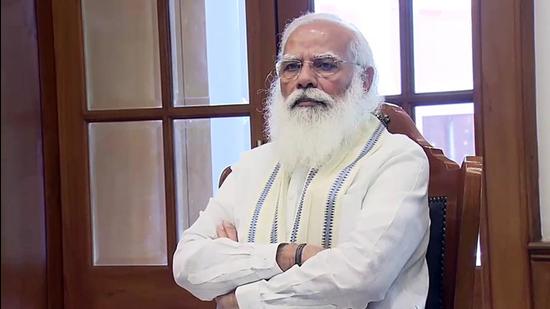
Modi asked officials at the meeting to ensure the plants are made functional at the earliest and work closely with state governments, said a statement by the Prime Minister’s Office.These plants include those being financed by the PM CARES fund as well as from various ministries and government firms,the statement added.
“The PM asked officials to ensure there is adequate training of hospital staff on operation and maintenance of oxygen plants... to ensure that each district has trained personnel available,’’ the statement said.
Principal secretary PK Mishra and cabinet secretary Rajiv Gauba were among top officials who attended the meeting.
Officials familiar with developments said each plant has a daily capacity of 1.5-2 MT of oxygen. A standard hospital needs 15MT of oxygen daily in usual circumstances. A training module is being prepared by experts and they are aiming to train around 8,000 people across the country to operate the oxygen plants, the official added.
During the second wave of infections this summer, India faced a debilitating shortage of medical oxygen as demand shot up from 4,000 MT to more than 10,000 MT due to a surge in infections and deaths. Unable to meet demand, many hospitals ran out of oxygen, leaving hundreds of patients gasping for breath. In response, the government banned industrial use of oxygen, airlifted oxygen trucks from industrial plants and ran oxygen trains but experts stressed on the importance of augmenting supply to avert any future crisis.
The issue was taken up by high courts and the Supreme Court with daily monitoring of supply after a number of hospitals approached the courts in distress.
According to the PMO statement, the PM also urged officials to ensure India uses advanced technology Internet of Things (IoT) “to track performance and functioning of these oxygen plants at a local and national level”. IoT is a system of internet-connected devices embedded with sensors that can collect and transfer data over a wireless network for computation and research purposes.
“A pilot (is) being done using IoT for monitoring the performance of the oxygen plants,” officials told the PM, according to the statement.
The decision came a day after the Union Cabinet announced a ₹23,123 crore package to augment grassroots health infrastructure and set up an emergency response system in preparation for a third wave. The ‘India Covid-19 Emergency Response and Health System Preparedness Package: Phase-II’ will be implemented across 736 districts to improve medical infrastructure at primary and district health centres. Projects under the plan will be implemented within nine months. The Centre will provide ₹15,000 crore and states ₹8,123 crore in the package.
The Prime Minister’s meeting was followed by the commerce minister Piyush Goyal holding a meeting in the evening with oxygen manufacturers, where he focussed on three aspects of oxygen supply. The minister asked how production of oxygen could be increased, how it could be stored and finally, how to increase transportation abilities of liquid oxygen, said a person familiar with the development.
“RIL Jamnagar has been very efficient in converting gaseous oxygen into liquid but they are unable to increase storage. So, the minister asked if their strategy could be replicated by other manufacturers and how could they ramp up storage,’’ said the person quoted above.


