
 E-Paper



PM Modi’s ‘Doklam team’ back in action to stand up to China in Ladakh
The standoff in Ladakh has been triggered by Chinese People’s Liberation Army effort to block building border infrastructure in the Daulat Beg Oldie sector

 Prefer HTon Google


India has pushed in high altitude warfare troops with support elements to the eastern Ladakh theatre to counter Chinese People’s Liberation Army (PLA) aggressive posture designed to browbeat the government to stop building border infrastructure in the Daulat Beg Oldie (DBO) sector as it may threaten the Lhasa-Kashgar highway in Aksai Chin. The specialised Indian troops are familiar with the Tibetan Autonomous Region of China and are tuned for operating at rarefied altitudes.
The scale of PLA deployment - two brigades strength and more - indicates that the move has the sanction of Beijing and not limited to local military commanders.
“From Australia to Hong Kong to Taiwan to the South China Sea to India and right up to the US, a bellicose China is staring at the world for domination at all costs,” said a senior government official after a meeting convened by Prime Minister Narendra Modi to review the situation on Tuesday.
Also Watch | ‘China hindering patrolling’: India slams Beijing after Ladakh, Sikkim fistfights
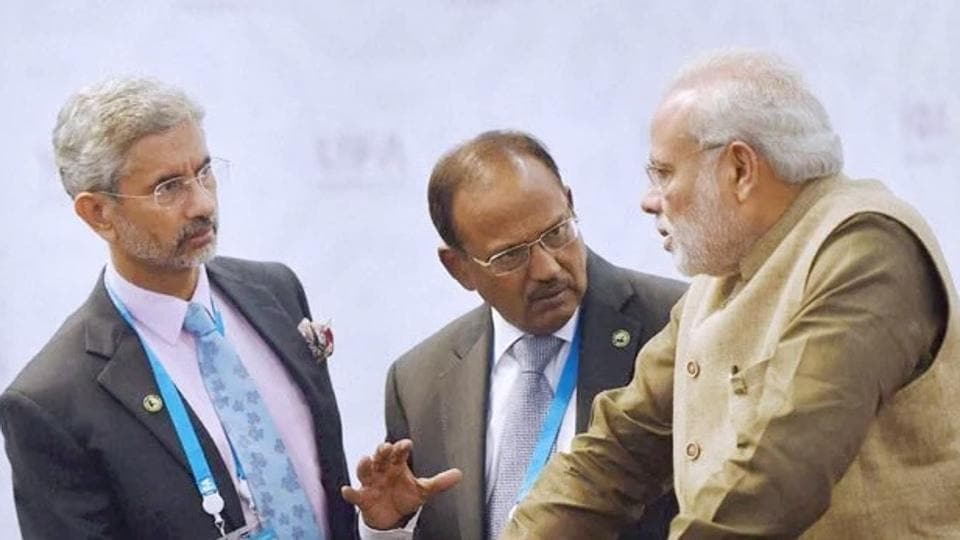
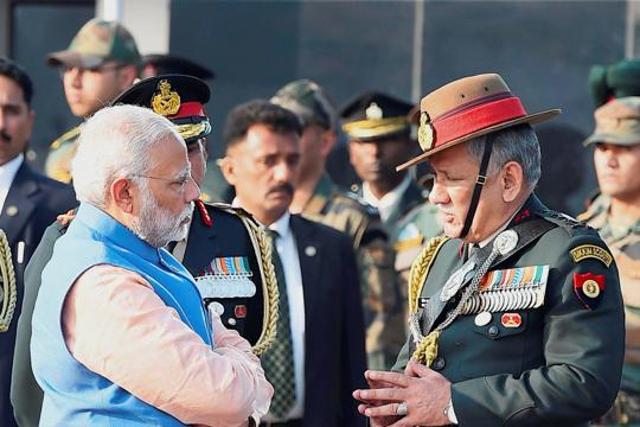
For three faces at PM Modi’s strategy meeting, this was the second time in three years that they were faced with a similar situation. National Security Adviser Ajit Doval, Chief of Defence Staff General Bipin Rawat and Foreign Minister S Jaishankar. This was the team that had crafted India’s response to the Doklam standoff in 2017 that lasted 73 days. General Rawat was then the army chief and Jaishankar, India’s foreign secretary.
Also Read: India matches up to China’s military in standoff near Karakoram Pass
The messaging from Tuesday’s meeting mirrored India’s response to the 2017 standoff when Indian troops dug in and stood their ground in the face of a rapid mobilisation by the Chinese side.
Officials said while India favours de-escalating the situation on the LAC through mutual respect and dialogue under the peace and tranquility mechanism in place, PM Modi’s ‘Doklam team’ has been told to prepare for all eventualities.
In purely military terms, the Chinese dominance and deterrence posture in the DBO sector is an effort by the PLA to try to prevent India from executing its rapid border infrastructure building plan. This summer is the last chance it has.
“The Darbuk-Shyok-DBO road will be completed this year and will raise the Indian capacity to rapidly deploy in the area. If the road project is blocked, the Indian Army will be forced to live off aerial supply lines and prepare for an arduous route linking Sansoma to Murgo to DBO through glaciated Saser La,” a national security planner in the government said.
Also Read: China’s tactical play in Ladakh isn’t just about the boundary
To be sure, there has been friction between the Indian Army and PLA in Pangong Tso, Galwan and Depsang Plains for the last two years. But most of these were taken care of.
“Just as China has built infrastructure within its own claim line without any objections from India, the former is opposed to any Indian infrastructure build up as if New Delhi has military objectives while Beijing has done this to promote tourism,” said a former army chief, a reference to the infrastructure on the Chinese side where all military outposts are linked by metalled roads to the base camps.
Also Read: Resolution of the Doklam stand-off is a case study on how to deal with China
While China has all plans to stare down India into submission with its all-weather ally Pakistan deliberately initiating troop movement in neighbouring Gilgit-Baltistan region, India cannot afford to budge from its position as this will amount to acceding to Xi Jinping’s cartographic expansion in the area through military muscle.
It is in this context that the Indian Army has inducted more troops in the theatre with others undergoing through the acclimatization process as this may be a long haul.
“The Chinese have already initiated psychological operations through its mouthpieces to remind India of the 1962 border skirmish in the same area. But this is 2020 and the leader is Narendra Modi,” said a senior cabinet minister.


