
 E-Paper



PM Modi stresses policing reforms, tech integration at DGPs conference in Raipur
PM Modi said police must enhance professionalism, sensitivity and responsiveness while ensuring citizen-centric service delivery.

 Prefer HTon Google


Raipur: Prime Minister Narendra Modi on Sunday called upon the police leadership across the country to realign policing practices with the national vision of a Viksit Bharat, emphasising the need to modernise systems, transform public perception of the police and deepen youth engagement.
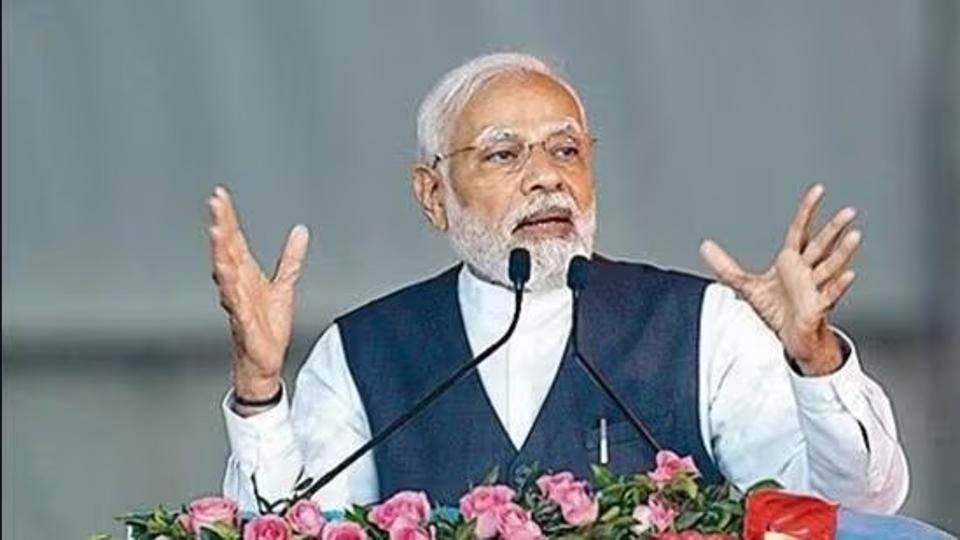
Addressing the 60th All India Conference of Director Generals and Inspector Generals of Police at the Indian Institute of Management, Raipur, Modi said police must enhance professionalism, sensitivity and responsiveness while ensuring citizen-centric service delivery. The three-day conference is themed “Viksit Bharat: Security Dimensions.”
Modi underlined the need to strengthen urban policing and reinvigorate tourist police, saying rapidly growing cities demand dedicated approaches to public safety and law-and-order management. He also stressed increasing public awareness of the newly enacted Bharatiya Nyaya Sanhita, Bharatiya Sakshya Adhiniyam and Bharatiya Nagrik Suraksha Sanhita, which replace the colonial-era criminal laws.
Calling for greater use of technology, he urged State and UT Police to link databases integrated under NATGRID with Artificial Intelligence to produce actionable intelligence. He suggested encouraging universities and academic institutions to undertake case studies on the use of forensics in investigations, noting that deeper forensic application would reinforce the criminal justice system.
Modi said regular and structured monitoring of banned outfits is essential, along with ensuring holistic development in areas freed from Left Wing Extremism. He also stressed innovation in island security and coastal policing to address evolving maritime threats. On narcotics, he reiterated that tackling drug abuse requires a Whole-of-Government approach combining enforcement, rehabilitation and community-level intervention.
Detailed deliberations at the conference covered the Vision 2047 roadmap for policing, trends in counter-terrorism and counter-radicalisation, use of technology to enhance women’s safety, strategies to bring back Indian fugitives abroad and reforms to strengthen forensic-based investigation and prosecution.
Referring to Cyclone Ditwah and other climate-linked emergencies, Modi called for stronger preparedness and coordinated response mechanisms so that lives are protected and disruption is minimised during natural disasters such as cyclones and floods.
During the ceremony, Modi presented the President’s Police Medals for Distinguished Service to officers of the Intelligence Bureau. He also honoured the three best-performing cities under the newly instituted Urban Policing Awards, introduced to encourage innovation and improvement in policing in urban environments.
The conference was attended by Union home minister Amit Shah, national security advisor (NSA) Ajit Doval, ministers of state for home affairs and the Union home secretary. DGsP and IGs from all States and Union Territories, along with heads of Central Armed Police Forces and Central Police Organisations, participated in person, while more than 700 officers of various ranks joined virtually from across the country.
-kW0H-U20214218012MgB-250x250%40HT-Web.jpg)


