
 E-Paper





Follow the latest breaking news, major developments and agenda-setting stories from India and around the world with the newsdesk at Hindustan Times. Operating round the clock, the desk brings together experienced editors, reporters and correspondents to deliver fast, accurate and contextual reporting across subjects that influence public policy, governance, business, society and international affairs. The HT News Desk covers politics, elections, government policies, the economy, business and markets, science and technology, the environment, law and order, infrastructure, education, climate issues and geopolitics, while closely tracking developments across states, institutions and global capitals. The team also leads coverage of major breaking news events, policy announcements, court proceedings, natural disasters, public emergencies and significant international developments. Reports published by the newsdesk are based on information gathered from reporters on the ground, official statements, government agencies, court records, regulatory filings, recognised institutions and other authoritative sources. Stories undergo editorial scrutiny and verification processes to ensure accuracy, fairness and relevance, and are updated as events evolve and additional information becomes available. Whether covering a key political decision in New Delhi, an economic policy shift affecting millions, a landmark court ruling or a major global event, the HT News Desk aims to provide readers with reliable, fact-based journalism that delivers not only the latest developments but also the context and analysis needed to understand their wider implications.
PM Modi wants definition of ‘hate speech’ expanded
PM Modi also said that while reviewing existing laws, “the objective should be to maintain the honour and dignity of aggrieved civilians”.


Prime Minister (PM) Narendra Modi has proposed that inflammatory speeches made to instigate inter-regional clashes be included in the definition of “hate speech” to maintain the honour and dignity of Indian citizens, two government officials, who refused to be named, told Hindustan Times.
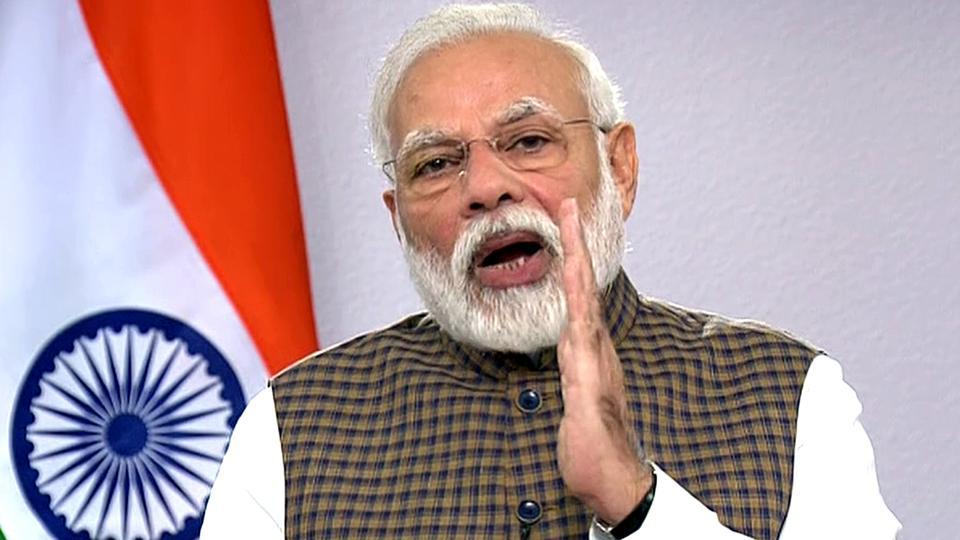
The PM sought an expansion of the definition of hate speech during the annual conference of state police chiefs and intelligence/investigation agencies held in December following which the Intelligence Bureau recently sent the action points to all the states and ministries concerned. Hindustan Times has reviewed the action points.
PM Modi also said that while reviewing existing laws, “the objective should be to maintain the honour and dignity of aggrieved civilians”.
The officials cited above said the PM was hinting at including incidents such as attacks on north Indians in Maharashtra at the behest of a political party, or anti-national statements made for carving out a separate state like Khalistan, which have the potential to cause inter-regional clashes, and attacks on students from the north-east or Kashmir in other parts of the country in the amended laws pertaining to hate speech.
Any publication, comments on social media and cartoons, which are potentially incendiary and could cause a regional clash could also be included in the amended definition of hate speech, said one of the officials.
The current laws, pertaining to hate speech, will be analysed prior to taking a call on whether there is an immediate need to make changes or existing provisions are adequate, they added.
At present, hate speech is defined on the basis of religion, ethnicity, culture or race. Even though the term hate speech itself doesn’t find mention anywhere in the law, it is identified through various laws that address such speech, including Sections 153A, 153B, 295A, 298, 505 (1), 505 (2) of the Indian Penal Code (IPC).
These laws say that any words or imputation, spoken or written or signs/visual representation, which may promote disharmony or hatred or insults/offends any religion, culture, language, caste or community, is a punishable offence. Besides, there are laws like the Information Technology Act, which are often used by agencies/police to charge an individual inciting any clashes/conflict on social media.
In 2017, the 21st Law Commission had recommended inserting new acts, which covered ridiculing or abusing anyone on account of region, place of birth etc. The commission recommended that Section 153C, which prohibits incitement to hatred, and Section 505A, which deals with causing fear, alarm, or provocation of violence in certain cases, be added in the IPC.
“There are enough existing laws if government and police are serious about acting against people who spread hate. What matters is the will to implement the laws. If a law is introduced and it is implemented in a discriminatory manner, then it’s no good,” said Ajai Sahni, an internal security expert.
PM Modi also urged police forces and agencies to co-opt lawyers, retired judges and Indian Police Service officers in the process of reviewing the existing laws. All the state police chiefs have been asked to compile a report on hate speech and send their recommendations to the Union ministry of home affairs, the officials said.


