
 E-Paper



PM calls for vigilance against online frauds
PM Modi cautioned against "digital arrest" scams exploiting fear, urging citizens to stay calm, think critically, and report incidents to authorities.


Prime Minister Narendra Modi warned the country about the scaremongering tactic of “digital arrest”, that has been used to dupe Indians of lacs to crores of money, in his 115th episode of Mann Ki Baat on Sunday. He highlighted the social engineering tactics used by fraudsters to target victims that exploit people’s fear and create “psychological pressure”. In the face of it, Modi stressed on the need to stop, think and then act when people receive such calls.
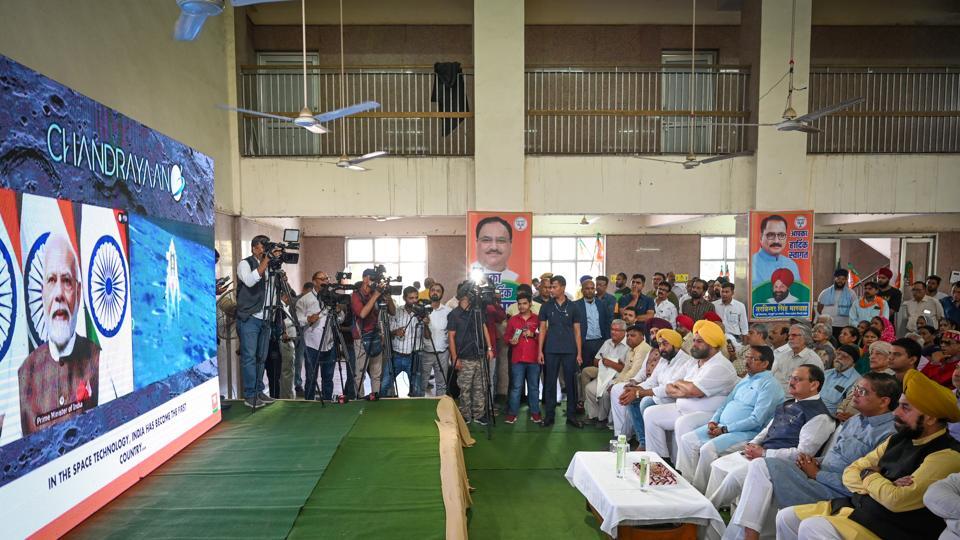
“People from every class and age group fall victim to digital arrest. People have lost lakhs of rupees earned through their hard work, out of sheer fear. Whenever you receive such a call, don’t be scared. You should be aware that no investigative agency never inquires like this through a phone call or a video call,” he said.
Modi explained the modus operandi used by the fraudsters: first, collect personal information about the victim so that they believe it is a genuine call from a government or a law enforcement agency such as the police, CBI, NCB, customs department, Telecom Regulatory Authority of India, etc.
In many calls, the perpetrators claim a parcel intended for the victim has been intercepted for containing illegal goods or drugs. Or they may state a person close to the victim is involved in a crime and must thus be placed under “digital arrest” to visually available over Skype or another video conferencing platform till demands are met.
Second, create an atmosphere of fear. “Uniform, government office set-up, legal sections. They will scare you so much on the phone. In the midst of the conversation, you will not be able to even think,” Modi said.
Third, create a sense of urgency. “ ‘You have to decide now or else you will be arrested.’ These people create so much of psychological pressure on the victim that one gets scared,” Modi said.
‘Stop, think, act to counter it’: Modi
To counter it, Modi said people should not be scared when they get such calls. The first step is to “stop”. “As soon as you get a call, stop. Don’t panic, stay calm, don’t take any hasty steps, don’t give away your personal information to anyone. If possible, take a screenshot and record it,” he said.
Second is to “think”. “No government agency threatens you on the phone like this, neither inquires nor demands money on a video call like this. If you feel scared, then know that something is wrong,” he said.
And third is to “act” by reporting it on the national cyber helpline 1930, on the portal cybercrime.gov.in, informing family and police, and preserving evidence.
Modi reiterated that there is no legal concept of a “digital arrest”. “[T]his is just a fraud, deceit, it is a lie, a gang of criminals and those who are doing this are enemies of society,” he said as he highlighted the whole of government approach that the government had adopted to deal with this, including setting up the Indian Cyber Crime Coordination Centre (I4C).
In certain cases, especially those involving women, victims are also blackmailed using non-consensual intimate imagery, Shubham Singh, a cybersecurity consultant who regularly works with the Maharashtra Police, said.
“In a case that I worked on, a victim fell for the ruse. The fraudsters told her to remove her clothes for ‘body mark identification’ over a video call. The fraudsters recorded the video and sent it to her via WhatsApp to blackmail her. She then contacted me and I told her to either temporarily disable all her social media accounts or to make them private. I told her to report the crime to cybercrime.gov.in or to visit the nearest cyber cell. Luckily, she had used a scarf to cover her face in the video,” Singh said.
Whole of government approach to tackle the issue
The Prime Minister said thousands of fraudulent video calling IDs have been blocked by agencies. “Lakhs of SIM cards, mobile phones and bank accounts have also been blocked. Agencies are doing their job, but for protection from scams in the name of digital arrest, it is very important that everyone is aware, every citizen is aware,” Modi said.
Departments and agencies involved in investigating these crimes include the Union home ministry (via I4C), IT ministry, department of telecommunications (DoT), department of financial services (DFS), department of economic affairs (DEA), department of revenue (DOR), Reserve Bank of India (RBI), TRAI, and multiple banks and payment service providers along with telcos and social media companies.
This month, the DoT operationalised the “International Incoming Spoofed Calls Prevention System” in two phases that can detect and block spam international calls that display Indian numbers as caller ID, a significant part of what enables such con jobs.
On May 14, the I4C had issued an alert warning citizens about “digital arrests”. “This is an organised online economic crime and is learnt to be operated by cross-border crime syndicates,” it had then said. I4C CEO Rajesh Kumar had at the time said the agency is working with Microsoft to evolve a system using machine learning and artificial intelligence to track Skype IDs that misuse official logos in display pictures.


