
 E-Paper



Pollution levels spike in Delhi, below-zero temperatures hit Kashmir
Pollution levels in Delhi rose after humidity touched 100%. in Jammu and Kashmir, Kargil was the coldest town at minus 20 degrees.


Minimum temperatures throughout the Kashmir Valley and Ladakh dropped several notches below freezing point on Friday, even as the humidity at 100% in New Delhi caused a sudden spike in pollution levels, officials said.

At minus 20, Kargil was the coldest town in Jammu and Kashmir followed by Leh at minus 13.8. The 40-day-long harsh winter period called Chillai Kalan would end on January 30.
Srinagar recorded minus 3.1, Pahalgam minus 5.7 and Gulmarg minus 8.6, a Met official said.
Jammu city recorded 6.9, Katra 7.8, Batote 3.4, Banihal minus 1.1, Bhaderwah 0.9 and Udhampur 1.2 degrees Celsius as the night’s lowest temperatures.
Meanwhile, Delhiites woke up to a cold morning, as the minimum temperature settled at 7.4 degrees Celsius.
The weatherman forecast clear skies through the day with the maximum temperature likely to settle around 27 degrees Celsius.
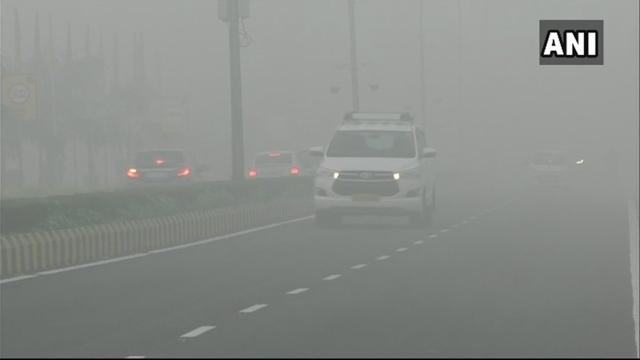
Visibility was recorded at 200 metres and humidity was recorded at 100%, a Met department official said. There is a possibility of mist during the day with moderate to dense fog likely to prevail on Saturday morning.
Thursday was the hottest January day in the last eight years with the maximum temperature being recorded at 27.7 degrees Celsius, eight notches above the season’s average.
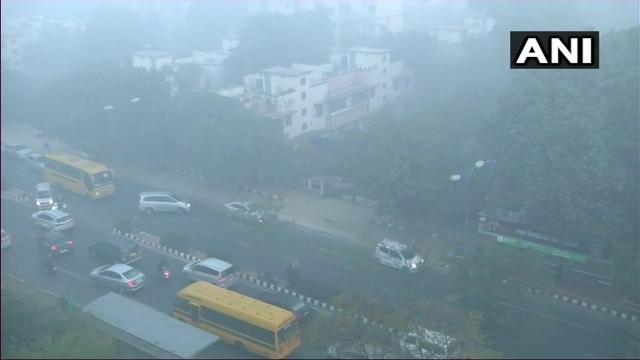
Officials said that the humidity at 100% caused a sudden spike in pollution levels.
At 9 am, the major pollutant concentration PM2.5 or particles with diameter less than 2.5 micrometers were 273 microgrammes per cubic metres around Delhi, while it was 272 across NCR -- about 10 times the international safe limits.
According to System of Air Quality and Weather Forecasting And Research (SAFAR), the Air Quality Index of Delhi at 9 am was 379 on a scale of 0 to 500.
The IMD has predicted the air quality and visibility to improve from January 23 as it was most likely to rain.


