
 E-Paper



Prayers teaching moral values not confined to religion: Supreme Court
The Supreme Court said this in response to a plea challenging the Centre’s December 2012 order making recital of Sanskrit shlokas mandatory during morning assemblies at Kendriya Vidyalayas.


Prayers inculcating moral values are not confined to any religion, the Supreme Court said on Wednesday while hearing a plea challenging a December 2012 Union government order that made the recital of Sanskrit shlokas mandatory during morning assemblies at Kendriya Vidyalayas.
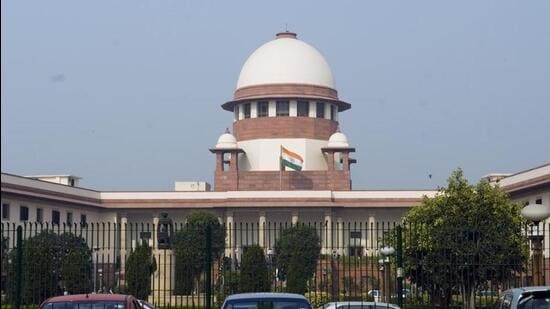
A bench of justices Indira Banerjee, Surya Kant, and MM Sundresh said such recitals are meant to inculcate moral values. “Values inculcated in school; we still carry. This basic education is so important.” No order was passed in the matter.
Advocate Veenayak Shah moved the plea in 2017. In January 2019, a two-judge bench referred the matter to the larger bench saying the petition raises questions of seminal importance citing Article 28(1) of the Constitution, which says no religious instruction shall be provided in any state-funded educational institution.
The Centre argued at the time that nobody could object to the use of Sanskrit shlokas as they proclaim a “universal truth”. It said the Supreme Court emblem is inscribed with “yato dharmastato jayah (where there is dharma, there is victory)” and added these words have been taken from Upanishads and find reference in the Mahabharata. It contended that merely because they are contained in Mahabharata, does not mean that the Supreme Court is religious.
Muslim organisation Jamiat Ulama-i-Hind also filed an intervention application in the matter saying the recitation of the prayer was based on a particular religion and violative of the Constitution
Senior advocate Colin Gonsalves, appearing for Shah, said during Wednesday’s hearing: “Here, it is a specific prayer about a specific community. But the principles which the court has expressed are more profound.”
Gonsalves said being a born Christian and a practising Hindu, his daughter is Hindu and the prayer “asatoma sad gamaya” is recited among other prayers at home.
He referred to Shah’s apprehensions and added parents, children of minority communities, atheists and others, who do not agree with this system of prayer — such as agnostics, sceptics, rationalists and others — would find the imposition of the prayer constitutionally impermissible.
“This (recitation) may have consequences for the society given the situation that we are in,” he added.
However, the bench said: “These prayers only inculcate moral values. Values inculcated in school we still carry. This basic education is so important. Inculcation of moral values is not confined to any religion.”
The matter was adjourned till next month as one of the presiding judges, justice Banerjee, is due to retire later this month.


