
 E-Paper



Psy Ops: In Ladakh standoff with India, China’s PLA replays Doklam tactics
China People’s Liberation Army is up to its old tactics to weaken the Indian resolve in the on-going stand-off at Pangong Tso and Galwan River in Eastern Ladakh.

 Prefer HTon Google


Psychological operations against the adversary is the key ingredient in the Chinese War Zone Concept (WZC) doctrine. Although Psy Ops, as it is called, is an age-old concept since the times of Chanakya and Sun Tzu, the Chinese Communist Party (CCP) has refined it by influencing the influencers among the adversaries, on and off social media, to lower the morale of enemy troops and the political decision makers.
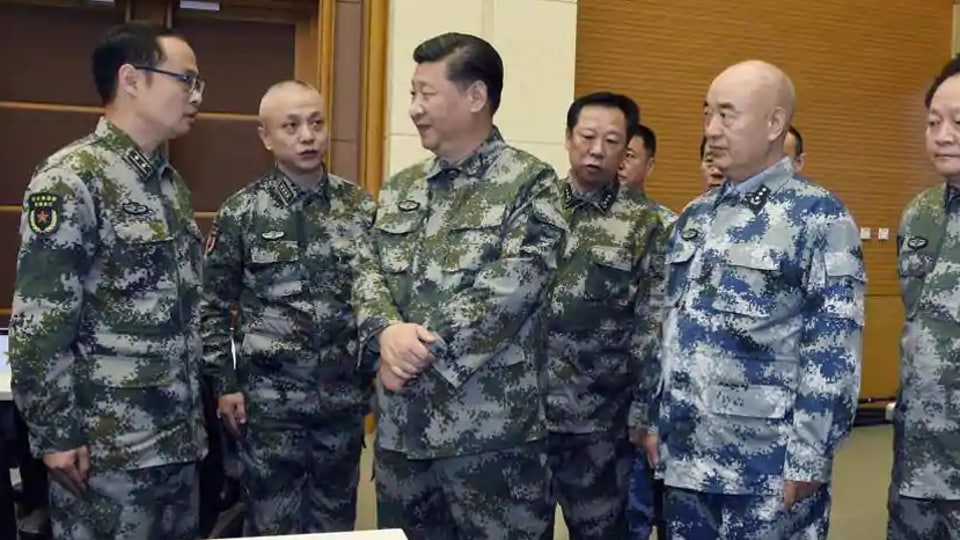
Under this strategy, its version of ground position maps and videos are leaked among the influencers to create political friction within the enemy country and seed doubt in the mind of the adversary on his capability to fight. Exaggerated information about deployed weapons systems against the enemy is circulated through official media even if the theatre weapons are untested or unproven in the field.
The basic idea is to overwhelm the enemy into panic so that his capacity to negotiate is weakened.
Just like the 73-day Doklam stand-off, the Chinese PLA is up to its old tactics to weaken the Indian resolve in the on-going stand-off at Pangong Tso and Galwan River in Eastern Ladakh. With the battle theatre totally transparent to the engagers through technology, the Chinese misinformation campaign has shrilled the pitch to seed the minds of the public with mistrust towards their government through tailored images and conjured up huge deployments to convey the threat of an imminent conflict.
Also Watch | Explained: Trump’s G7 offer to India, how it may help amid China standoff
Also Read: ‘India, China engaged to address current situation’: Indian Army on Ladakh standoff talks
Like the recent Chinese propaganda over a reconnaissance helicopter drone. Never mind that in a contested airspace, a slow-moving drone can be shot out of the sky in one go.
The propaganda about deploying latest motorised cannons and missiles in eastern Ladakh by Chinese too fails to mention that India too has the same systems in its armoury, if not better.
The PLA may be a step better in indigenous development of drones but India has already blunted that edge through imports from Israel. The air force of the two countries are evenly matched with both using Russian Sukhoi-30 as their front-line fighters. The Indian Air Force calls it Mark India (MKI) and PLA Air Force, Mark China (MKC). Despite China tom-toming about its two aircraft carriers, the Indian carrier-based naval aviation is miles ahead of anyone in the region barring a select few.
Also Read: Ahead of today’s meet over Ladakh standoff, India signals a realistic approach
The other critical aspect of Psy-Ops is first, to create hope of resolution through dialogue and then lead it to disillusionment among the public, which is always looking for instant noodles. It is quite evident that the resolution of the current stand-off in eastern Ladakh will require a series of engagements with small incremental steps each time, if at all. Given the heavy deployment on both sides, each side would look for concessions from the other before the status quo ante is restored.
It will also be very difficult for either the diplomats or generals on both sides to reconcile due to historical memories constantly refreshed by Chinese attempts to dominate the 3,488 kilometre long Line of Actual Control (LAC).
Also Read: As the LAC heats up, reading China’s playbook, writes Shyam Saran
Although China marched way ahead of upgrading border infrastructure in comparison to India at the turn of the millennium, New Delhi after initial lag, is fast catching up by building strategic roads right up to patrolling posts in eastern, middle and western sector of the Line of Actual Control.
Faced with a daunting Himayalan terrain in comparison to the flat Tibetean plateau, India is surely nullifying the Chinese military advantage. The standoff in eastern Ladakh and the belligerence of the PLA should be understood in this context.


