
 E-Paper



Pulses still pricey, but policy helps tame inflation spirals
Consumer prices of pulses are rising an average of 9% each year but higher procurement and realisation of MSPs by farmers are lessons in managing other volatile food items.


Pulses, a common source of protein for most Indians, are still expensive, but higher production and government procurement at minimum support prices (MSP) have broken a pattern of uncontrollable price spirals, a lesson in managing food prices, analysts said.
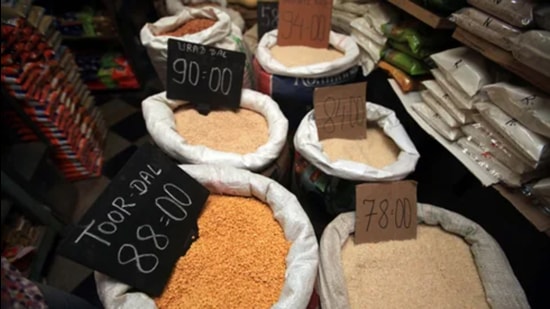
Consumer prices of pulses are rising an average of 9% each year but higher procurement and realisation of MSPs by farmers are lessons in managing other volatile food items, analysts said. MSP is a federally determined floor rate that is meant to serve as a price signal to farmers and traders.
Legumes such as arhar or pigeonpea, grown across India, are a staple of millions. Short supply would frequently mean import bills worth ₹7000 crore annually. Spells of soaring prices were one of the reasons why Indians were paying the highest protein prices a decade ago.
Average consumer inflation of four key pulses – pigeonpea, gram, urad, and moong – has stabilised around 8.8%, which still stokes food prices, but the country has not suffered a price spiral since 2019, price trends show.
Experts say there were four high-price cycles between 2005 and 2017. The swing in prices showed a clear pattern taking hold. According to CRISIL Research, which established the pattern in a 2017 report, wholesale prices of pulses, measured by the headline wholesale price index, prices shot up once in three years.
“In the last cycle, wholesale inflation ranged from 46.2% at its peak in November 2015 to -35.5% at the trough in November 2017,” said Dharmakirti Joshi, chief economist of the rating firm Crisil Ltd.
There haven’t been such price peaks in pulses, especially after 2019, when pulses inflation soared to 20% in July that year.
“A sustained increase in production because of policy push and procurement have tamed the price spirals. This is a lesson for other volatile items,” said Ashok Agrawal of Comtrade, a commodities trading firm.
The year 2019 was an inflection point in output. Between 2019 and 2021 so far, India’s annual output of pulses grew 2 million tonnes on average to touch 23.6 million tonnes from 21.6 million tonnes in the preceding three-year period.
Farmers tend to grow more of crops that fetched higher prices in the previous season and less of those where realisations were poor, a pattern known as the cobweb phenomenon in farm economics.
So, low prices tend to lead to future scarcity, while better prices produce gluts. This was a key reason for the price spirals in pulses. Higher government procurement of pulses has managed to break this pattern in pulses, experts say.
Procurement, or the government’s buying of pulses to build state-owned reserves, increased from 7.7% of production in 2017 to 13.6% in 2021. The government had set up a price stabilisation fund in 2015 to tame price volatility in food articles, including pulses. Federal spending under this fund went up from ₹48.5 crore in FY2016 to ₹996 crore in FY2021.
“This has lent support to prices of pulses and helped reduce the volatility,” Joshi said.


