
 E-Paper



Rare Sooty Shearwater found in Gujarat, first preserved specimen in India
The specimen of the sub-adult female sooty shearwater now joins the Feather Library’s collection of over 350 specimens

 Prefer HTon Google


A sooty shearwater, a rare oceanic bird known for its transoceanic migrations, was rescued near Porbandar by the Gujarat forest department but died during treatment on July 1. The Porbandar division later handed over the deceased bird to the Feather Library for complete morphological documentation—marking the first time a physical specimen of the species has been preserved in India.
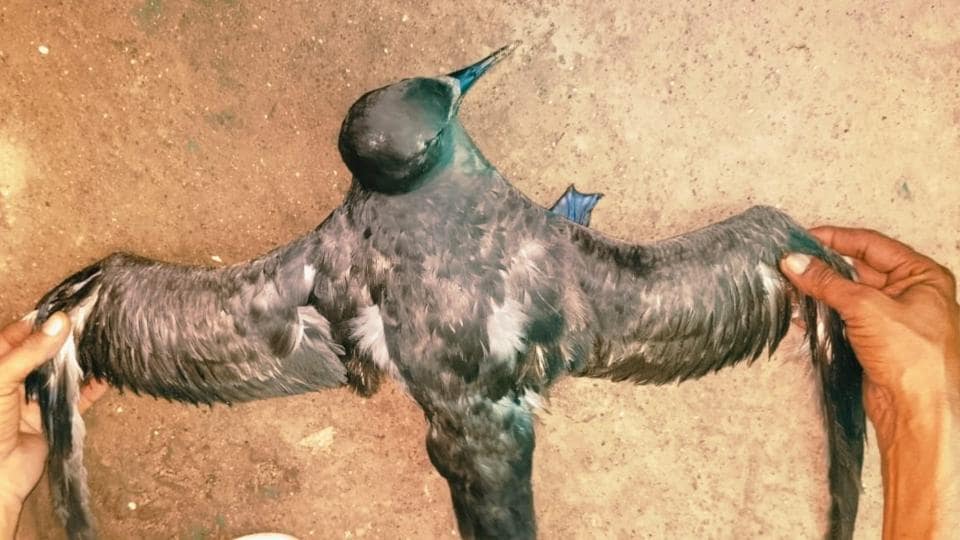
The specimen of the sub-adult female sooty shearwater now joins the Feather Library’s collection of over 350 specimens representing 153 species from Gujarat and Karnataka, including white tern, brown noddy, lesser noddy, Malabar grey hornbill, Nilgiri wood-pigeon, and emerald dove.
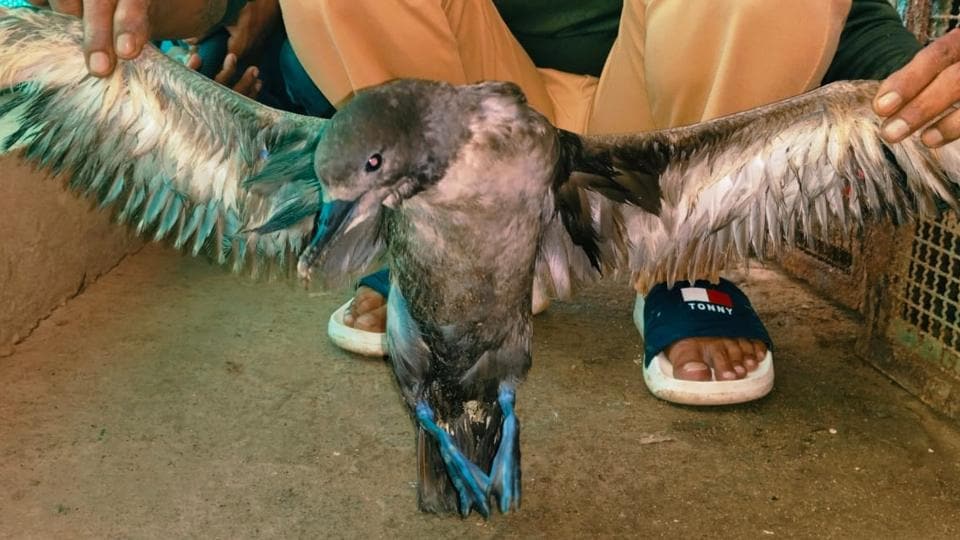
A white pattern on the underwing, a longer bill compared to the short-tailed shearwater, and a long-winged structure were features that helped experts confirm the bird’s identity.
The bird was initially rescued by local birders Nayan Thanki, Paresh Pitroda, and Nagajan Modhwadiya. Though there was some uncertainty about its identity—possibly a short-tailed shearwater—pelagic specialists Dipu Karuthedathu and Praveen Jayadevan at the Feather Library confirmed it as a sooty shearwater (Ardenna grisea) after reviewing its morphological features.
This is the second recorded instance of the species in India—and the first in Gujarat. The first confirmed sighting was in April 2023, when a sooty shearwater was photographed off the coast of Mangaluru, Karnataka, said Karuthedathu.
“Most of the time, you see these birds only fleetingly and from a distance, so distinguishing one species from another is challenging,” Karuthedathu said, adding, “In this case, we had the bird in hand, which allowed us to take proper photographs, measurements, and make close observations. That made things easier.”
Karuthedathu, who authored the scientific monograph Jaegers of the Indian Coast published in Indian Birds, was also part of the team that identified the sooty shearwater photographed in 2023.
The sooty shearwater breeds in the Southern Hemisphere and migrates to northern oceanic waters during the austral winter. “This bird might have got caught up in monsoon winds and strayed into the Arabian Sea while searching for food,” Karuthedathu said.
Also Read: Bird park cleared at flamingo haven in Bhandup, but experts flag ecological concerns
Principal chief conservator of forests (Wildlife) Jaipal Singh said that the forest department received formal communication about the documentation from founder and project director of Feather Library Esha Munshi.
Southern ocean birds have appeared in Indian waters before. Researchers have spotted Antarctic and sub-Antarctic pelagic birds like the flesh-footed shearwater and storm petrels in seas off Gujarat, Maharashtra and Karnataka, he added.
Munshi, a birder and bird sound recordist, is the curator of birds at the National Centre for Biological Sciences (NCBS-TIFR) in Bengaluru.
Also Read: Long-billed Bush Warbler sighted in India after 46 years
“As soon as I measured the bill of the bird, I knew it was not a short-tailed shearwater. Unlike shorebirds, very little is known about pelagic birds because they live out at sea and are rarely seen from the coast. There’s a gap in data,” Munshi said.
Her work involves collecting feathers and specimens sourced through forest departments, rescue centres and scientific institutions. “Every feather has a story — from genetic identity to ecological history, it can tell us about the bird’s species, origin and movement. That’s the idea behind building a feather library,” she said.


