
 E-Paper



Reaffirming India as a responsible power
A crisis is here and it is best to recognise it and deal with it.

 Prefer HTon Google


External affairs minister S Jaishankar ’s arrival in New York on Friday and visit to Washington DC next week could not have happened at a better time.Indian diplomacy is currently facing one of its most challenging moments in the Modi era.
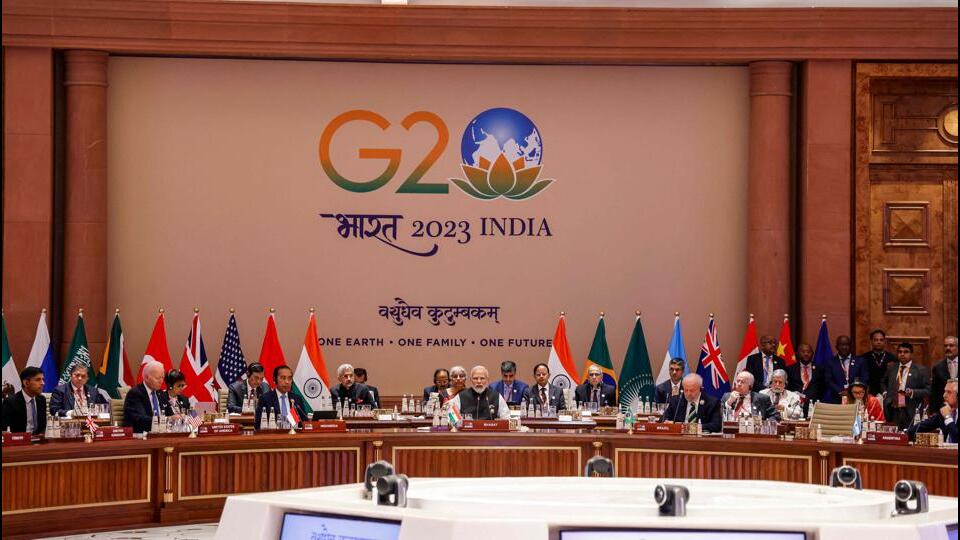
Fresh from the success of G20, without a moment to take it easy since there was a Parliament session in the middle, Indian diplomacy has moved to its next challenge; answering uncomfortable questions about Canada’s allegations against India. But India doesn’t have a better spokesperson to answer those questions, for, agree or disagree with him, Jaishankar has been remarkably effective in government in articulating foreign policy positions that go beyond black and white, drawn from complicated calculations, in accessible terms for the world and Indian citizens.
But dealing with the challenge is now task of wider Indian state, for here is what’s at stake — the future direction of India’s relationship with the West in general but India’s relationship with the US in particular; the narrative about Indian state’s character in the world of international politics; and India’s case on the unprecedented accusation hurled by PM Justin Trudeau. Examine each challenge separately and India’s worldview.
The India-US dynamic
Take the relationship with the West, or more accurately, G7. India and the US are much closer friends than most realise. France is India’s closest friend in the West. Japan is India’s best friend in Asia. Italy’s new PM comes from a politically conservative tradition and seems to want to invest in India. Ties with Germany are stable, as it struggles to get out of the Russian energy-Chinese market trap.
UK is complicated, given history and its somewhat bizarre South Asia policy where Pakistan is still given the benefit of doubt, but relations have got better on even the security issue. The fact that India has been a guest country at all recent G7 summits rests on these bilateral relationships. Canada, of course, is the aberration. But the key is the relationship with US. Few acknowledge that it is this relationship with Washington that has often enabled and smoothened ties with other Western powers. India’s bilateral relations with US allies help it improve ties with the US, India’s ties with the US help it improve ties with its treaty partners. This relationship with America rests on real facts and mutually convenient fiction.
The fact is there are mutual needs and capabilities convergences between the two countries to deal with China, mutual business interests, deep society-level linkages, convergences in a worldview on even multilateral affairs where an introspective US values the Indian perspective given its scale and reach in the global south, a recognition of the fact that the world of the future — tech — needs to operate within “trusted ecosystems, a desire for manufacturing supply chains to be “diversified” (both code terms for reducing dependence on China and ensuring it doesn’t get an edge on emerging tech), and the mutual need to fuse workforce abilities and complementary strengths to ensure that world has a choice when it comes to Beijing.
The fiction is the narrative that both states believe in same “values”, have identical or even common interests when it comes to interests in their immediate vicinity, that India can get the benefits of an ally without being an ally, and that there aren’t deep psychological, political, cultural, and emotional differences between those who dominate a Democratic administration in DC and a Bharatiya Janata Party government in Delhi. Fact and fiction have now collided. And to understand that, it is important to have a fair sense of where America is coming from. The US doesn’t want trouble with India.
The Biden administration has taken enough hits on India from its progressive base and even segments of the administration, yet persisted with deepening ties with India. This isn’t a favour. Obviously the administration sees gains from cultivating India. And this will continue. But there are three sources of friction. For one, the importance of the discourse of “values” in the American discourse is often underestimated. Yes, interests drive policy and that is what constitutes the basis of ties. But do remember that principles of democracy and rule of law are integral to both the US vision of itself in general and the Democratic Party platform in particular, especially at a time when party has framed the political battle in the US against an opposing force (read Donald Trump and “Maga Republicans”) that it sees as undermining precisely these democratic principles.
To be sure, with good reason, this can be termed hypocrisy for there are innumerable instances, in both the Cold War and the post Cold War era, where Washington has violated international law and sovereignty and engaged in “transnational repression” externally, and curbed individual liberty, attacked people on the basis of ideology and identity and trampled on human rights internally. But despite the gap between actions and principle, as Joe Biden says, never underestimate the impulse in US to “strive for a more perfect Union” — which, often with disastrous consequences, gets extended to the quest to engineer a more perfect world as defined by America.
There is a genuine ideologically driven constituency in US which is why even their worst actions are couched in liberal idealism. The US administration has invested in ties with India despite what it sees as troubling domestic political signs in India, not because of it.
It is playing the “long game” because it sees Indian democracy surviving the current challenge to pluralism, not because it thinks Indian democracy is doing well, irrespective of whether one thinks that is a right or wrong viewpoint.
For even the top hard-nosed realpolitik policymakers who operate within the ecosystem of Democratic Party and are loyal to it, the issue of “values” cannot be discounted entirely.
This doesn’t necessarily mean Republicans are better for India, as is conventionally assumed; it is that Democrats bring a different set of priorities to the table.
The current episode, where India’s internal trajectory is being linked to its external actions, brings this tension to the fore sharply and the administration can’t ignore the voices in favour of “values”, integral to its party’s progressive base, civil society and the Washington DC and New York-based media.
Two, Canada is not just an ally but America’s closest ally. By law, given the treaty relationship, the US is bound to defend Canada in case of a foreign attack, which can be, more widely, interpreted as a violation of its sovereignty. Not speaking for Canada at the moment would send a signal to the rest of NATO that US isn’t reliable. No sensible administration can risk that.
A quick glance at the factsheet on the Washington DC-Ottawa relationship on the State Department website should be enough to dispel doubts about the depth of these ties. The security and defence section of the factsheet says, “U.S. defense arrangements with Canada are more extensive than with any other country. The United States and Canada share North Atlantic Treaty Organization (NATO) collective defense commitments. US and Canadian military forces cooperate on continental defense within the framework of the North American Aerospace Defense Command (NORAD), the world’s only binational military command.”
And finally, as Secretary of State Antony J Blinken said, there is a wider issue of “transnational repression”. India must not let this instance dilute that narrative, for the primary culprit here is China. Yes, Indian diaspora politics coupled with Indian domestic politics has caused tremendous complications. But the Chinese Communist Party’s surveillance, control, intimidation, violence, and influence in countries beyond its border is of another level. If the US doesn’t speak on the current issue, its wider attack on China gets weaker.
Having said this, in most of the commentary, there is a surprisingly high degree of illiteracy in the US about Canada’s demographics, political environment, Justin Trudeau’s own domestic coalition compulsions, and how a segment of extremist Sikh groups and forces have held Canadian politics hostage, given the complicity of government as the line between violence and free speech is often crossed. The US also needs to realise that Indian public opinion — and a part of it is regime-orchestrated, but don’t attribute all of it to that — is still evolving.
The residual suspicion of the US is dissipating in India but hasn’t disappeared, and this government, to its credit, has taken political ownership of the relationship with the West. Just see Jaishankar saying last week that it is time to stop treating the West as the bad guys and look at who is flooding the markets (read China). But even as the US thinks that the issue is all about an extra judicial transnational killing, for Indians, as Tanvi Madan of Brookings astutely put in a thread (on X) on the disjunct between western and Indian commentary on the issue, it is also about the history of Khalistani separatism and violence. The US needs to recognise this while articulating its position.
Diplomatic challenges
On the Indian side, it is important to avoid two temptations.
The first is knee jerk anti-Americanism just because US officials seem like they are backing Canada. Break down the statements and there is nuance and calibration there. But even if Washington is sympathetic to Ottawa, just like US understood Indian constraints on Russia, Delhi should understand DC’s constraints on its immediate neighbour with which there is an emotional connect beyond geopolitics. The episode will pass, the relation and maintaining the growing trust levels is important for India’s quest to build its capabilities.
This doesn’t mean that western hypocrisy shouldn’t be called out or India shouldn’t present its viewpoint. But it means that parts of Indian establishment shouldn’t encourage an unnecessarily anti-American strain when US policymakers, in private, are doing their best to strike the right balance.
The second temptation to avoid is domestic triumphalism. The latter may suit politics of the ruling party, but deeply damages the work being done on ground to attempt an exercise in reputational damage control when faced by serious allegations.
There is a value to public restraint in diplomacy that political operators often underestimate. And at this moment, the diplomatic challenge must take precedence over political calculus. There is noise at the moment. As Avinash Paliwal warned in HT, India sceptics across western capitals have been energised.
A coalition of extremes has come together. If there are Sikh and Islamist groups, driven by extremism, there are also both genuine civil society and human rights groups, disturbed by India’s possible human rights violation. If there are progressive factions of liberal parties subscribing to the values argument because they are ideologically driven, there is the Five Eyes alliance which cannot turn a blind eye to an allegation of this nature in one of its own country. Then there are external adversaries such as China which see a big opportunity to drive a wedge between India and the US, the real geopolitical partnership that worries Beijing, and Pakistan, which despite its internal troubles, can’t let go of an opportunity to damage India. But despite the noise, Delhi-DC ties will continue to survive, even thrive.
Indian and US strategic, political, commercial and geopolitical interests are now intertwined and there are many bilateral and plurilateral institutional structures that Delhi and DC have locked themselves into a structured partnership, for the good. There will be ebbs and flows, but the relationship will survive this test.
The second diplomatic challenge for India is showing to the world it is a responsible power.
India’s achievements and leaps on external front over the past two-and-a-half decades have stemmed from this image of being a responsible power.
Trace it back to then PM Atal Bihari Vajpayee’s decision to have a a nuclear doctrine based on “no first use” or his decision not to cross the Line of Control during Kargil. Extend it to his decision to invite then Pakistan President Pervez Musharraf to Agra despite Kargil. Take it to former PM Manmohan Singh sealing the nuclear deal on the basis of India’s responsible record on non-proliferation (compared to you know who). Or his decision to exercise strategic restraint after 26/11. Take PM Narendra Modi’s willingness to sign up to climate responsibilities, despite the sheer injustice of it, because of seeing and projecting India as a problem-solver rather than creator.
Dealing with criticism
Whenever criticism of India’s domestic politics has come up in western capitals in recent years, India first counters the criticism hurled at it. But privately, Delhi also points out that internal developments are a different issue, confined to the sovereign jurisdiction due to complex historical and political factors, but that its external behaviour has remained consistent and responsible. Whatever one thinks of the allegations, and whether, in any way, anyone in the government sanctioned the killing in Canada, the world will see it as unacceptable. The fact is a longstanding democracy carrying out a targeted killing on the soil of another longstanding democracy is rare; in these instances, it is presumed that the aggrieved nation litigates such cases through legal avenues. The fact that India might have circumvented such formalities means that its image as a responsible power is at stake.
And that is why India has denied the allegations outright. As political scientist Christopher Clary said in a recent piece, “Just as people say hypocrisy is the tribute vice pays to virtue, it is similarly the case that refusing to officially acknowledge extrajudicial killing is the tribute the intelligence community pays to international law.”
And that is why former foreign secretary Nirupama Rao, in her conversation with the Financial Times, spoke about India’s solidity and dependability and reliability.
One of Jaishankar’s key challenges, which he is equipped of meeting, is showcasing that this allegation doesn’t dilute that image of India. He is also using the opportunity in New York to acquaint his counterparts with an introductory course on Canada, its political complexion, and why the accusations have to be seen in that context. But beyond that, there is a specific allegation involved, which may — or may not — be India’s biggest challenge.
The allegation
And what is this allegation? Canada has said, “Canadian security agencies have been actively pursuing credible allegations of a potential link between agents of the Government of India and the killing of a Canadian citizen, Hardeep Singh Nijjar.”
Since then, there have been leaks of the evidence in possession, including diplomatic communication among Indian officials, but the particulars haven’t been released. There has been conjecture that India had the motivation. On the other side, those like former Punjab CM, Amarinder Singh, who knows a thing or two about both national security (as an acclaimed military historian and former officer) and his state and its diaspora, have said that the killing is due to inter gang rivalries in Canada.
The fact that Indian intelligence does crack down, in severely violent ways, against those considered and proven to be actively working against India isn’t a secret. This author can recall at least two instances in the immediate neighbourhood where there is credible reason to believe that Indian agencies targeted deep Pakistani assets. And encounter killings aren’t a secret within India. Fuse a deeply hardline political state with an aggressive deep state and the possibility of adventurism increases. But this doesn’t mean that a) Indian agencies have perfected the art of doing this in the west or/and b) there is a smoking gun, or foolproof evidence that agencies did this.
But the fact is that this evidence isn’t in public. The fact also is that India has indicated it will cooperate but doesn’t know what it is dealing with. And the fact is that while privately members of the Five Eyes Alliance think there is something to the allegation, they have been discreet about it in public or most haven’t let in come with engagements with India.
No one quite knows what Canada will throw out as proof. But India’s best case is that the evidence is based on conspiracy theories or that it is flimsy or that it is circumstantial. That will be the easiest way to disprove the specific allegation, ensure India’s image stays intact, and give room to its western partners in governments to tackle domestic criticism and continue their quest to deepen ties with Delhi. But it also needs to be prepared for worse.
India will survive this crisis with its geopolitical weight intact, as it has survived many crises in the past. It is too important strategically for the world. It remains a beacon of hope in a grim international system. Its partners in the global south — the Brazilian foreign minister told HT that his country doesn’t have a position on what is purely a bilateral issue — are entirely aware of the hypocrisies involved in the allegation. The foreign policy leadership has the smarts, and the personal relationships, to navigate this even if it takes time.
But a crisis is here. And it is best to recognise it and deal with it, nor rashly or for short term political partisan purposes, but methodically with an eye on the world and India’s standing.


