
 E-Paper



Retail inflation rises to 8-month-high 6.07%
India’s annual retail inflation rose to an eight-month high of 6


India’s annual retail inflation rose to an eight-month high of 6.07% in February on higher food prices, data released by the statistics ministry showed on Monday. Wholesale prices also rose by 13.11% in February, the first increase in three months.
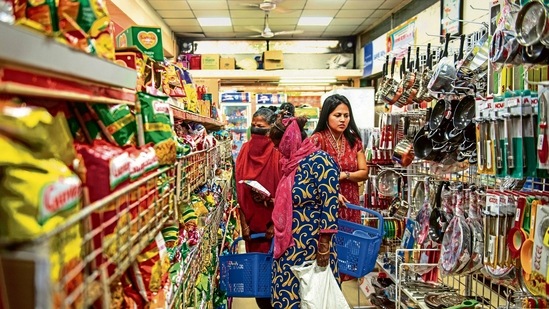
Benchmark Consumer Price Index (CPI) exceeded 6% for the second consecutive month, rising above the tolerance band set by the Reserve Bank of India. The price rise might gain further momentum as the war in Ukraine pushes up commodity prices and the government raises auto fuel prices after a freeze for more than four months on account of assembly elections in five states, experts said.
The rise in retail prices was marginally higher than the 6% forecast by a Bloomberg poll of economists. The latest value is slightly higher than the 6.01% reading in January and makes it unlikely that overall inflation in the quarter to March will be in line with the central bank’s projection of 5.7%. Retail inflation in February was the highest since June 2021, when the it was at 6.26%.
What is the outlook on RBI raising interest rates?
The surge has been driven by rising food prices to a large extent. The food component, which has a share of 39% in the overall CPI basket, grew at 5.85% in February. This number was 0.68% in September last year. Food inflation is now becoming broad-based even as it continues to be in double digit for items such as edible oils.
Core inflation, which excludes the more volatile food and fuel prices, rose 5.98%, marginally lower than 6.01% in January. Non-core inflation, which rose 6.27% in February, has been increasing rapidly, data from the Centre for Monitoring Indian Economy show. The non-core component is expected to rise further when pump prices of fuel are increased as crude oil costs have skyrocketed after hostilities broke out between Russia and Ukraine.
In another piece of data released on Monday, the Wholesale Price Index (WPI) grew at 13.11%, marking an end to the three-month-old trend of moderation in wholesale prices. WPI has been in double digits since April 2021.
The reversal in WPI trajectory is because of an acceleration in prices of manufactured goods, even as inflation declined for the other three sub-categories of primary goods, fuel and power, and food. With international commodity prices, including those of crude oil and cereals such as wheat, rising significantly in March compared to February because of the ongoing geopolitical tensions, WPI too is expected to experience tailwinds.
“As (the) flare up in crude oil prices, which were at $129.51 per barrel in the international markets as on 7 March 2022, is expected to keep the energy prices, logistics and transportation costs high in the foreseeable future, India Ratings & Research expects the wholesale inflation to remain in double-digits in the near term,” said a note by Sunil Kumar Sinha, principal economist at the ratings agency.
The difference in wholesale and retail prices is expected to capture the ability (or lack of it) of producers in passing on higher input prices to consumers. Many commentators have interpreted the lag between WPI and CPI in India as an evidence of weakness in consumer demand holding back firms from passing on higher input prices.
Such an interpretation, however, must balance for the difference in both qualitative and quantitative composition of the two inflation measures. While CPI includes commodities and services meant for household consumption such as housing and telephone bills, WPI includes a lot of industrial inputs such as metals, which are not included in the CPI.
Even for common items, the weights are drastically different in CPI and WPI. Food items, for example, have a much lower weight in WPI (24.4%) than CPI (39%).
“While the surge in global food prices may not percolate fully through the food CPI inflation back home, the channel of surging energy price led by Russia-Ukraine war could materially impact inflation dynamics, directly and indirectly. Domestic fuel and pump prices will likely see a rise in coming weeks, which will pressure the inflation prints ahead”, said a note by Madhavi Arora, lead economist at Emkay Securities. “We remain watchful of inflation push-and-pull factors and impact on MPC’s (monetary policy committee) reaction function, which we think will be on wait and watch mode until 1HFY23”, she added.
That view is actually the consensus one among most analysts -- that RBI will wait and watch till at least the middle of the year before deciding if any tightening of interest rates is needed.


