
 E-Paper



Review orders on J&K internet ban not to be kept in cupboard: SC
The court was hearing an application first moved in 2020 by the Foundation for Media Professionals which challenged the internet shutdown in J&K.

 Prefer HTon Google


The Supreme Court on Tuesday said that orders reviewing whether or not the internet should be suspended in a particular region are not meant to be “kept in cupboard”, giving two weeks to the Jammu & Kashmir administration to take instructions on making them public.
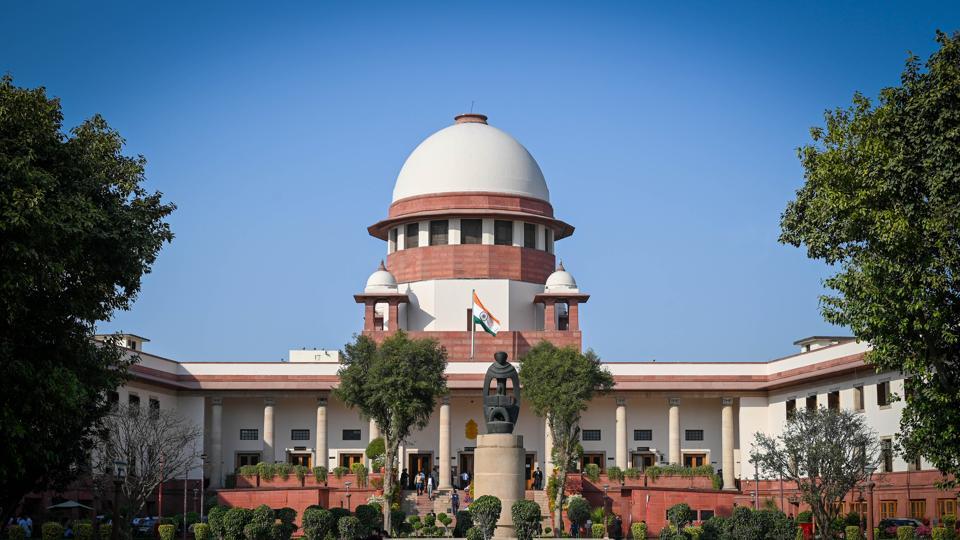
A bench of justices BR Gavai and Sanjay Karol, which was told by the state administration that there was no requirement to place such review orders in the public domain, responded: “Review orders are not to be kept in the cupboard. Let the state show from the orders we have passed that there is no requirement to publish review orders.”
The court was hearing an application first moved in 2020 by the Foundation for Media Professionals (FMP), which challenged the internet shutdown in the erstwhile state of Jammu & Kashmir (now a Union territory) for varied periods, between January and April 2020.These orders were withdrawn in February 2021 after a Special Committee headed by Union home secretary assessed the prevailing situation and recommended that the ban be withdrawn.
Advocate Shadan Farasat, appearing for the foundation, said that the Supreme Court in two consecutive orders passed in January 2020 (Anuradha Bhasin v Union of India) and May 2020 (FMP v Jammu & Kashmir), categorically held that the publication of orders imposing internet shutdowns is a must.
READ | Mobile internet suspended in parts of Pulwama
The court appeared to agree with this submission. “If you read our orders, prima facie it is clear you have to publish (internet clampdown orders). Take instructions in two weeks,” it told the J&K administration. While the state has published the initial orders banning internet use, it expressed reservations on making the review order public.
Additional solicitor general (ASG) KM Nataraj, appearing for J&K, said, “These issues arose during the pandemic. Subsequently, there were two judgments. We have complied with it. Now this application is seeking a review of those orders.”
The UT administration filed a short affidavit last year giving reasons for opposing the application. It said that neither the Anuradha Bhasin matter nor the subsequent order of May 11, 2020 in the FMP case required the UT to publish the review order.
“Decisions of the special committee (headed by MHA secretary) deal with highly sensitive and secret/confidential matters relating to militancy, terrorism, cross border infiltration, security and defence of the nation...Likewise, the deliberations and findings of the statutory review committee would stand on the same footing,” the affidavit said.
READ | India country with most internet shutdowns for 4th time, 85 in J&K alone: Report
Apart from local administration, the special committee discusses and deliberates inputs received from armed forces, paramilitary forces, and security agencies in arriving at a final decision, and therefore such deliberations cannot be made public, the UT administration submitted, citing “national interest”.
But the bench told the ASG: “They are not wanting the deliberations to be made public, only the order.”
The constitutional validity of such ban came up for challenge in the Anuradha Bhasin judgment. The court held at the time that such a ban cannot be indefinite as it violates the fundamental rights of citizens.
“The respondent state/public authorities are directed to publish all orders in force and any future orders under Section 144 CrPC and for suspension of telecom services, including internet, to enable the affected persons to challenge it before the high court or appropriate forum,” the judgment in January 2020 said.
In the subsequent order passed in May 2020, the court said that a Special Committee headed by Union home secretary be constituted as a one-time measure to resolve the matter.


